
A canoe cove, an event space, an extended water’s edge promenade, a promontory and a 115-metre-fall industrial crane will soon be accessible to the public once another phase of a groundbreaking Toronto park, the biggest to emerge along the city’s waterfront in a generation, opens next week.
“This is one of the best Instagram moments for the city right now,” Chris Glaisek, chief planning and design officer at Waterfront Toronto, told reporters during a tour of the western portion of Biidaasige Park.
During the tour, Glaisek, his team, and reporters were standing on the water’s edge promenade, a 250-metre paved walkway that overlooks Lake Ontario, offering visitors strolling along the Don River a chance to stop and take in both the vast Great Lake and the skyscraper-laden Toronto skyline.
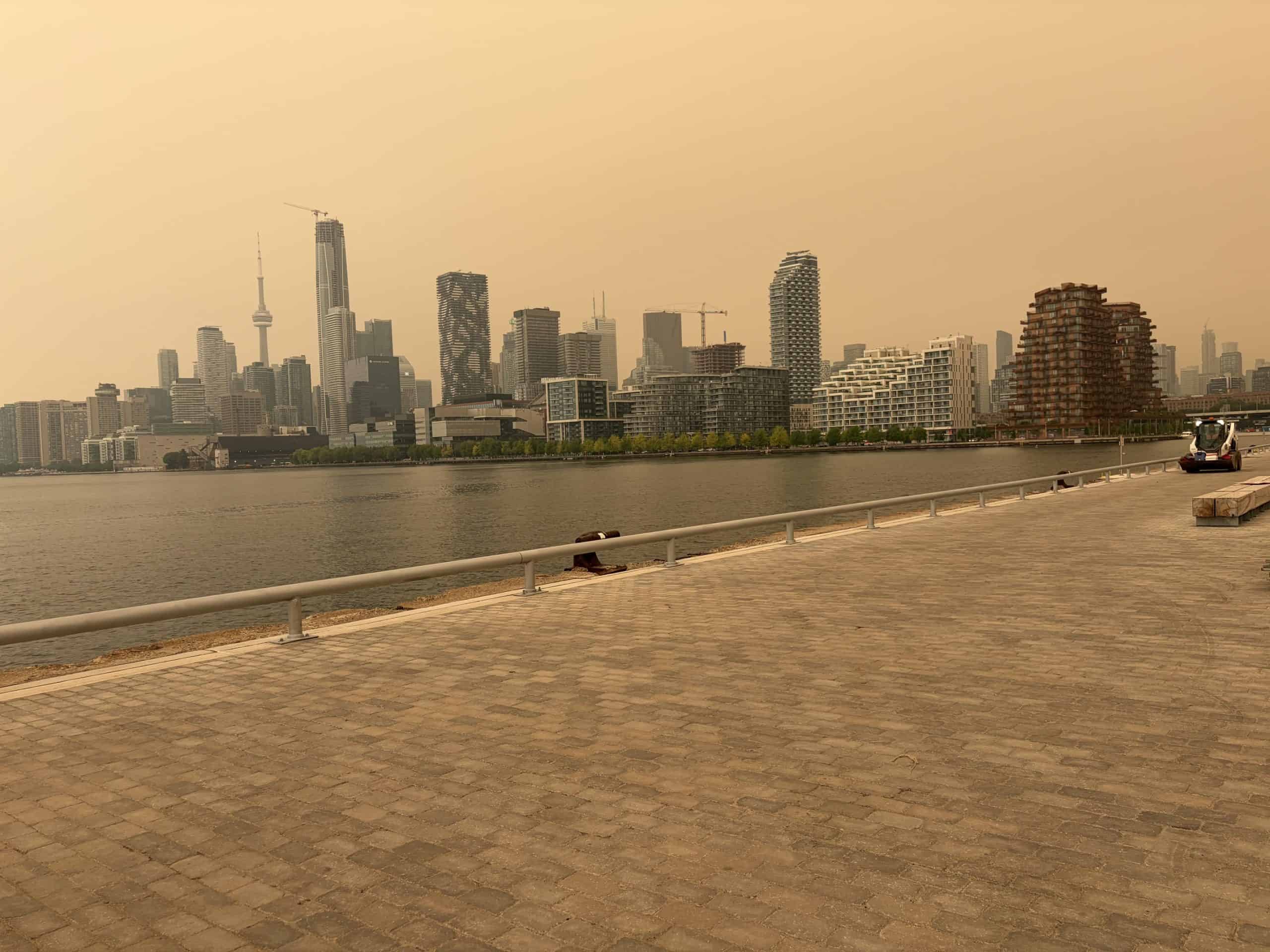
Water’s edge promenade
“It’s an incredible place to see the skyline and see so much of how the waterfront has developed, particularly in the last 20 years.”
Biidaasige Park, a sprawling recreational space at the city’s end in the Cherry Street and Commissioners Street area, has indeed been years in the making.
The park, the first part of which opened last year, is part of a significant $1.4 billion infrastructure project spearheaded by Waterfront Toronto, and the first public space to open on Ookwemin Minising (formerly known as Villiers Island), a new island in the Port Lands.
Located where the Don River meets the lake, the new island was created by ongoing flood-protection and river-restoration projects in the area. Once complete, the 98-acre island will boast 50 acres of parks and 80 acres of parks and green space (including the river).
The first portion of the park, which features a massive owl, two ziplines, a raccoon climbing structure, a Badlands-style playground (complete with multiple water features) and brand-new hiking and biking trails, opened to significant fanfare in 2025. Earlier this year, the first works on the Lassonde Art Trail, a unique outdoor, year-round art trail spanning both the east and west sides of the park, were revealed.
The LAT, a one-of-a-kind public art destination, will include renowned Canadian artist Kent Monkman’s first permanent public sculpture, Monira Al Qadiri’s monumental work First Sun (direct from NYC in partnership with Public Art Fund), and a new sculpture by internationally acclaimed artist Alicja Kwade (which will debut in 2027).
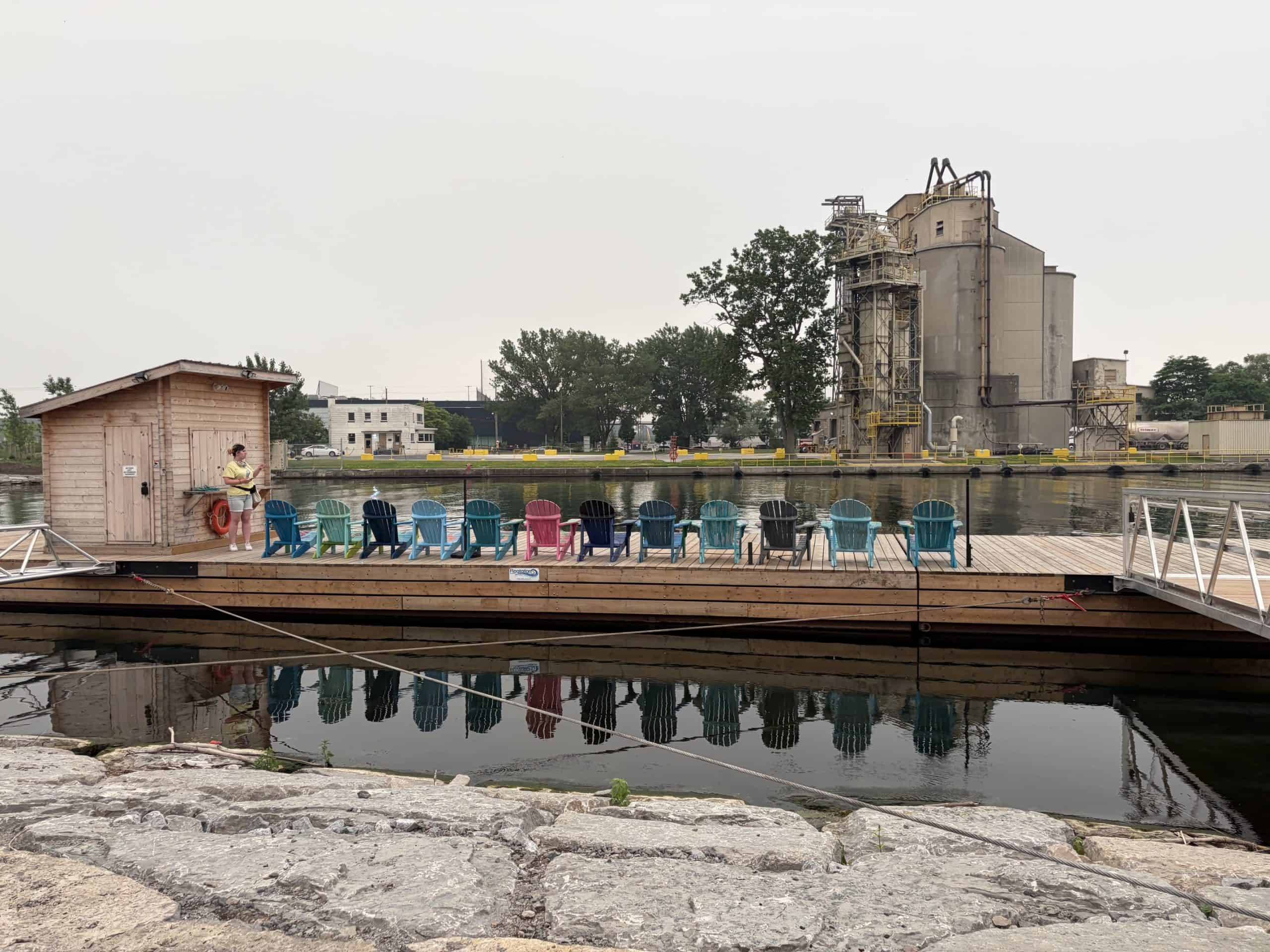
Some of the LAT’s newest pieces were unveiled today, along with 10 new acres of parkland that include a Canoe Cove that people can use to launch non-motorized watercrafts such as canoes and kayaks, a 3,000-person event lawn that will host outdoor movie nights and other gatherings, the water’s edge promenade, a promontory with views of the inner harbour and city skyline and a 115-metre-tall, 3,000-ton former industrial crane that has been preserved as a landmark that pays homage to the area’s industrial heritage.
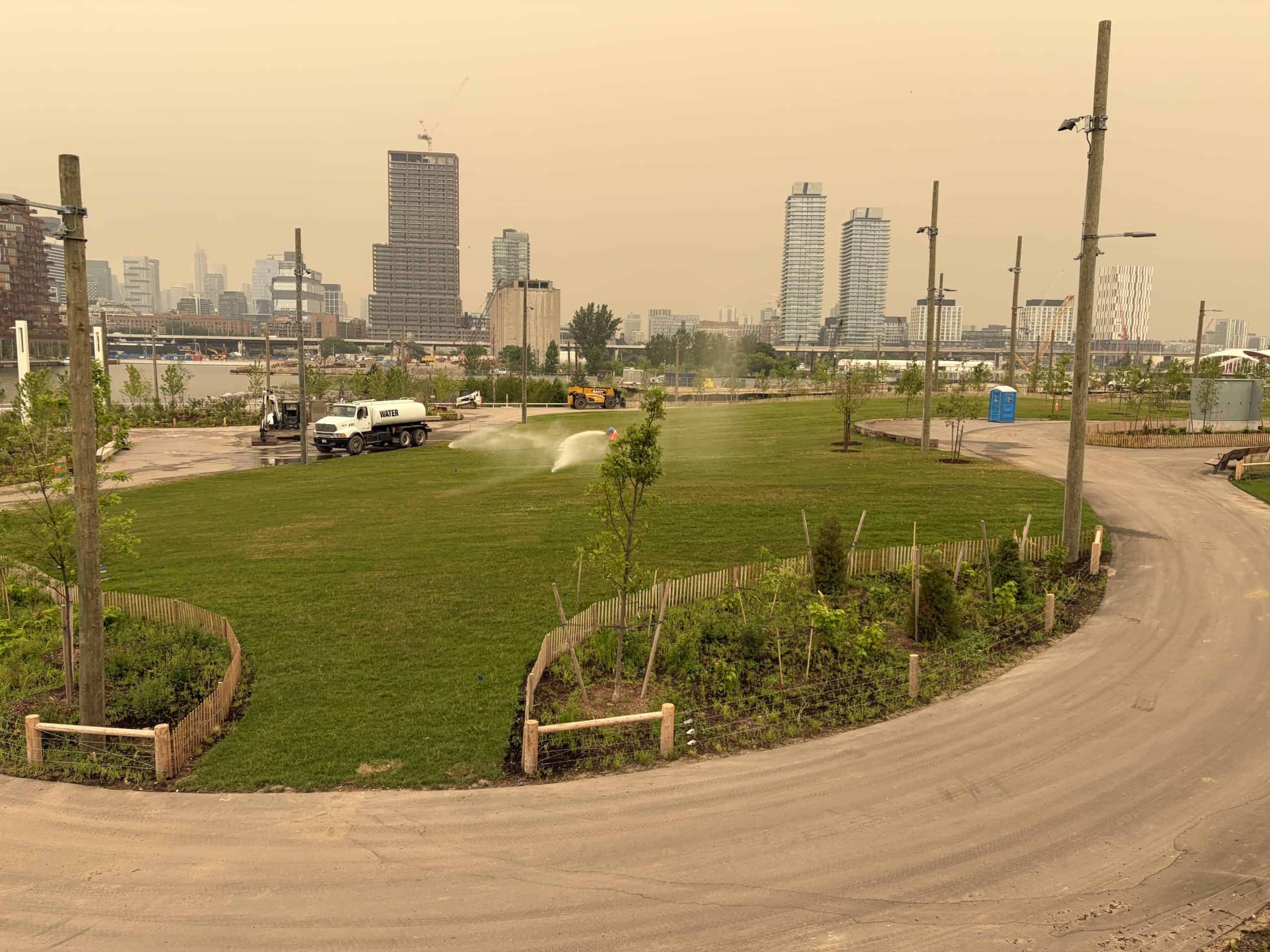
Event lawn
The new LAT installations include Stories of Relics by Ryan Gander, which consist of fluorescent metal boxes fused to rocks and are also present on the east side of the park, against the wind, with the wind by Alexa Kumiko Hatanaka, which features five flagpoles that support a school of fish sculptures based on koinobori (traditional Japanese streamers) and Lodestar by Lisa Hirmer, a head-turning sculpture on the promenade made up of words that speak to the past, present and future of the project.
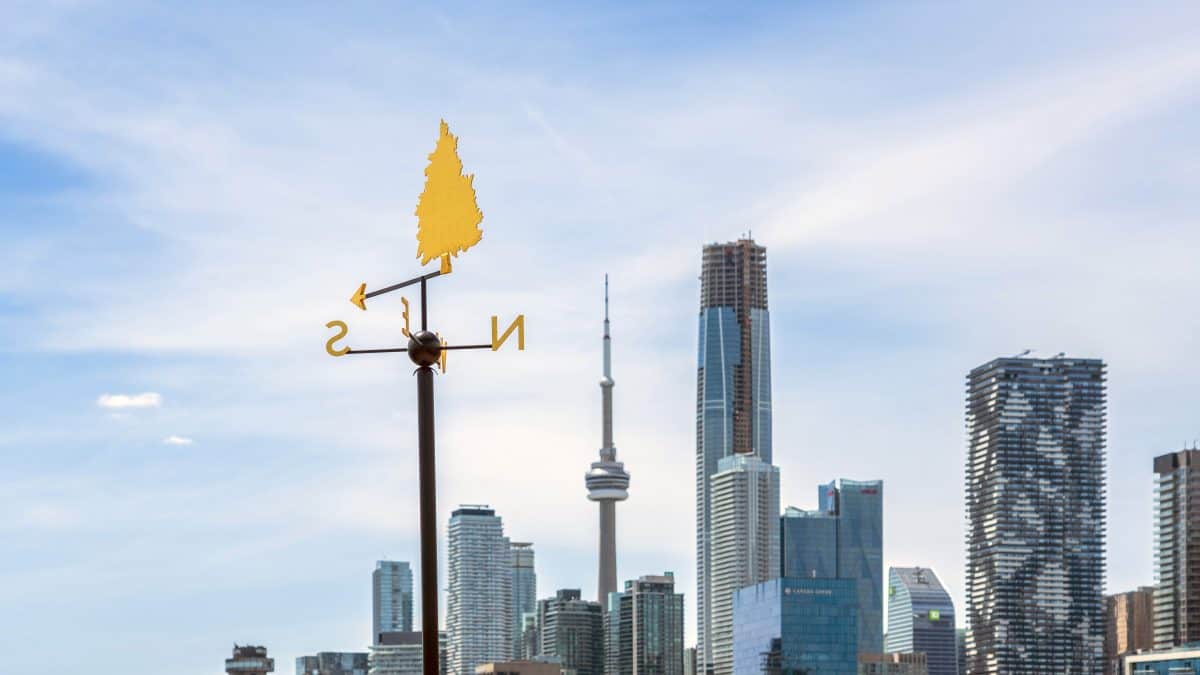
The western portion of the LAT also includes Juniper by Virginia Overton, a functioning weathervane adorned with an ornamental juniper tree and Hank Willis Thomas’ Ernest and Ruth (Exuberant Pink) and Saverio and Daisy (Navel), colourful cartoon speech and thought bubbles that offer a splash of whimsy to the promenade.
During the tour, Glaisek and other representatives from the City of Toronto and Waterfront Toronto emphasized that more is coming, with a northern portion of Biidaasige Park set for completion in 2029. As of now, the entrance to the new western portion of the park is marked by temporary, high-tech self-cleaning washrooms near a generously sized pavilion with picnic tables.
When asked about a restaurant planned for the park, Glaisek said that it’s in the works and expected to take shape in the future. The park will, city and Waterfront Toronto representatives said, continue to grow over the next several years. A city document indicates that in 2029, the northern portion of Biidaasige Park will evolve to include space for events, festivals and seasonal activities.
In 2030 and beyond, workers will extend the water’s edge promenade along the Keating Channel and the Ship Channel.
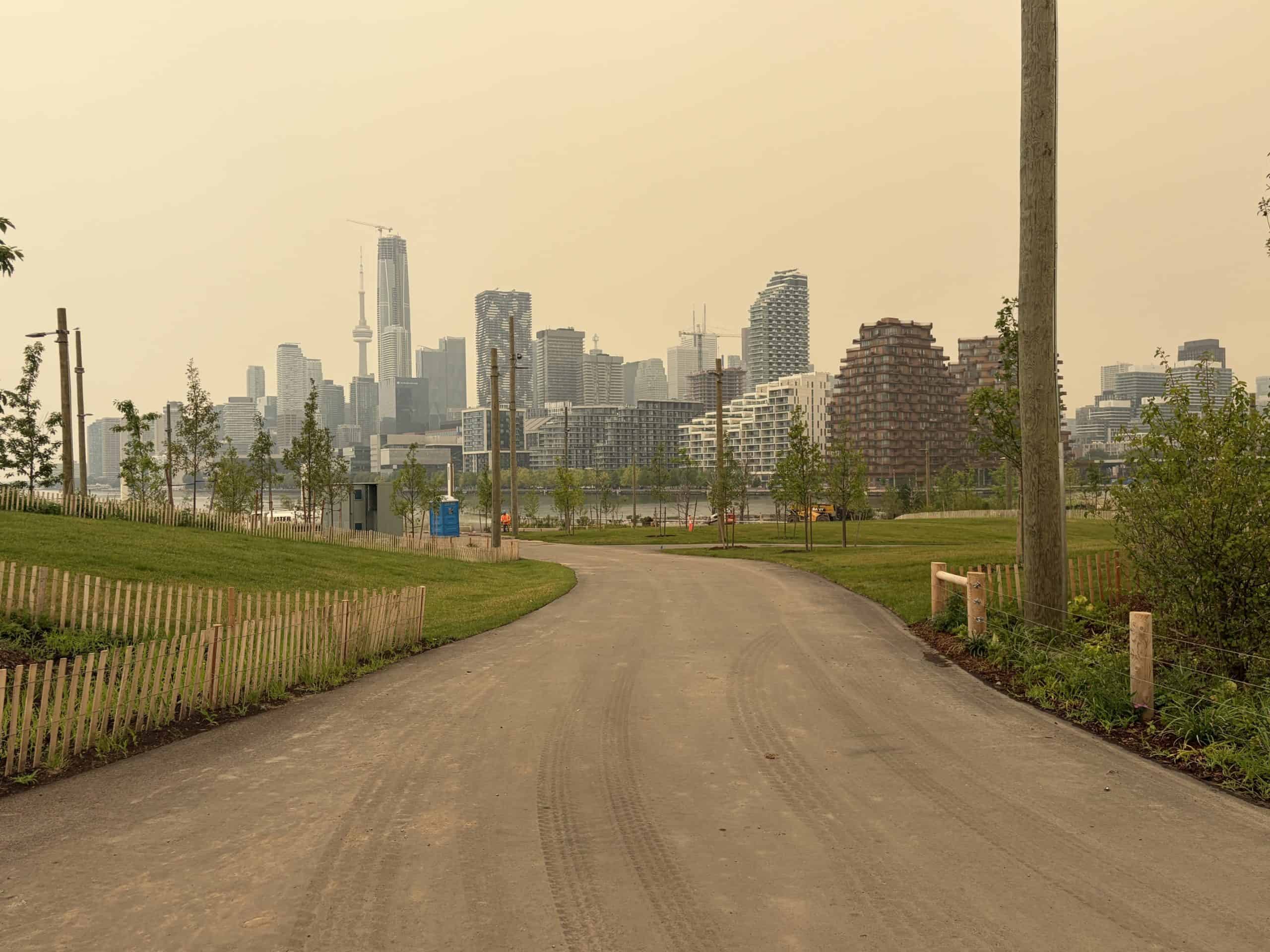
But as for right now, the huge park has, beyond creating more recreational opportunities for residents and visitors, allowed the earth to recover and regrow. A city document said that working with Indigenous Elders, over two million herbaceous plants, 77,000 shrubs, and 5,000 trees were chosen to help restore a piece of the natural ecosystem that was destroyed in the early 20th century.
Toronto and Region Conservation Authority has also documented over 20 fish species in the lower Don River. For the first time since 2012, an Atlantic salmon was found in the area, along with the first-ever emerald bowfin upstream of Lake Shore Blvd. E. in the Don River watershed.
When asked what other projects might have inspired a project this ambitious, Glaisek told INsauga.com in a previous interview that one project that set a precedent took place over 100 years ago.
“It’s actually the Back Bay in Boston. The city decided to flood-protect the Muddy River, and they filled it in in a way that created a proper river valley for the Muddy River,” he says.
“That created the beginnings of the Emerald Necklace park system in Boston. So they turned the river into a beautiful feature with parks on either side that could flood, and then the remaining land was able to be redeveloped. So that I would say is the closest thing we have to a kind of inspiration for the project.”
Ookwemin Minising (pronounced “oh-kwhe-min min-nih-sing”) spans 39.6 hectares. Over time, the new island is expected to feature over 9,000 housing units (including affordable rentals) that will accommodate up to 15,000 residents. The island is also expected to create up to 3,000 new jobs.
Waterfront Toronto also said the island will connect the more than 60 acres (or 24 hectares) of parkland delivered through the Port Lands Flood Protection, plus approximately 15 acres (six hectares) of additional parks that have yet to be built. Once housing is built, the island will also include an elementary school, a community recreation centre, a library, and child care centres.
When asked why Waterfront Toronto took a slightly less orthodox tack by opening the island with a park, Glaisek said that’s an important part of the overall strategy.
“We refer to it as leading with landscape, and it serves a couple of purposes, that approach. When Waterfront Toronto was started, there was a sense that none of the great public spaces that were promised in previous decades had ever been delivered on the waterfront,” he told INsauga.com in a previous interview.
“All we ever got were the condos, and the condos made a profit for the developers, and it never resulted in any of the great parks that people had been asking for since the ’70s on the waterfront. So we took a different tack, which was to say ‘we’ll do the parks first.’ We’ll create that public sense of confidence that the public spaces are getting delivered as part of revitalization and it isn’t going to be just development and maybe the parks will come later.”
Glaisek says showcasing the results of years of work–enough soil was removed, he says, to fill up the Rogers Centre–by first unveiling a spectacular park was a way to restore faith and confidence in the waterfront redevelopment process.
He also says having the parks and recreational elements in place ahead of time will only increase the land’s value.
“The increase in that real estate value comes back to the government, to the taxpayers. So we can sell the land for more money if it is already proximate to a beautiful new park than we could sell it for just based on the promise of a future park.”
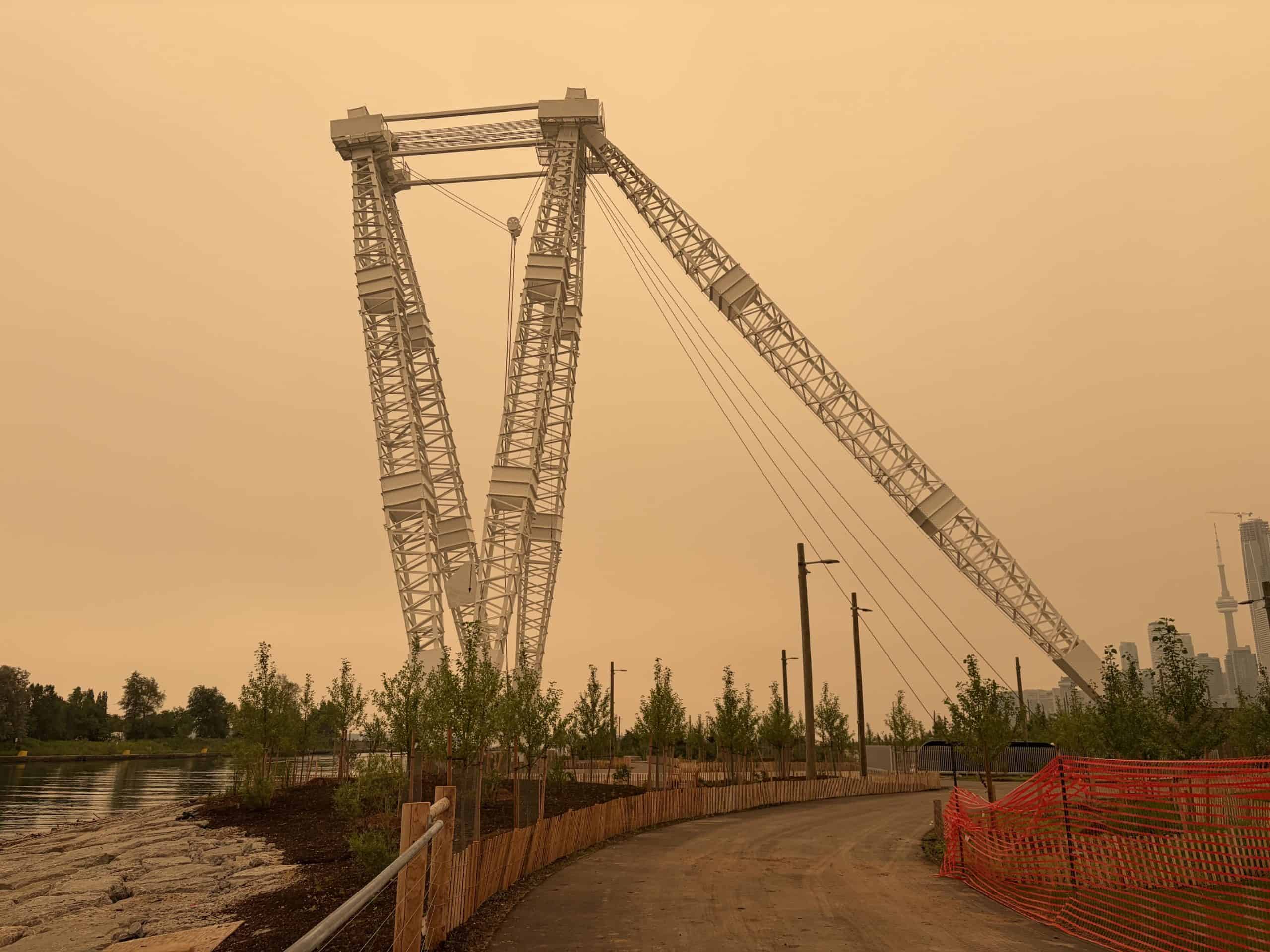
Industrial crane
The newest portion of Biidaasige Park is expected to open to the public on July 25.
Cover photo: Virgina Overton, Untitled (Juniper), 2014
Photo Vid Ingelevics and Ryan Walker. Courtesy the artist and Lassonde Art Trail.
PollView All
WIN A $100 GIFT CARD
Subscribe to INsauga’s daily email newsletter for a chance to win a $100 Amazon gift card.