
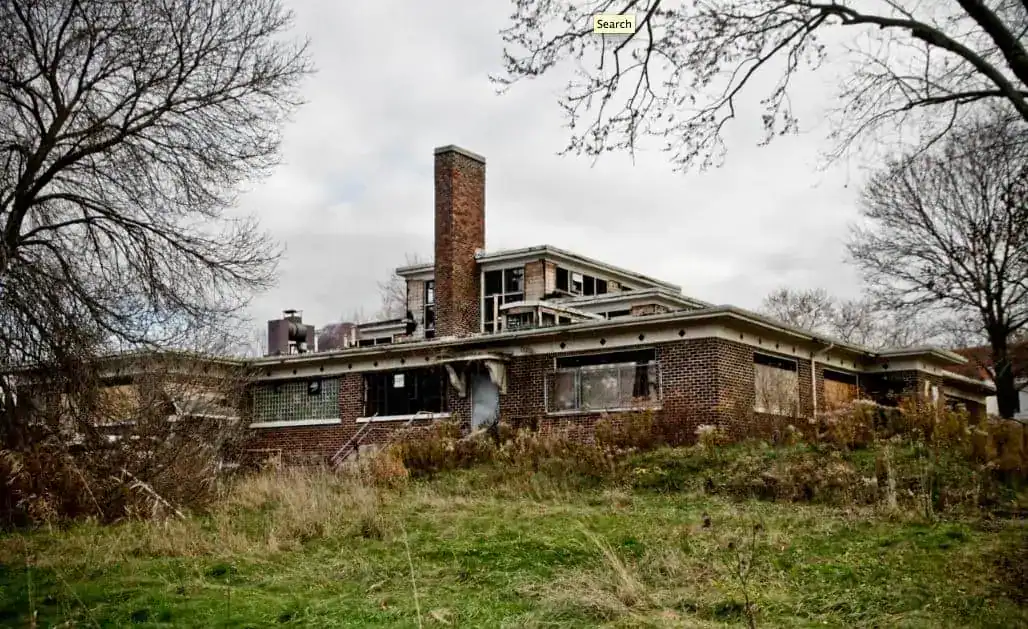
The fate of the historic Camp 30 Cafeteria building in Bowmanville will be in the hands of Clarington Planning Committee members later this month and a group hoping to save the “one-of-a-kind” structure has launched a public petition urging council to preserve it and pursue its redevelopment as a community hub.
The Jury Lands Foundation is first trying to win the hearts of Clarington residents and is circulating a petition to drum up public enthusiasm for preserving the site, the location of a prisoner of war camp for high-ranking German officers during World War II and the short-lived Battle of Bowmanville in 1942, the only pitched battle on North American soil during the war.
“It’s a one-of-a-kind place,” said the foundation’s Stefanie Campbell. “As Canadians we don’t really know about the history. We need to preserve it.”
The foundation hosted two outdoor movie nights and a family picnic at Camp 30 last weekend, drawing hundreds of attendees. “Families and residents came together not only to celebrate community spirit but also to learn more about the Cafeteria building’s history and express their support for saving Camp 30,” she said.
The problem, as is usually the case, is cost. Estimates soared as high as $22 million for complete restoration, prompting Clarington to hire Stantec Consultants to prepare a Heritage Impact Assessment. The report, released in the spring, offered four options, ranging from partial retention with active adaptive reuse at $7.7 million to complete demolition at nearly $1.44 million.
The foundation prefers option 1, which would turn the crumbling structure into something the entire Clarington community could enjoy, from childcare and vital community services to cultural programming and events.
Adaptive reuse of the Cafeteria building could be shaped directly by residents’ input, ensuring the site meets real needs while honouring its history, noted Marilyn Morawetz, Chair of the Jury Lands Foundation.
“It would be such a loss to see this building torn down. Instead, we have an opportunity to imagine something wonderful – a community hub shaped by the people of Clarington. This is our chance to build a future we can all share in.”
Council and town staff, however, are leaning towards two options:
- Partial retention with adaptive reuse (passive), which was described as a “commemorative ruin” and would include a combination of retention, stabilization, repair and reconstruction of the ground floor of the structure including basement, foundation walls, and exterior masonry walls including window frame openings. Potential uses would include a pavilion, picnic space, community garden or commemorative garden and the estimated cost is just over $2.5 million.
- Building footprint delineation, which would entail the use of low knee walls or installation of materials at grade level, such as retention and support of a portion of the existing masonry walls and foundation with a concrete cap. Potential use would include commemorative elements or plantings and the estimated cost is $1,573,825.
Campbell, however, said the town didn’t perform a needed “deep dive” on a full restoration and brought in an architect of their own who told them restoring it properly would cost the same as just preserving the structure.
“What we want to do right now is to raise awareness about our efforts to save Camp 30.”
The Lambs Road property, now known as the Jury Lands, was originally a boys training school before morphing into Camp 30, a WWII Prisoner of War camp noted for a half-dozen escape attempts and the Battle of Bowmanville, when several thousand prisoners revolted and barricaded themselves in the mess hall, armed with makeshift weapons like sticks and iron bars.

About 100 soldiers from a base in Kingston arrived on the scene armed with hockey sticks and high-pressure hoses to quell the riot. One soldier suffered a skull fracture after being hit with a jar of jam, while two prisoners were injured, including one who was impaled with a bayonet.
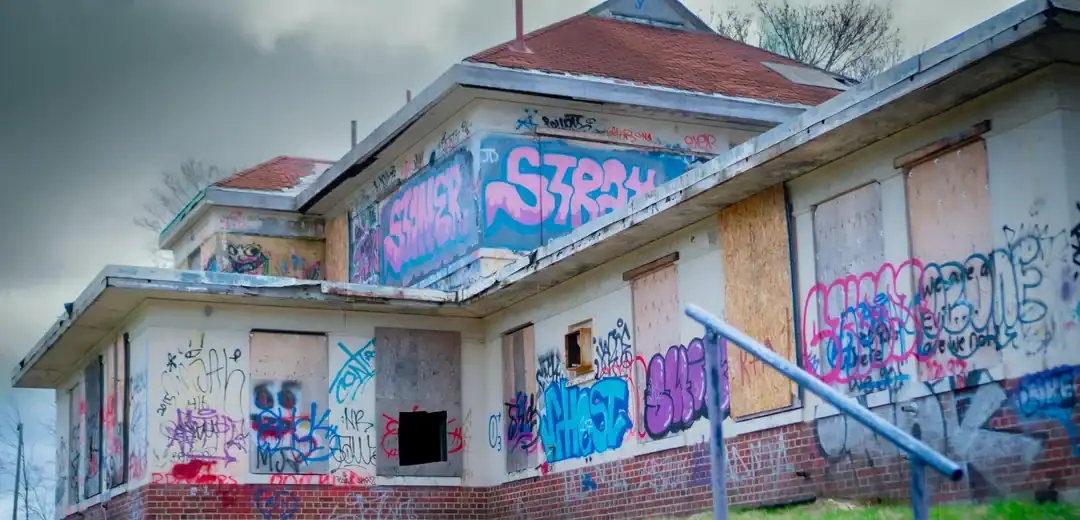
The property has become dangerously run down in the years since and is a frequent target of vandalism and late-night illegal adventures by area youth. “Despite best efforts, the building and property continue to be vandalized and damaged by individuals,” staff noted in a report earlier this year.
It also suffered a partial roof collapse in May, requiring the municipality to provide extra fencing and increased security to prevent future calamities.
The municipality’s original vision was to repurpose the building and allow the space to serve another function while conserving its history. Clarington has also negotiated an agreement with the former landowners, Kaitlin Corporation and Fandor Homes, which included the transfer of ownership of the Cafeteria Building and the transfer of some of the remaining heritage buildings and large portions of the property that have been identified as environmentally sensitive.
The Jury Lands area covers some 48 hectares of land from Concession Street East to the south, Lambs Road to the east, the Canadian Pacific Railway to the north, and the existing residential development to the west. The lands will see some low and medium density residential development and as many as 1,200 homes built, with limited commercial opportunities based on location and proximity to Lambs Road, which is a local corridor.
The former Camp 30 campus area within the ring road will be designated as a future municipal-wide park and the hope is the buildings themselves will eventually be refurbished, allowing residents to “walk in the footsteps of history.”
The cost of preservation appears to be working against that dream, however, especially as restoration work would not be eligible for Development Charges funding as cultural heritage buildings don’t meet the criteria.
The foundation believes Community Benefits Charges – a provincial funding tool collected from new development to support community infrastructure that has been used to transform heritage spaces into childcare centres, cultural facilities, and vibrant public hubs – could be used to fund the work.
But a staff report released in June said the project wouldn’t be eligible as the fund may only be used for growth related capital investments. “At this time there are no plans for use of the building which would tie its restoration to growth needs,” staff declared.
Reserve funds would instead be used to finance the restoration, should council agree to proceed.
Campbell said council must take some action soon to preserve the historic structure. “There’s a lot of risk involved. Teens are still finding their way in. It’s dangerous.”
Rallying the community to what’s at stake is important, she added. “We need to raise money. The more awareness the better.”
The petition from the Jury Lands Foundation is now live at https://www.change.org/savecamp30 and will be presented to Clarington Council ahead of the upcoming vote on October 20.
For more information, visit jurylandsfoundation.com
PollView All
WIN A $100 GIFT CARD
Subscribe to INsauga’s daily email newsletter for a chance to win a $100 Amazon gift card.