
A rising tide floats all boats, as the saying goes, and leaders in Durham Region are just as happy with the decision from Queen’s Park to “explore” building a large-scale nuclear power plant at the ‘ghost’ village of Wesleyville as those in the host community of neighbouring Port Hope.
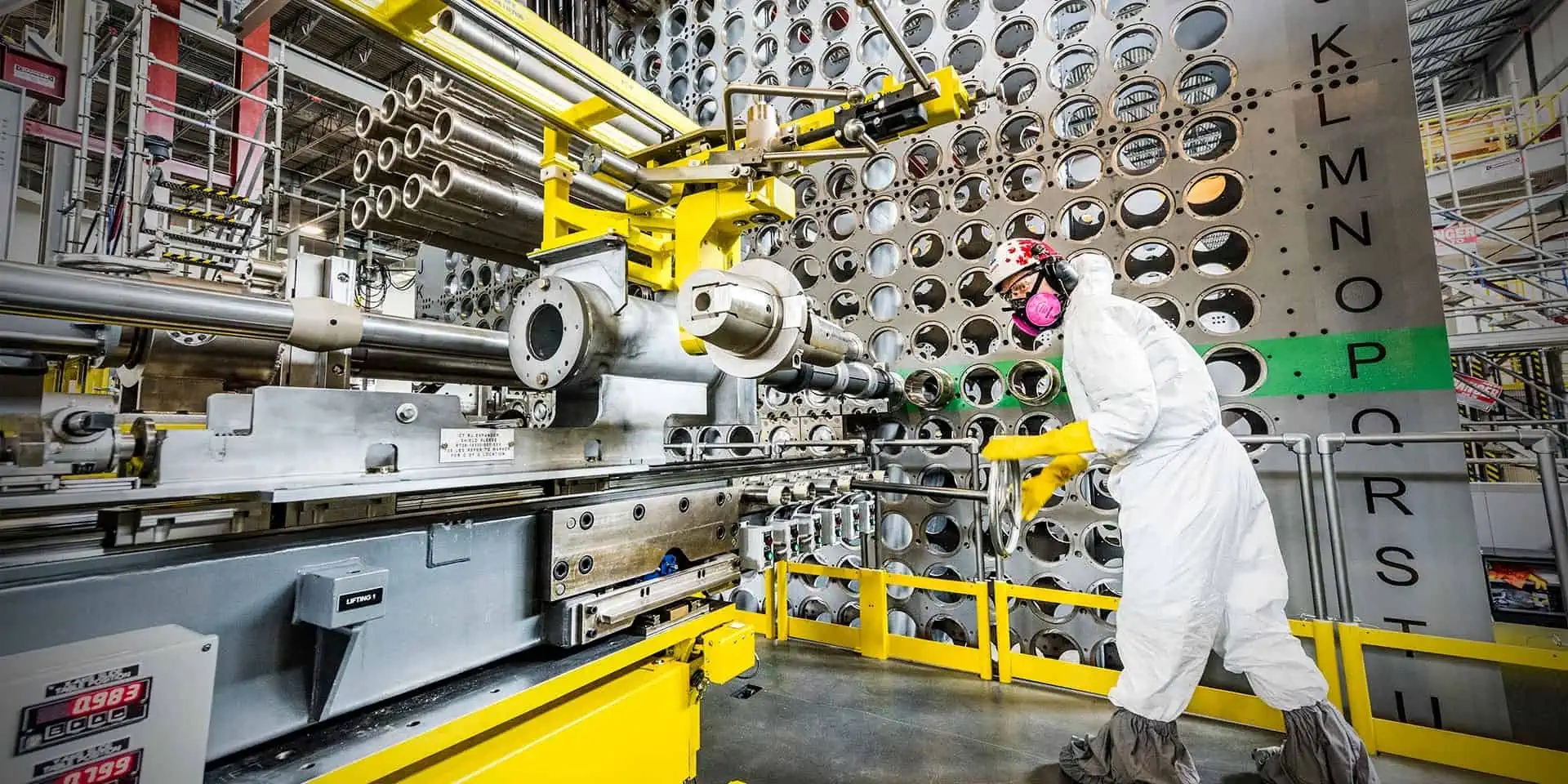
The Ontario government has asked Ontario Power Generation (OPG) to begin their due diligence for the construction of a new nuclear power station at the Wesleyville site, which is maintained by OPG, located near all the right infrastructure and is already zoned for new electricity generation.
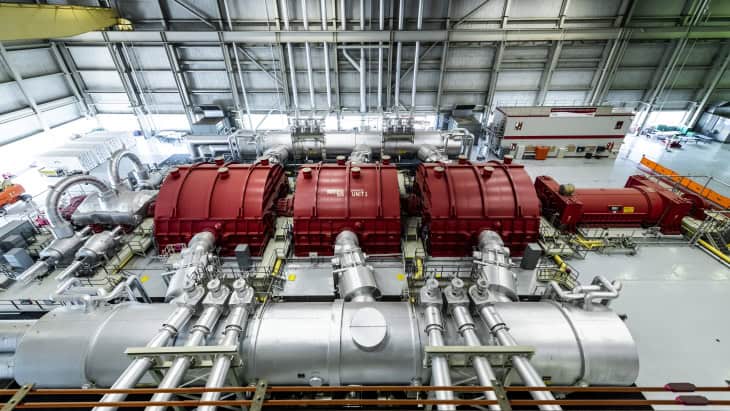
In fact, the site could host up to 10,000 megawatts (MW) of nuclear power, enough to light up the equivalent of 10 million homes. If the site is built to capacity it would instantly be Canada’s largest and one of the biggest in the world.
The Darlington Nuclear plant is just west of Bowmanville and a short drive from Wesleyville so Clarington Mayor Adrian Foster, who said he was “thrilled” to hear last month that Wesleyville was ripe for a rebirth, knows there will be supply chain jobs aplenty for his constituents if the project gets the green light.
“On behalf of nuclear communities across Canada, I applaud Port Hope, the Ontario government and OPG for exploring new nuclear generation opportunities in Wesleyville,” said Foster, who also chairs the Canadian Association of Nuclear Host Communities. “Engaging the community at the outset is the kind of collaboration that builds proud and enthusiastic nuclear host communities. We’ve got a huge task ahead of us to meet Ontario’s growing electricity needs, but there are incredible opportunities that come with it.”
John Henry, the Chair of Durham Region (“the Clean Energy Capital of Canada”) was also fully on board with the province’s decision.
“We know that electrification is the future; that large amounts of electricity will be needed to power this transition, new technologies and growing energy demands,” Henry said. “It’s great to see the province investing in new nuclear projects that will power Ontario’s economy for generations to come.”
The locals are pretty darn chuffed too. David Piccini, the Port Hope-based MPP for Northumberland-Peterborough South (whose riding takes in a chunk of Clarington’s east side), called it a “game-changing” project” that will deliver “energy affordability, energy security, and job growth” for the community.
“We are investing and building not only for our children but our grandchildren as well,” he said. “Ontario needs more affordable and reliable energy to meet soaring demand, and I am excited to work with our municipal and Indigenous leaders to explore how we meet that challenge.”
Port Hope Mayor Olena Hankivsky was also pleased, calling it an “important opportunity” to look at clean energy solutions to meet the “growing energy demands” of the province.
“We look forward to engagement with our community and partners to carefully evaluate the potential benefits of this initiative, including infrastructure improvements, job creation, and enhanced municipal revenues.”
The project needed the blessing of both Port Hope and the Williams Treaties First Nations to get off the ground and both parties have offered “expressions of interest” in the proposal.
Port Hope Council unanimously passed a motion last month endorsing continued engagement with OPG and the Ministry of Energy on a nuclear build at Wesleyville.
The Ontario government will also provide the municipality with $1 million for planning, infrastructure and consultant requirements and, as part of a milestone-based process toward the development of a Host Municipal Agreement, Port Hope could also access up to $30 million of funding for associated infrastructure investments and to attract co-located industries.
Williams Treaty First Nations will be awarded capacity funding and an opportunity for equity participation in the project.
OPG will work with the local partners to determine support as the province seeks to expand generation to meet the rising demand for electricity.
OPG has been busy of late preparing for a large-scale nuclear build at the Bruce plant and four small modular reactors at Darlington, as well as the refurbishment of both Darlington (nearly complete) and Pickering (in preparation phase).
Now the province is looking to add a total of three electricity plants on sites owned by OPG and already zoned for electricity generation – Nanticoke in Haldimand County and Lambton in St. Clair are the others – to meet skyrocketing energy demands that are forecasted to jump 75 per cent by 2050.
Bringing life to the site in Wesleyville will naturally be an economic driver for the area but it will also take care of some unfinished business for OPG and its predecessor, Ontario Hydro, which began building the oil-fired Wesleyville Generating Station in the late 70s before the 1979 oil shock and subsequent recession brought construction to an end.
For 45-plus years, the site has sat forlorn and forgotten, with its smokestack serving as a reminder for what could have been.
OPG has looked after the property since, making sure it would be ready for an energy emergency. With electrical demand over the next quarter century a political hot issue, that emergency is now and Wesleyville is back in the spotlight.
The provincial utility will still proceed with caution, however.
“As we move ahead with site exploration, OPG will strive to listen to the priorities, concerns, and hopes of all stakeholders and rights holders involved,” OPG CEO Nicolle Butcher said. “And we will only advance development with their express support.”
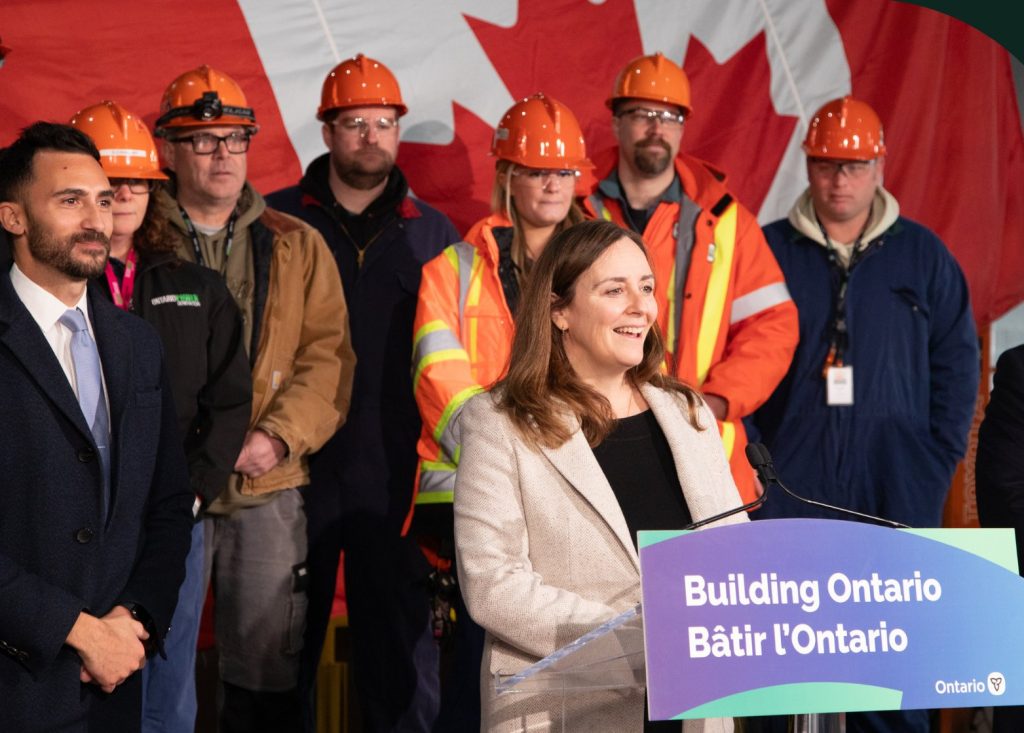
OPG CEO Nicolle Butcher, Energy Minster Stephen Lecee and OPG workers at the nuclear announcement at Wesleyville
The province is raring to go, said Energy and Electrification Minister Stephen Lecce, who said the early engagement and development work will ensure the government has “options” to meet the growing energy needs of the province.
“I’m excited to be continuing these conversations with Indigenous and municipal leaders to explore options for new nuclear generation at the Wesleyville site, including new good-paying jobs and other associated benefits.”
According to the Conference Board of Canada, a potential nuclear development in Port Hope would contribute $235 billion to Ontario’s GDP over an estimated 95-year project life, which includes design, construction, operation, and maintenance. It would also support 10,500 jobs across Ontario, including 1,700 new good-paying jobs in Port Hope, representing an average 15 to 20 per cent boost to overall employment levels in the local area.
The potential nuclear build would also provide Port Hope with an estimated $10.5 million in municipal property taxes, a huge boost in these times of restraint and belt-tightening.
Canadians for Nuclear Energy President Dr. Chris Keefer wanted to expedite the build-out process by adding the nuclear capacity to Darlington (which already produces 20 per cent of Ontario’s energy needs) instead of Wesleyville, but likes the idea of a large-scale nuclear power plant, because that means homegrown CANDU technology.
“Ontario should be building full-scale nuclear plants using made-in-Canada CANDU know-how anyway instead of pushing the American technology being used in the small modular reactor project underway at Darlington,” he told INdurham recently.
“We’re building US-designed nuclear while Trump is threatening a trade war,” he noted. “We need to be leaning into our competitive advantage.”
Full-scale nuclear reactors also offer a better bang for the taxpayer buck and the economic impact of the nuclear build will go well beyond Port Hope and Clarington, he added. “There’s going to be more work for the supply chain all across Ontario.”
There is no price tag yet for the project and if all goes well the province is hoping to begin construction in the early to mid 2030s for operation in the mid 2040s.
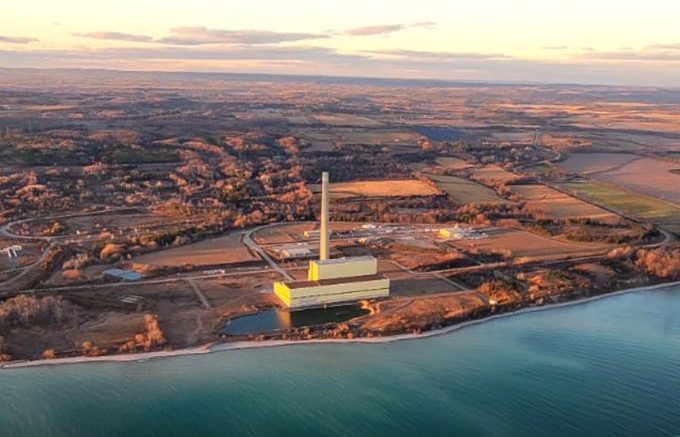
Wesleyville Generating Station
INsauga's Editorial Standards and Policies
PollView All
WIN A $100 GIFT CARD
Subscribe to INsauga’s daily email newsletter for a chance to win a $100 Amazon gift card.