
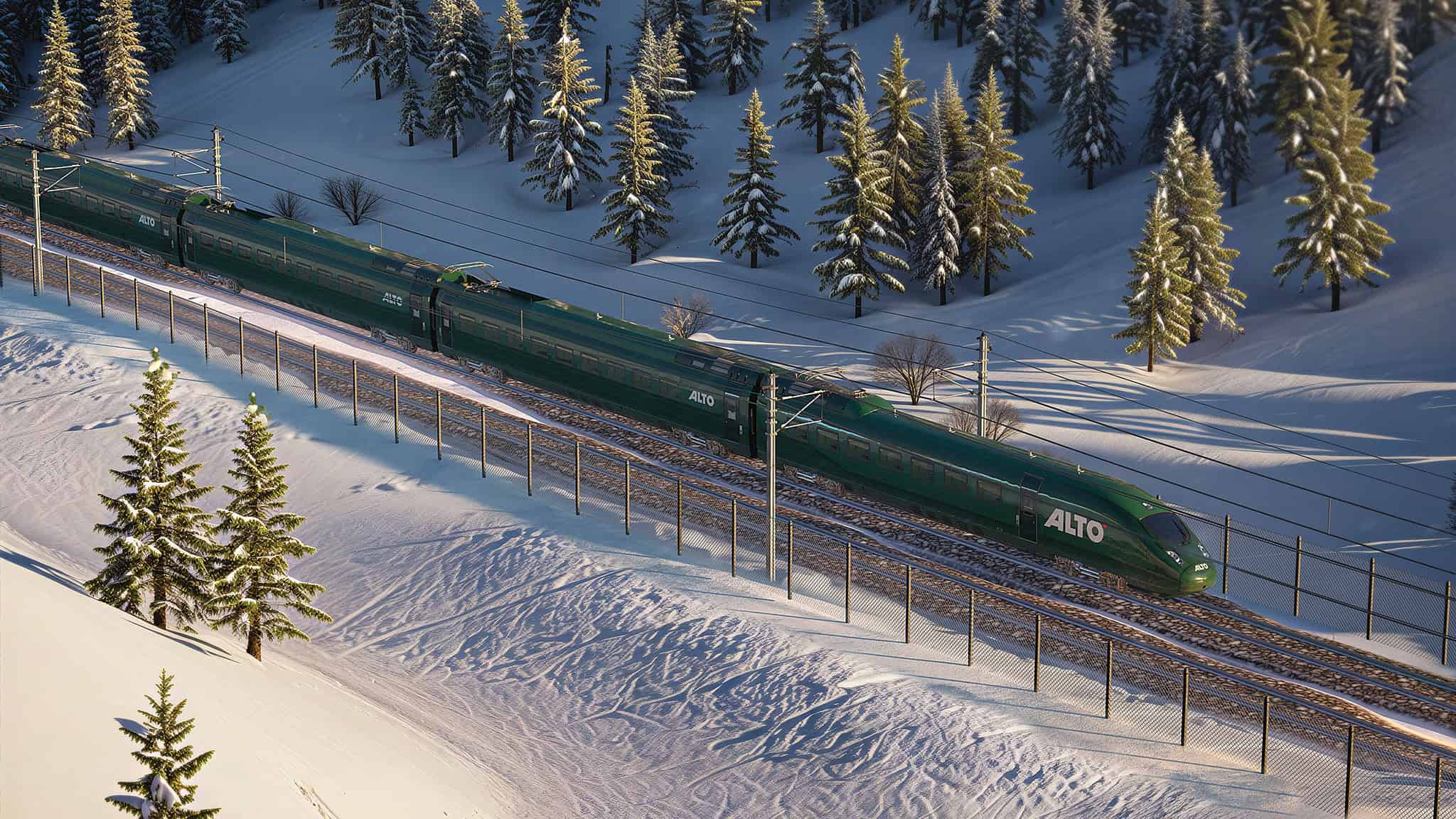
Toronto residents came out to learn more about Canada’s first high-speed rail service this week—many people wanted to know if it will start from Union Station.
Alto, the crown corporation tasked with building the country’s first high-speed rail line between Quebec City and Toronto, is now hosting information sessions and seeking feedback on the project.
Almost half of Canadians currently live along the Toronto-Quebec City corridor, and Alto predicts the high-speed rail line will attract up to 24 million passengers every year by 2055.
Alto was at St. Lawrence Market in Toronto on Feb. 4 and 5, part of 26 open houses and up to 10 virtual sessions planned for feedback on the project.
Nearly 200 people attended the first afternoon session in Toronto, and overall, the sessions have been well attended, Peter Paz, Alto’s senior director for public and government relations in Ontario, told INsauga.com.
“We have seen an incredible response from the public in terms of providing feedback, sharing opportunities, concerns, risks, and it has been incredibly beneficial for us to get this feedback,” said Paz.
Paz said many people are excited about the project, but some are skeptical about the costs— the federal government has committed $3.9 billion to the project—and the location of the line.
Toronto residents had mixed feedback about where the high-speed rail should start. Some suggested Union Station is the best choice, but others questioned the feasibility of starting the line at the busiest train station in Canada.
“Union is our preferred location, 300,000 people go through Union Station every day,” Paz said. “But we know there are challenges, there are constructability challenges, congestion challenges — so if not Union, as close to Union as possible is what we are striving for.”
The location of the new rail line is also raising some concerns. Right now, the study corridor between Québec City and Toronto is about 10 kilometres wide on average, Paz said. The width allows Alto to explore various options. It is too early to present precise route options, as field studies and detailed engineering work have not yet been completed.
Paz said they want to hear the public’s input on environmental areas, floodplains and landmarks they need to avoid.
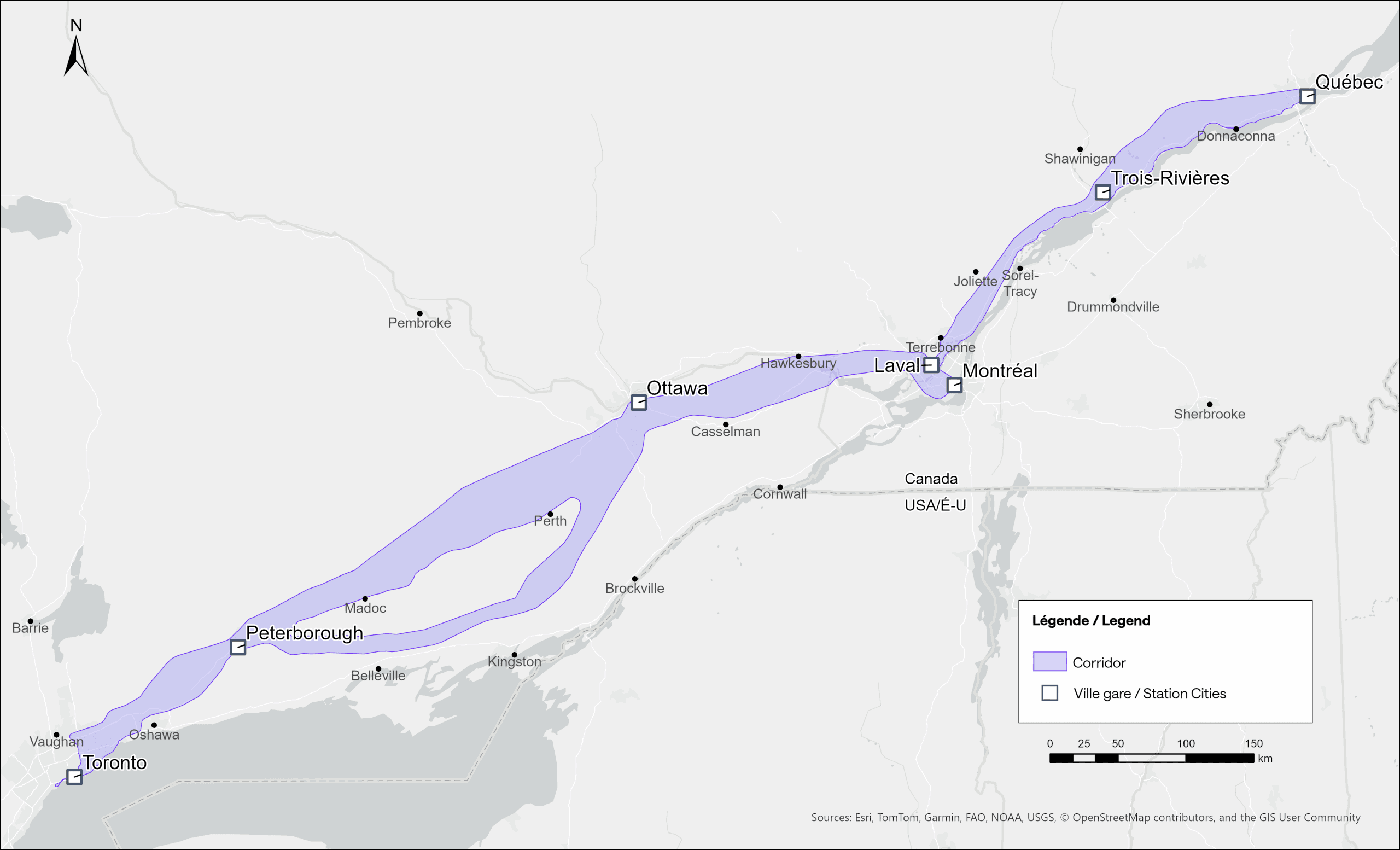
A study corridor map shows possible locations for the rail between Québec City and Toronto. Map: Alto
Once they get feedback and complete studies, the rail path corridor will be narrowed.
Unlike traditional railways such as VIA Rail or GO train lines, high-speed trains must run on a straight line.
“We are looking at up to 315 kilometres an hour at its peak, so straight lines are really important,” Paz added.
High-speed rail needs to be completely fenced, and road crossings must be raised for safety.
Feedback gathered during the public consultation will help shape the rail network’s alignment, which will be defined later in 2026. A second round of consultation will then be held to review and refine the proposed alignment.
It will be many years before the train line is operational.
Construction on the first segment of the line, Ottawa to Montreal, is projected to start in 2029 or 2030. There will be a staggered construction approach, so construction on other portions could start before the first segment is complete, Paz said. The final completion date is not yet known.
There are more opportunities to attend information sessions. Sessions are planned in Scarborough on Feb. 10, Markham on Feb. 11, Pickering on Feb. 12, and Peterborough on Feb. 26. More sessions are happening in March in Ontario, and there are virtual information sessions planned this month and next. People can also learn more and comment online.
INsauga's Editorial Standards and PoliciesPollView All
WIN A $100 GIFT CARD
Subscribe to INsauga’s daily email newsletter for a chance to win a $100 Amazon gift card.