
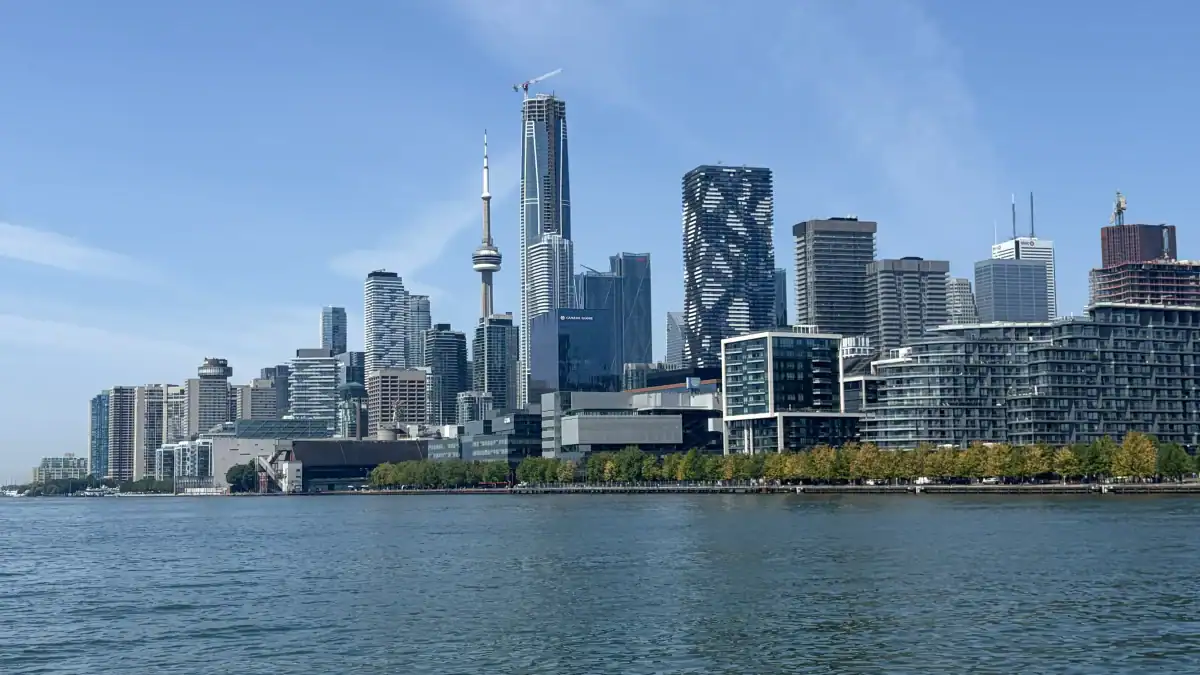
A long-neglected waterfront area that was flood-prone and contaminated has, after years of backbreaking work that involved moving a river, become a top-tier recreational destination that offers visitors unparalleled views of Lake Ontario and one of Toronto’s most memorable playgrounds.
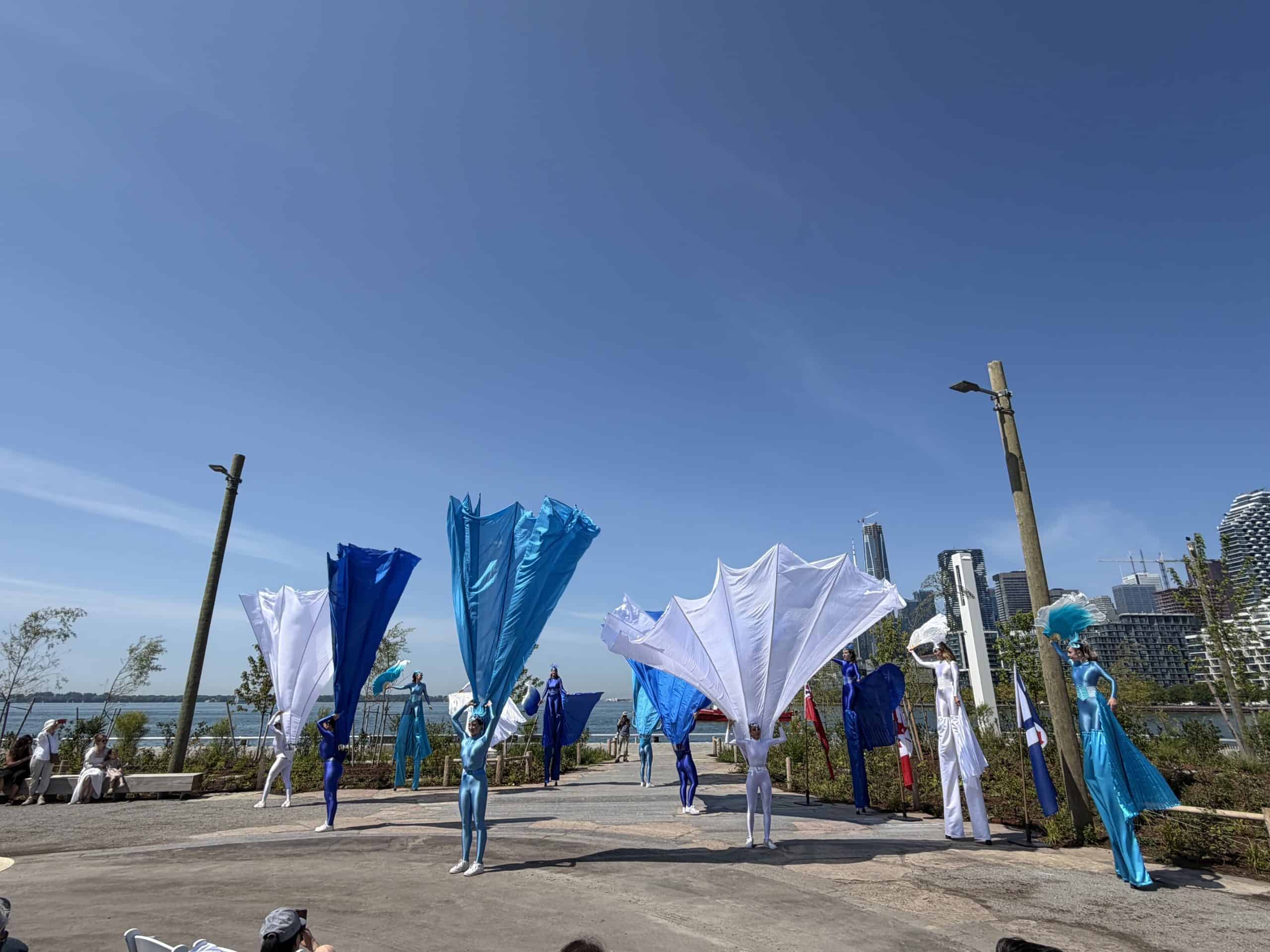
Today, representatives of all levels of government and Waterfront Toronto, an organization that works with government and other stakeholders to revitalize the lakefront, marked the official unveiling of the western portion of Biidaasige Park.
The park is part of a significant $1.4 billion infrastructure project spearheaded by Waterfront Toronto and just one feature on a new island that will, over time, boast over 9,000 housing units (including affordable rentals) and thousands of residents.
On July 25, an additional 10 acres of parkland will officially open on Ookwemin Minising, the new man-made island in the Port Lands.
Located where the Don River meets the lake, the new island was created by ongoing flood-protection and river-restoration projects in the area. Once complete, the 98-acre island will boast 50 acres of parks and 80 acres of parks and green space (including the river).
The first portion of the park, which features a massive owl, two ziplines, a raccoon climbing structure, a Badlands-style playground (complete with multiple water features) and brand-new hiking and biking trails, opened to major fanfare in 2025.
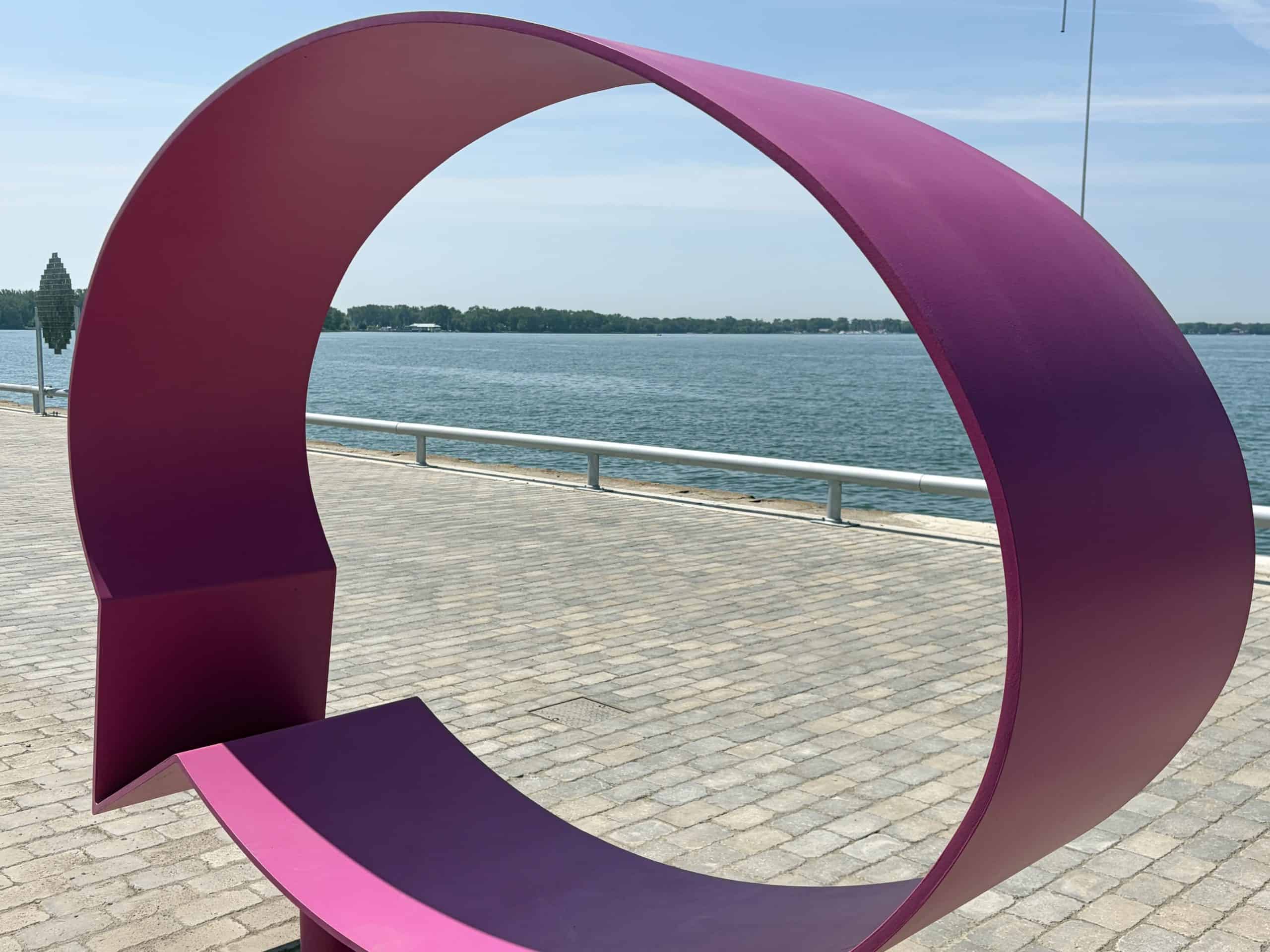
The park, located in the Cherry Street and Commissioners Street area, is also home to the Lassonde Art Trail, a one-of-a-kind public art destination that partially opened earlier this year. The trail spans over four kilometres and will welcome renowned Canadian artist Kent Monkman’s first permanent public sculpture in September.
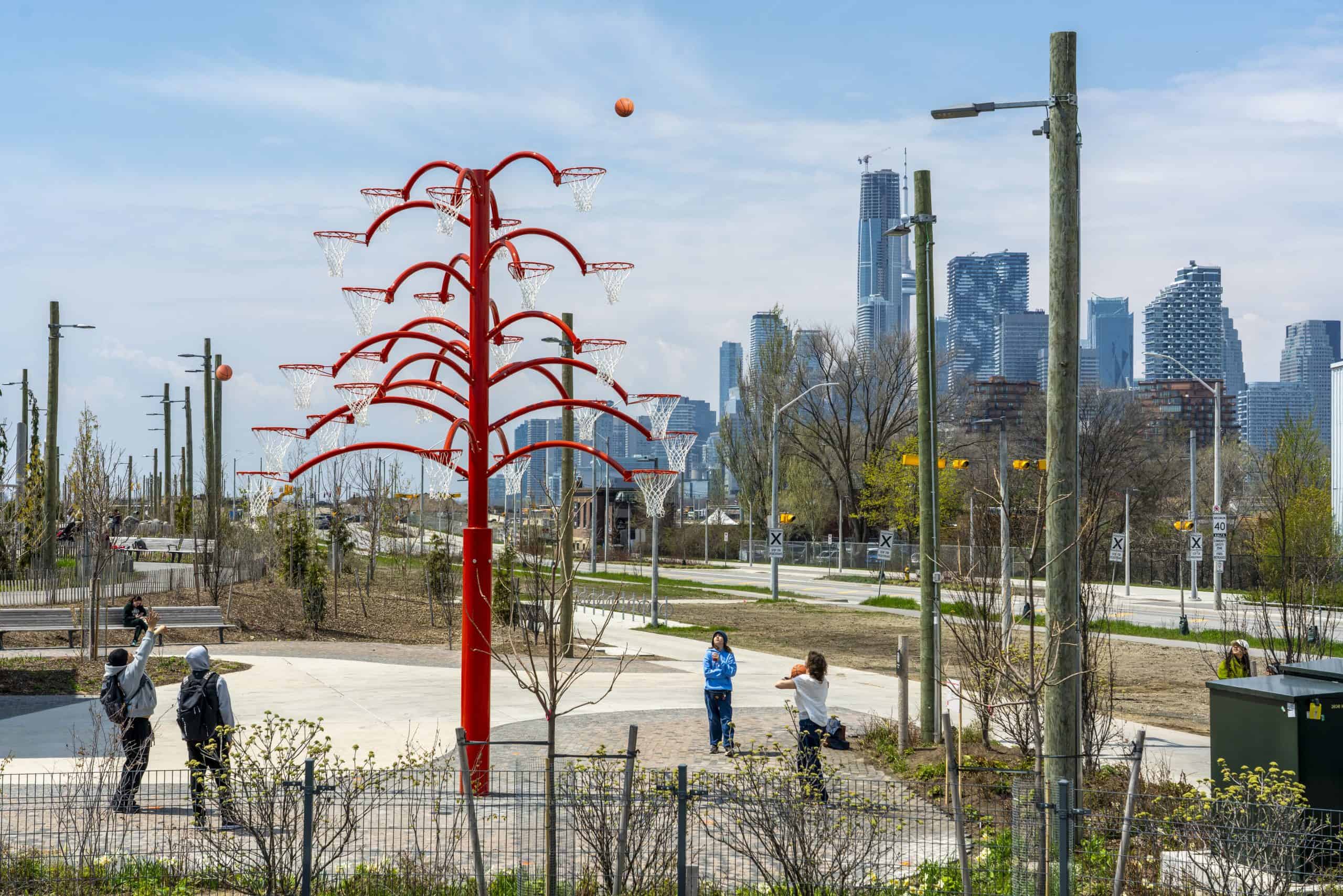
Orange Functional. Photo by Vid Ingelevics and Ryan Walker. Courtesy Lassonde Art Trail.
The trail currently features 15 installations from national and international artists.
Now, the western section of Biidaasige Park has joined the eastern part and with it comes a canoe cove, an event space, an extended water’s edge promenade, a promontory and a 115-metre-fall industrial crane.
The park also features a number of Indigenous design features, including a fire holder feature and teaching signifier sturgeon stones, both designed by Solomon King and Brook McIllroy. Visitors can also find directional compasses/marker trees and interpretive signage that celebrate the area’s Indigenous past and present.
“This is one of the best Instagram moments for the city right now,” Chris Glaisek, chief planning and design officer at Waterfront Toronto, told reporters during a tour of the western portion of Biidaasige Park last week.
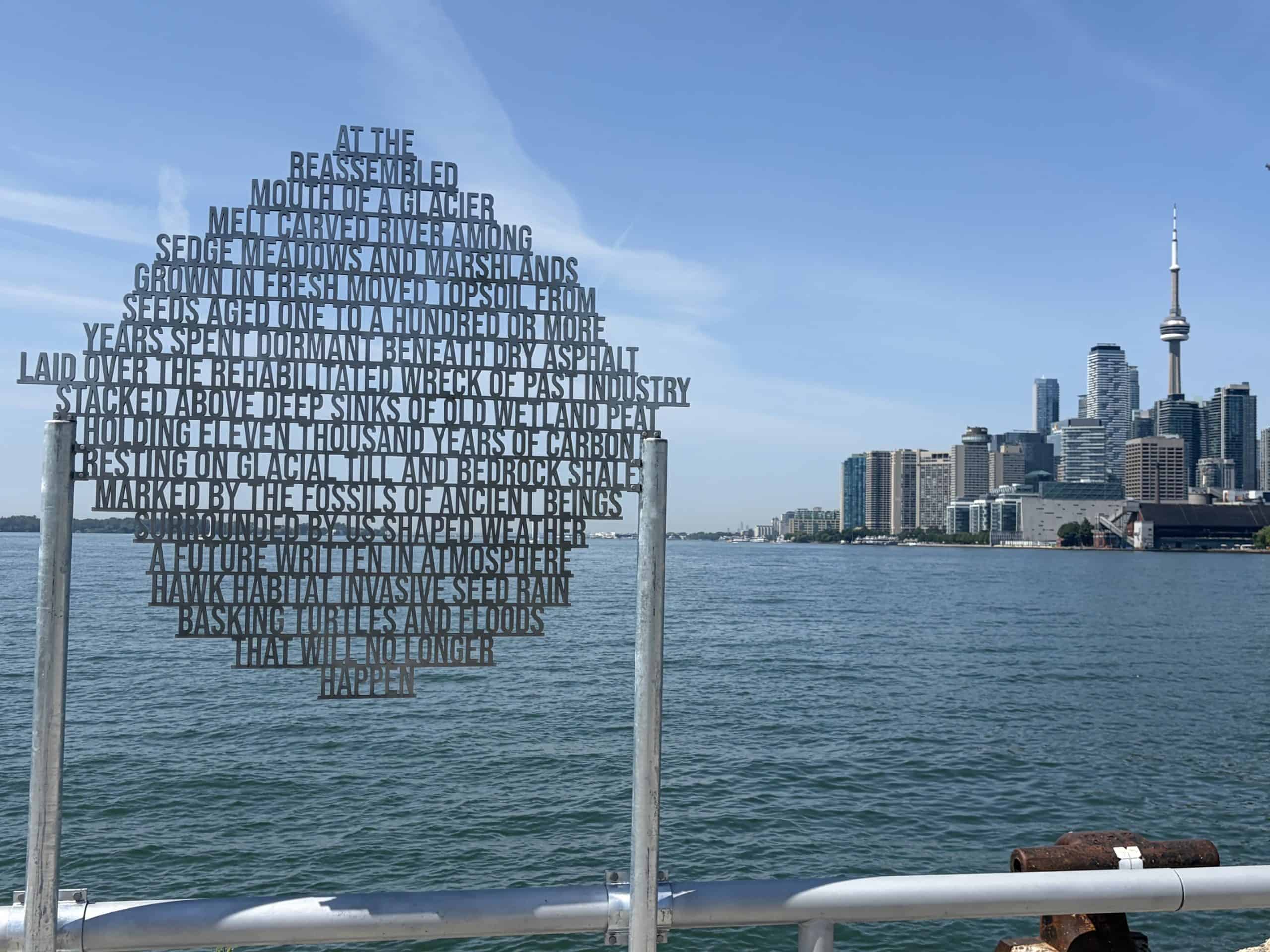
During the tour, Glaisek, his team, and reporters stood on the water’s-edge promenade, a 250-metre paved walkway that overlooks Lake Ontario, offering visitors strolling along the Don River a chance to stop and take in both the vast Great Lake and the skyscraper-laden Toronto skyline.
“It’s an incredible place to see the skyline and see so much of how the waterfront has developed, particularly in the last 20 years.”
The new portion of the park offers more public access to both Lake Ontario and a new one-kilometre stretch of the Don River. Expansive and unique, it’s quickly become a recreational hub in the east end that’s ideal for everything from hiking and cycling to picnicking and gathering.
While the spacious (and creative) playground has been drawing visitors since last July, the new portion of the park offers more access to water with the unveiling of Canoe Cove, which allows people to launch non-motorized watercraft such as canoes and kayaks.
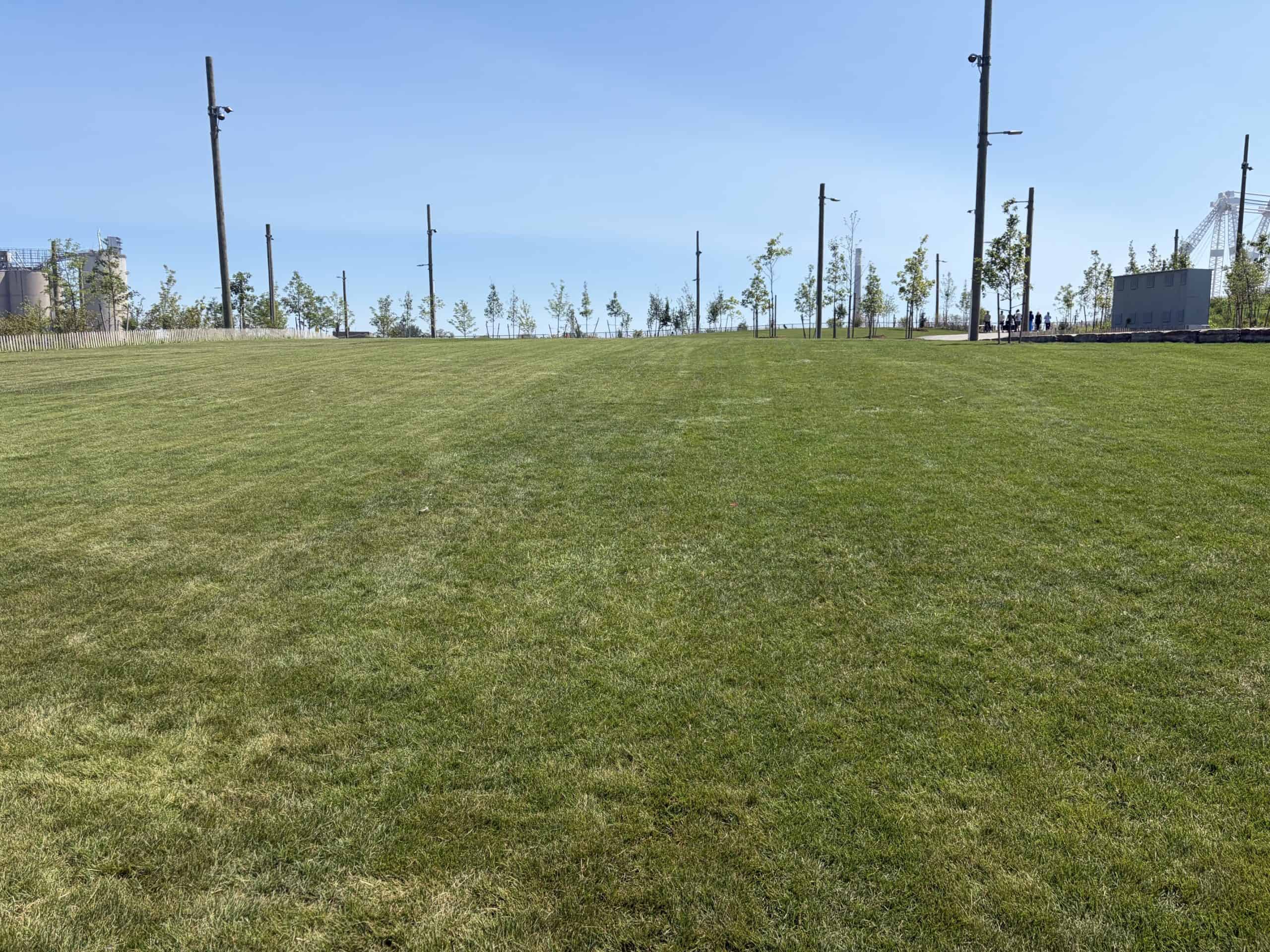
Event lawn
Another standout addition is the event lawn, which can accommodate up to 3,000 people and will likely be the site of summertime movie nights in the future.
“Right now, we’re standing on the event lawn, which is a space for about 3,000 people to gather, and it was really designed with the backdrop of the skyline in mind,” Shannon Baker, director of design with Waterfront Toronto, tells INsauga.com.
Everything involved in the design, Baker says, was intentional.
“The topography that we’ve created here uses a lot of the soils that we excavated from the river valley to build up this space.”
Baker says the space also lends itself well to the inclusion of public art.
“A lot of the artworks reference all of this incredible rejuvenation of nature,” November Paynter, artistic director and chief curator with the Lassonde Art Trail, tells INsauga.com, adding that free tours of the LAT are available on weekends and will be taking place both Saturday, July 25 and Sunday, July 26.
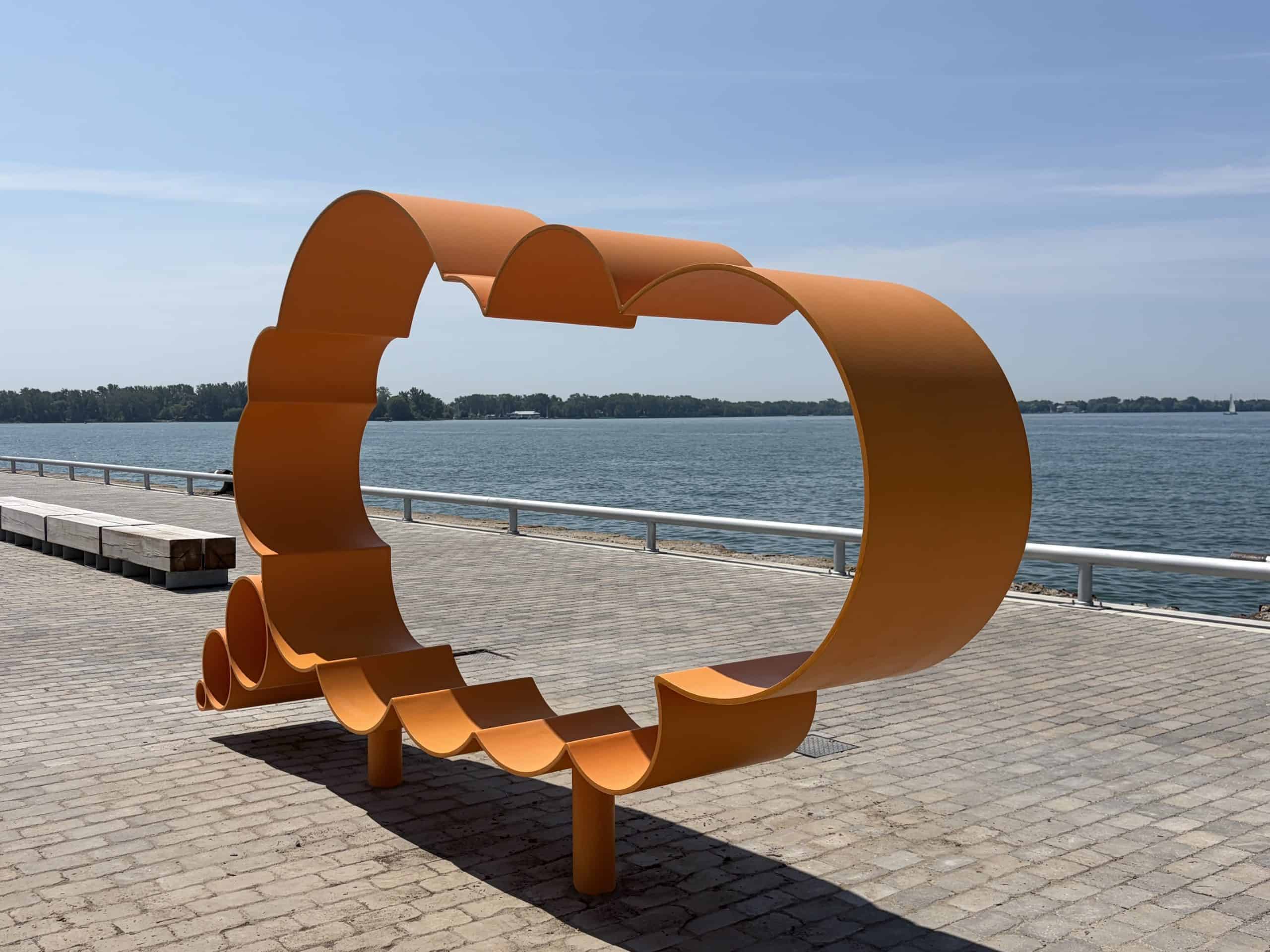
“The art tours will talk about, obviously, the artworks, but also in reference to things like the fish that will move back to the river.”
Renaturing the area–and attracting wildlife–has been one major goal of the ambitious revitalization project. A city document said that the Toronto and Region Conservation Authority has documented over 20 fish species in the lower Don River and, for the first time since 2012, an Atlantic salmon was found in the area, along with the first-ever emerald bowfin. The great blue heron and razorbill have also returned to the area, according to Waterfront Toronto.
The organization said that across the site, more than one million plants and approximately 5,000 trees have been introduced to support wetlands, fish habitats, native planting areas and naturalized shorelines.
During last week’s tour, Glaisek and other representatives from the City of Toronto and Waterfront Toronto emphasized that more is coming, with a northern portion of Biidaasige Park set for completion in 2029. As of now, the entrance to the new western portion of the park is marked by temporary, high-tech self-cleaning washrooms near a generously sized pavilion with picnic tables.
When asked at the time about a restaurant planned for the park, Glaisek said that it’s in the works and expected to take shape in the future.
The park will, city and Waterfront Toronto representatives said, continue to grow over the next several years. A city document indicates that in 2029, the northern portion of Biidaasige Park will evolve to include space for events, festivals and seasonal activities.
In 2030 and beyond, workers will extend the water’s edge promenade along the Keating Channel and the Ship Channel.
Waterfront Toronto says the latest 10-acre expansion adds parkland almost the size of the Rogers Centre building, and five times the size of Toronto’s Sugar Beach, into the already sizeable park.
Now, the park totals about 60 acres, with five more acres expected to be added in the coming years.
Once complete, the park is expected to be more than twice the size of Chicago’s Millennium Park.
PollView All
WIN A $100 GIFT CARD
Subscribe to INsauga’s daily email newsletter for a chance to win a $100 Amazon gift card.