
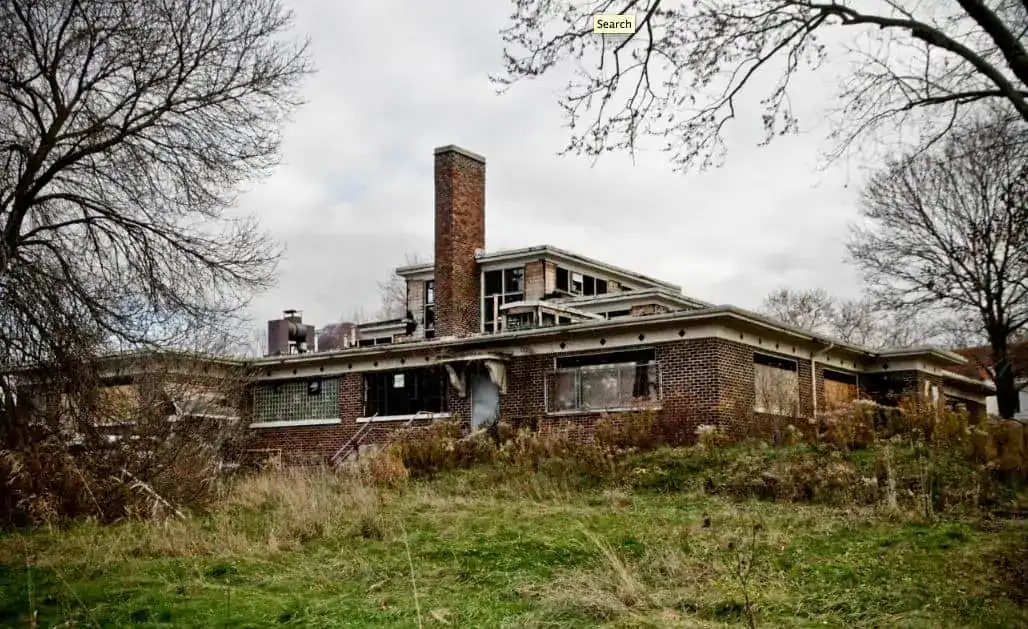
A community group dedicated to saving the Camp 30 Cafeteria Building – the best preserved of what’s left of a WW II prisoner of war camp in Bowmanville – said a fundraising campaign to raise $4.5 million to “stabilize and secure” the crumbling structure is about two-thirds complete.
After nearly six hours of debate on Monday Clarington’s Planning and Development Committee agreed to get a second structural assessment of the Cafeteria Building, giving the Jury Lands Foundation time to have the funding in place.
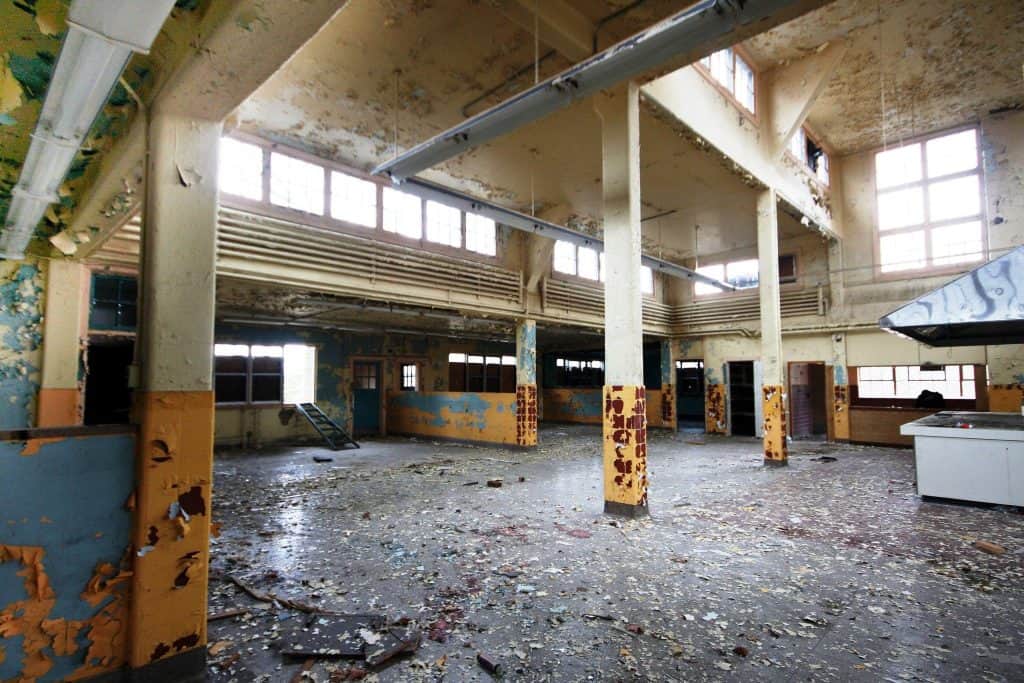
They also have architects lined up who believe the crumbling structure – ravaged by time and vandals over the years – can be safely restored and eventually turned into something the entire community can enjoy.
“We have an opportunity here to stabilize and secure the building … allowing us to meet the expectations of the government of Canada, the community and of council,” said foundation president Marilyn Morawetz
Committee heard an interview with Chris Borgal, an architect with 30 years experiencing restoring historic buildings, many far more “hopeless” than the Cafeteria Building.
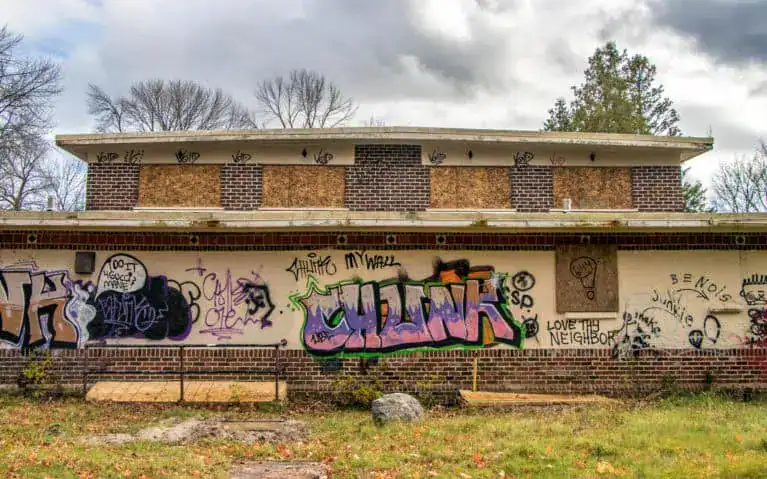
“Most people, they see the graffiti and think it has to be taken down. That’s not in my world view,” said Borgal, a Senior Principal with Goldsmith Borgal & Company.
“Taking it out and putting up a sign is the easy way … but that’s not preserving history. If you can be in it and touch it and breath it and see it and if it can be reconstructed, why wouldn’t you do it?”
The Jury Lands Foundation, establish to preserve an important of Bowmanville and Canada’s history, want the Cafeteria Building – part of a National Historic Site – restored to a hard-shell pavilion with the long-term goal of full preservation as funds become available.
The problem, as is usually the case, is cost. Estimates soared as high as $22 million for complete restoration of the Cafeteria Building, prompting Clarington to hire Stantec Consultants to prepare a Heritage Impact Assessment. The report, released in the spring, offered four options, ranging from partial retention with active adaptive reuse at $7.7 million to complete demolition at nearly $1.44 million.
Committee agreed on Monday to give the foundation an extension to proceed with a professional structural assessment of the building.
“Tonight, Clarington Council voted to give the Jury Lands Foundation more time – approving a motion that allows us to proceed with a professional structural assessment of the Camp 30 Cafeteria Building,” said an optimistic Morawetz. “This means the building’s future isn’t over.”
“It’s just beginning.”
The foundation received some other good news a few days the meeting when the federal government agreed to contribute up to $500,000 toward the Jury Lands Centennial Revitalization Project, an initiative to preserve, stabilize, and revitalize the historic Camp 30 site.
The funding, from the Building Communities through Arts and Heritage Legacy Fund, will help fund structural stabilization of the cafeteria building as well as the creation of a commemorative mural and healing garden, the installation of six bilingual historic panels, grounds work to make the site safe for public programming and events and community engagement activities including volunteer participation, artist involvement, guided tours, and an unveiling event.
Council, meanwhile, is also dealing with a proposition made by the owner of the lands surrounding the Camp 30 site, who made Clarington a tempting offer that the municipality may not be in position to accept.
Kaitlin Corporation, which owns five heritage buildings that were once part of a POW camp for high-ranking German officers, has offered to transfer them to the municipality – including the Triple Dormitory block and the lands within the Ring Road – in exchange for lands that were to be dedicated for parkland.
Mayor Adrian Foster said council is looking at “every option” to try and save the building but still has concerns with the ultimate cost.
“Council really would like to save the building and preserve our heritage (but) I worry that the cost will be prohibitive, even to simply stabilize the structure,” he said. “There may be difficult decisions ahead of us yet.”
The Jury Lands area covers some 48 hectares of land from Concession Street East to the south, Lambs Road to the east, the Canadian Pacific Railway to the north, and the existing residential development to the west. The lands will see some low and medium density residential development and as many as 1,200 homes built, with limited commercial opportunities based on location and proximity to Lambs Road, which is a local corridor.
The former Camp 30 campus area within the ring road would be designated as a future municipal-wide park and the hope is the buildings themselves will eventually be refurbished, allowing residents to “walk in the footsteps of history.”
Morawetz remains hopeful.
“We want to sincerely thank council for recognizing the importance of this heritage site and giving us the opportunity to demonstrate that Camp 30 can – and must – be saved,” she said. “To everyone who signed the petition, shared posts, attended tonight’s meeting, or spoke up in support – thank you. Your voices truly made a difference.”
“The Jury Lands Foundation will now move forward with the necessary work to show that this remarkable site – a place that tells Canada’s WWII story of integrity, humanity, and resilience – can stand strong once again. Together, we are making history by protecting it.”
PollView All
WIN A $100 GIFT CARD
Subscribe to INsauga’s daily email newsletter for a chance to win a $100 Amazon gift card.