
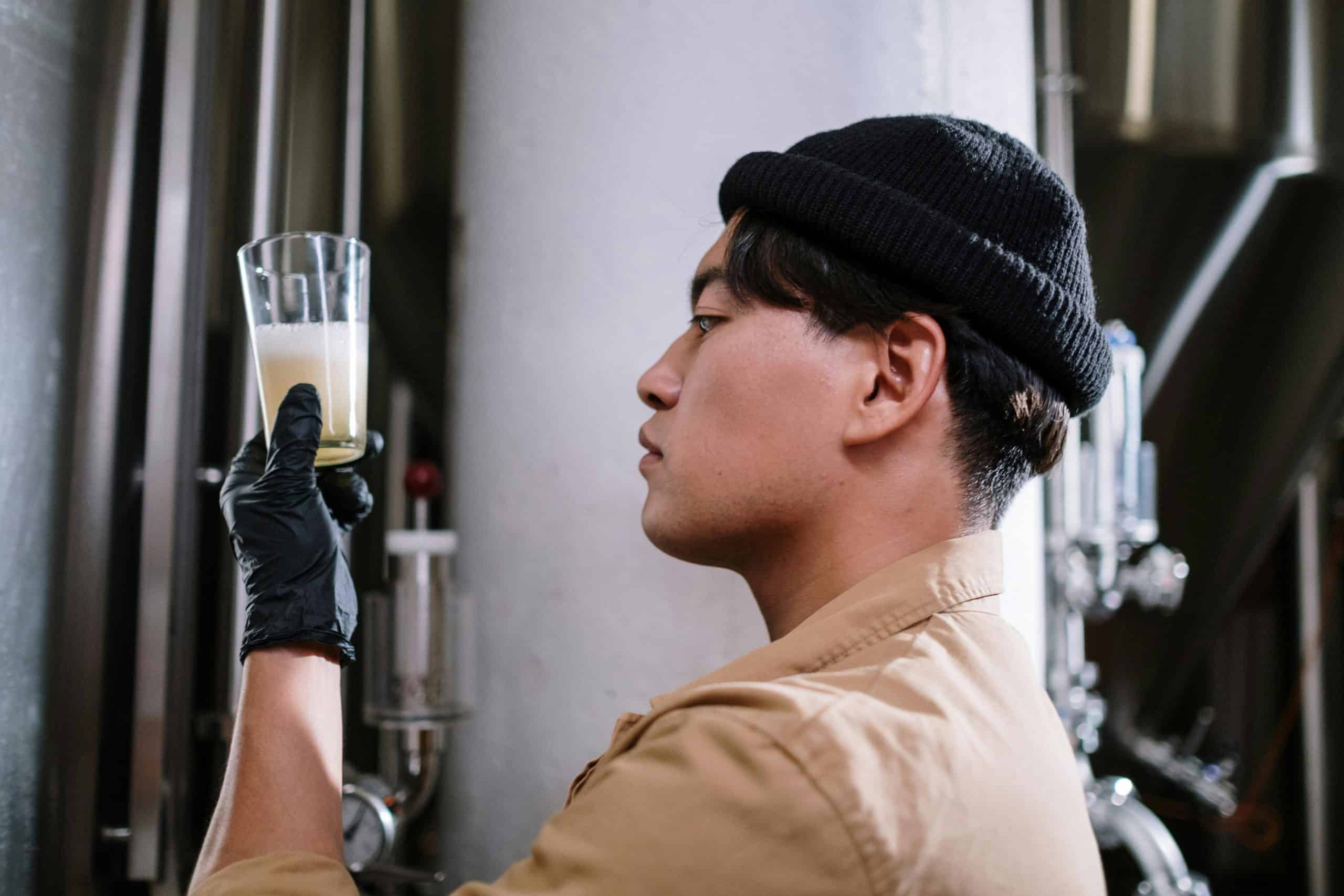
As brewery culture has hit its peak in the GTA, what was once a reliable venture now faces staggering operational concerns.
In brief, an average GTA brewery operates as a craft-beer manufacturing facility, often hosting a taproom or an adjacent restaurant that serves as a neighbourhood haunt for patrons to sample what’s made behind the curtain.
For the better part of the last decade — after a boom in the early 2010s — breweries have been a go-to spot for date nights or hanging out with friends, supporting neighbourhood economies like nowhere else, as these locations are often tucked away in local nooks.
However, what happens when the nuances of the neighbourhood economy get eclipsed by the disaster that is the global one?
Since the booming days of the last decade, numerous brewery locations throughout the GTA have shut their doors, including Folly Brewing, Indie Alehouse, and Beaches Brewing Co. in Toronto; Brock Street Brewing Company in Whitby, The 3 Brewers in Mississauga, and George Hamilton Restaurant & Brewery in Hamilton.
With the majority of these closing taking place between 2024 and 2025, the province went as far last year to provde microbreweries with a 50 per cent tax break when selling their product to LCBOs.
Now, a cost-of-living crisis and a risky geopolitical climate have not only made the public’s disposable income incredibly tight but also affected how breweries obtain supplies, such as malt, barley, and other ingredients, all of which turn a normal beer into a craft one.
“There are still over 250 craft brewers in the province, who, for now, are thriving. However, many consumers are moving towards RTDs (ready-to-drink beverages), spirits and other more accessible options. Things have really changed for brewers, but we still have so much to choose from in our own backyard,” Jennifer Tamse, menu director at The Charcoal Group of Restaurants, told INsauaga.com.
The Charcoal Group oversees prominent suburban and smaller city heavy hitters like Socialble Kitchen and Tavern, The Moose, Martinis, and Beertown Public House. With such a wide field of play, Tamse has been overseeing where craft beer goes, as dictated by consumer taste (and, more importantly, consumer wallets).
Unsurprisingly, the current trade war with the U.S. has impacted hospitality spaces that rely on craft beer, causing a secondary boom in the local market, leading to more Ontario brands finding their way to pubs and restaurants.
Economics has also changed tastes, as an IPA or port is often a few dollars more than the average brew, leading to a focus on ales, lagers, and pilsners, which tend to be lower in price.
There is one snag in this shift, as the U.S. is the largest producer of corn in the world, and corn is a primary ingredient in many beers — especially lagers.
While Canada, and by extension Ontario, does produce a lot of corn (between 7.5 and 9.5 million metric tonnes annually), it still does not put a significant dent in the corn required to brew beer, both on a macro and micro scale, especially when traditionally buffered by imported crops from the U.S.
“Lagers, unfortunately, take up a lot of space at a brewery. So for major brewers, where that is most of their facility, they can sell it on the cheaper end. But at craft locations, they not only take up a lot of tank space, but also sit in them for a lot longer, which means they can’t be churned out as fast,” says Tamse.
As a result, owners of craft beer spaces must contend with their limitations, as there remains little in the way of cheap choices, leading to shorter, less lucrative nights out.
“What it means right now is that people just aren’t getting a second round the way they used to,” says Tamse.
While those who import craft beer are forced to contend with the ebbs and flows of who is drinking, what, where, and for how long, those on the manufacturing side are doing all they can to make sure that the industry doesn’t dry up.
Troy Burtch, the general manager at Great Lakes Brewing (GLB), is at the forefront of observing how the brewery culture in the GTA has changed over generations.
Unlike the brewery boom of the 2010s, which saw numerous locations set up shop in and around Toronto, GLB has been around since 1987, and according to Burtch, it isn’t planning to ride off into the sunset just yet.
“We’re always experimenting, we’ll maybe start something on the small side, have 2,000 cans released to the public and just sit and see how it does. Then, if we see over the year that it is getting popular, we’ll expand it into our ‘Tank 10′ series, which then fires off 40,000 cans to the LCBOs throughout the province,” Burtch told INsauga.com.
This innovation is how GLB has stayed in the game, treating its Etobicoke facility almost like a giant test kitchen, burning resources on only a few small batches to gauge the public, while dedicating materials to make larger shipments of popular beers.
Burtch is also outmaneuvering the sense of economic panic across the industry by leveraging GLB’s entrenched status as a reliable brewer to launch seasonal beers—and, despite having their own taproom, choosing to use local bars as a podium for launch events.
“What we are trying to do is bring some fun back to this industry; it doesn’t have to be this stuffy thing. Somewhere along the way, everything had to be high ABV, or use exotic fruits, and get more expensive — beer is for the people,” says Burtch.
There is one snag, however, and that is the fact that the people are changing.
Two fundamental trends are emerging in the GTA demographic: first, that they cannot spend as much as their predecessors could and second, the emergent wave of non-drinking 20-somethings.
So if beer is for the people, and the people cannot afford beer or flat-out don’t like it, what can be done to strengthen the brewing industry?
“There have been shifts in customer tastes. We have branched out with seltzers, more options in lagers and pilsners and offering more non-alcoholic options in wholesale and in our own tap room,” Brayden Jones, co-founder of Blood Brothers Brewing, told INsauga.com via email.
Jones and his brother (hence the brewery’s name) have been running Blood Brothers since 2015 and have seen how, over the last 10 years, tastes have changed.
Hosting a major facility and taproom in the rapidly growing Toronto neighbourhood of Davenport, Jones has been tweaking Blood Brothers’ programming to make it a space that celebrates the industry.
The location is known to host live music on its attached stage during the peak of Toronto’s summer season, and also runs mid-week specials to take the load off regulars, making the location more like a clubhouse and not a rare outing.
Additionally, much like Burtch’s earlier sentiments, Jones is aware that Blood Brothers has to stay in a perpetual state of adaptation.
“Our consumer traffic has been stable and still growing. Knowing what our demographic is looking for and focusing on those wants truly contributes to our success,” adds Jones.
Even with this throughline in the brewery community, knowing tastes and price points can only go so far, especially as the market continues to throw every kind of obstacle in the way of brewers trying to move their product out of their taprooms — the true bread and butter of brewery income.
“In this industry, the ground moves every day, whether it is taxation, wholesale markups, senate bills or the price of gasoline,” says Burtch. “Pricing continues to get crazy, because every input that goes into a can of beer has gone up dramatically over the last number of years.”
Staring down the barrel of this reality, Burtch notes that diversifying taprooms and working within the community is the best way breweries can avoid plummeting into the red, especially as champions of the industry, such as himself, have no intention of making the community struggle more than they already are in the bleak economic landscape of the GTA.
“You can’t raise prices on the consumer to truly match the rate of inflation. If that were the case, you’d be honestly selling a can of beer for 10 bucks. That’s not strategic, and one thing we will never do is skimp on quality in any form.”
PollView All
WIN A $100 GIFT CARD
Subscribe to INsauga’s daily email newsletter for a chance to win a $100 Amazon gift card.