
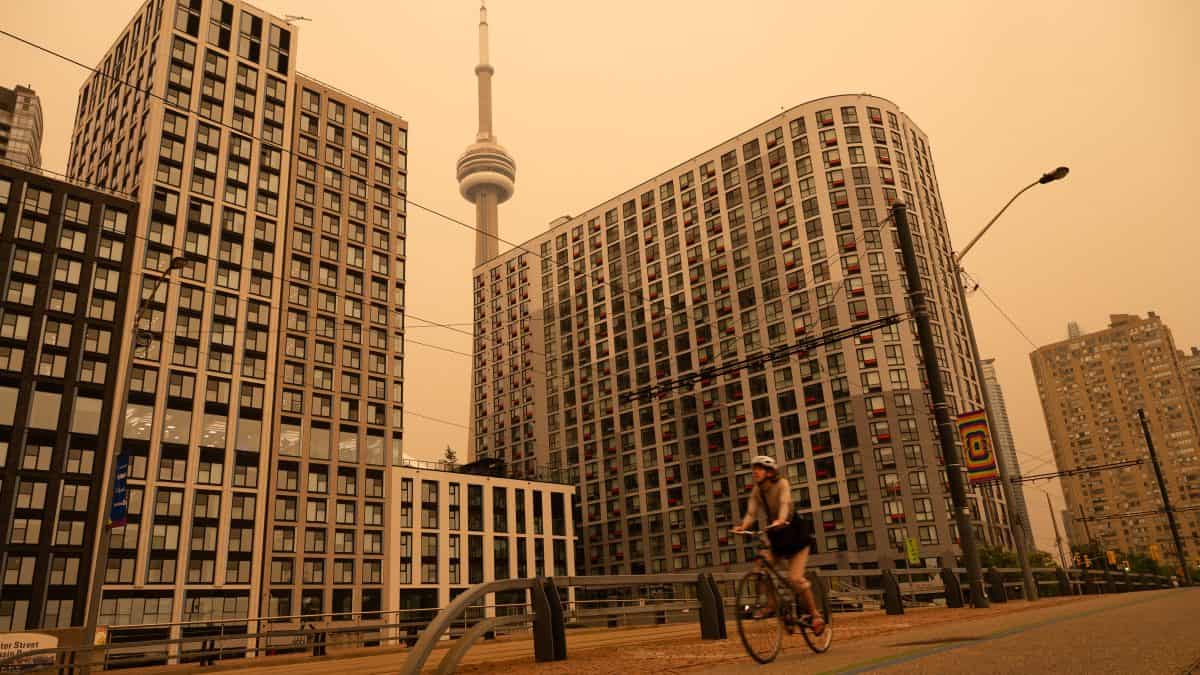
Residents across Toronto and much of southern Ontario are waking up to smoky skies as wildfire smoke from northwestern Ontario continues to create very poor air quality across the region.
Environment Canada says smoke will continue to affect the Greater Toronto and Hamilton Area, including Toronto, Mississauga, Brampton, Vaughan, Oakville, Milton, Burlington, Hamilton, and communities across the Niagara Region throughout the morning.
While there could be some improvement later this morning into the afternoon as weather conditions change, forecasters warn that poor air quality may return again tonight.
Health officials say everyone is at risk during periods of heavy wildfire smoke, regardless of age or overall health, and encourage residents to reduce time spent outdoors whenever possible.
The smoky conditions can cause common symptoms including eye, nose and throat irritation, headaches and mild coughing. More serious symptoms such as wheezing, chest pain or severe coughing are also possible. Anyone experiencing severe symptoms or what they believe is a medical emergency should seek immediate medical attention.
Those most vulnerable to wildfire smoke include adults aged 65 and older, pregnant people, infants and young children, people with existing heart or lung conditions, and anyone who works outdoors. These groups are advised to avoid strenuous outdoor activities and seek medical advice if symptoms develop.
The poor air quality could also affect outdoor sports, festivals and other community events taking place throughout the GTA, Halton, Hamilton and Niagara. Coaches, organizers and officials are being urged to monitor local air quality conditions and adjust activities when necessary to protect participants and spectators.
Residents are encouraged to stay indoors with windows and doors closed as much as possible. If temperatures become dangerously hot, staying cool should remain the priority. Improving indoor air quality by using high-quality furnace filters or certified portable air cleaners can also help reduce exposure to fine smoke particles.
Anyone who must spend time outside should keep it as brief as possible. Health officials say a properly fitted N95 or equivalent respirator can help reduce exposure to harmful fine particles, although it cannot eliminate all health risks associated with wildfire smoke.
Officials are also encouraging people to check on elderly neighbours, family members and others who may be more vulnerable to the effects of poor air quality.
Residents across Toronto, Mississauga, Brampton, Vaughan, Oakville, Milton, Burlington, Hamilton and the Niagara Region are encouraged to continue monitoring local forecasts and air quality updates as conditions may change throughout the day.
INsauga's Editorial Standards and PoliciesPollView All
WIN A $100 GIFT CARD
Subscribe to INsauga’s daily email newsletter for a chance to win a $100 Amazon gift card.