
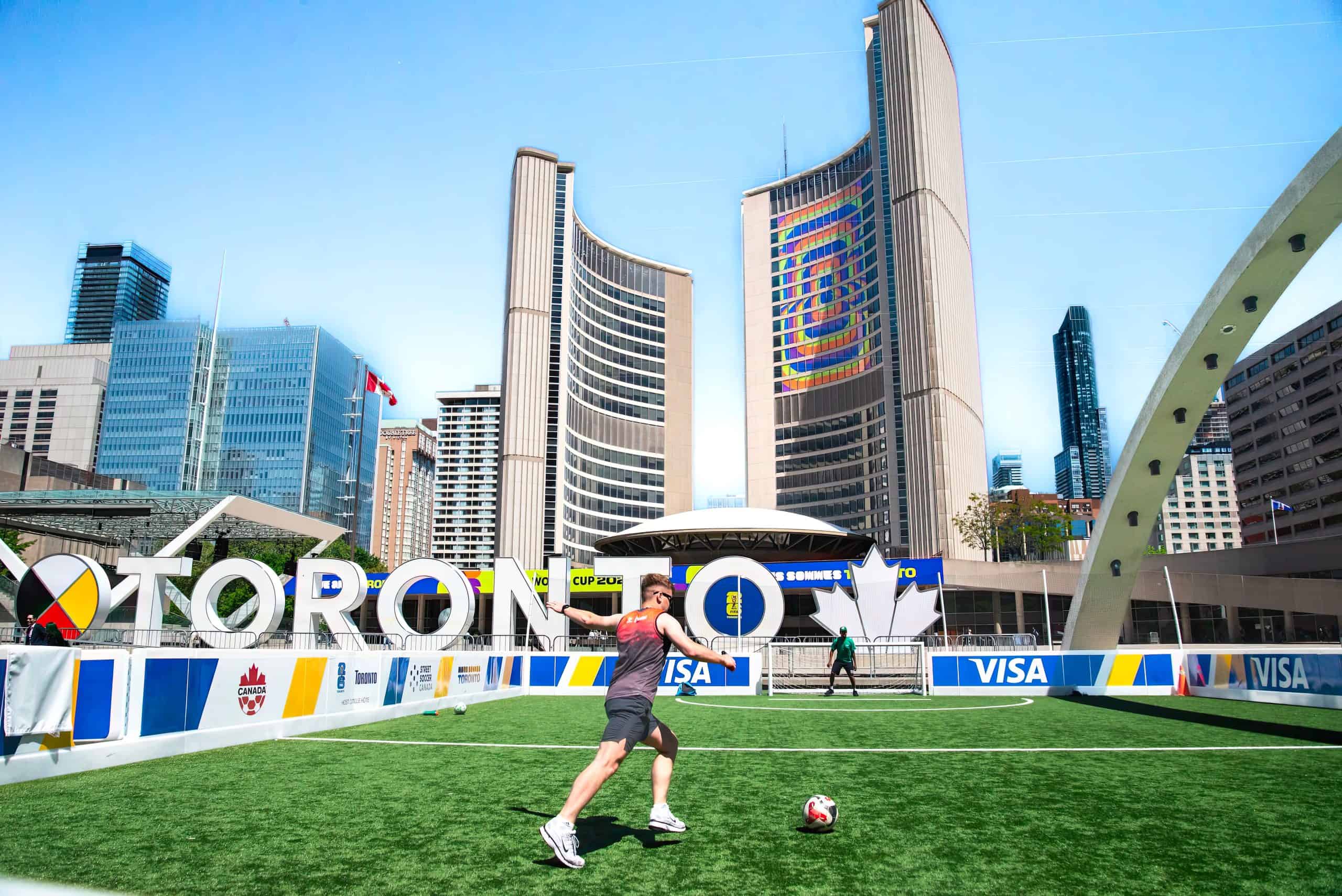
With the World Cup officially wrapping up in Toronto this week, many experts are asking, was it worth it?
While the city had years to prepare for this year’s FIFA 2026 World Cup, with domestic duties split between Toronto and Vancouver as Canada, Mexico and the U.S.A. were host countries, numerous industry leaders watched carefully as 300,000 tourists poured into the GTA.
Whether it was anxieties about traffic, rowdiness or money changing hands, now that the scaffolding is being torn down, economic players have weighed in on how — amidst a brief ‘technical recession’ — Toronto fared during one of the world’s largest sporting events.
Recent numbers from Angus Reid and Canadian fintech group Merchant Growth showed that, despite an avalanche of international tourists, only 47 per cent of Ontario businesses anticipated any boost in sales as a result of the World Cup.
“I’m sure you have business, like the hospitality industry in the downtown core, that definitely got some sort of bump in sales. But there is this big group in the middle, pretty much everyone else, that broader section of the economy that stated they really anticipated no change,” Hash Aboulhosn, chief growth officer at Merchant Growth, told INsauga.com.
Twenty-eight per cent of respondents across all industries said they didn’t anticipate much change in foot traffic, and even if they did, nearly the same number said they had no cash flow for additional preparations. An unsurprising sentiment, as 80 per cent stated that, despite recent (and more reassuring) data, they believe Canada is in a full-blown recession — and that soccer games won’t change that.
“Many businesses are still experiencing tremendous hardship; despite available programs, there is still a wholesale trade war, in-and-out conflict with Iran, which trickles into energy costs, which then, in turn, trickles into everything else,” says Aboulhosn.
Additional data assessed how many were adjusting to this reality, with Aboulhosn highlighting that despite rising manufacturing and shipping costs, a majority of Ontario businesses refuse to pass higher costs on to their client base. As a result, even if the World Cup brought in guaranteed business, it would still be moot, as most are choosing to eat extra costs in hopes that one day, things will settle and they can bounce back.
“Nobody entered the World Cup from a position of strength, but instead, vulnerability, which undermined confidence across the board. Even with that hint of optimism, most were incredibly cautious to hedge any bets on it,” says Aboulhosn.
While businesses felt little encouragement during the games, there were some surprising developments in who was saving and spending.
Data from online payment system PayPal Canada showed that when it came to the generational split of who was spending and where, despite economic odds stacked against them, it was Gen Z who showed up the most for Toronto’s economy during the games.
According to data collected on behalf of the service, out of the three host countries (Canada, Mexico, and the U.S.) Canada was the least likely to sacrifice financial priorities to engage with the World Cup, with only 44 per cent of respondents stating they would do so. Compared to the U.S. (66 per cent) and Mexico (55 per cent), it would appear that Canada’s economic strain has reduced inclination toward leisure spending.
Yet the youth of today — categorically in a constant state of financial duress — still seized an opportunity, as one in five Canadian Gen Z respondents reported taking on extra work or saving significantly to engage with the World Cup.
“They’re gunning for those chances to share in human experiences and meet people from all over the world, while staying in host cities like Toronto,” Michael Covin, enterprise sales director at PayPal Canada, told INsauga.com. “It felt like the whole world was here in Toronto, and even if you are not a huge soccer fan, you get to see your country in a new way, alongside people seeing Canada for the first time.”
Covin stated that this influx of young Canadians willing to prioritize an experience like the World Cup was not surprising, especially given the current trend around domestic tourism, amid expensive international travel and the ongoing trade war with the U.S.
As for where these dollars were going, similar to Aboulhosn’s hypothesis, the majority of young Canadians were spending on experiences instead of jerseys, as 64 per cent of respondents stated they would spend the bulk of their leisure dollars on bars and restaurants.
“It was Millennials, but now, they are having families where they can, so Gen Z is now the demographic, where they are looking to spend time with their friends and see new things, build new experiences. They want this, despite knowing that budgets are going to be a concern and that things aren’t getting cheaper for anybody,” says Covin.
However, even with a young generation willing to spend to help their bottom line, there lingered a massive amount of rhetoric that Toronto’s infrastructure wasn’t prepared for the World Cup.
Data from Nextdoor — a real-time neighbourhood information app — stated that 53 per cent of Torontonians felt that the city was not prepared for the influx of tourists or festivities, with 47 per cent calling it a burden on the taxpayer and 23 per cent citing delays in traffic and transit.
However, a recent popular Reddit post on r/askTO has shown that, for the most part, despite the hustle and bustle, many felt the energy more than the alleged tragedy, with the top comment reading, “Honestly surprised and impressed — an air of positivity across the city.”
Maya Kosoff, communications manager at Nextdoor, shed light on why pearl-clutching lingered throughout the last few weeks, as even though nobody is against a giant party, it was the cleanup that gave many pause.
“When juxtaposing the numbers, people weren’t really against cities hosting events like this, but they are wondering whether or not systems are in place that can handle it smoothly,” Kosoff told INsauga.com.
Beyond tax burdens and gridlock, data from Nextdoor, according to Kosoff, also highlighted concerns about general neighbourhood wear and tear, as the foot traffic of a Toronto summer, magnified by hundreds of thousands of visitors, carried the potential for disarray.
However, even in the thick of Liberty Village, the neighbourhood which hosted the games at Toronto Stadium/BMO Field, those in the thick of it, allegedly took the good with the bad.
“Server here in Liberty Village. Money has been amazing, but my god am I exhausted. Shifts are easily 9-10 hours, non-stop, and barely have time to breathe. Vibes are high, and it’s been fun chatting with all the tourists, though!” read another top comment on the Reddit thread.
An additional comment in the top bracket from the other end of the serving tray stated, “As a patron, my credit card is exhausted. The vibe has been great here; I personally love that the area is buzzing daily, and it’s been cool to meet people from all over!”
With the dust now settled, it will still take time to tally all the receipts to see just how Toronto fared during this historic event.
Yet, public outlook combined with expert insight has quantified that, even if the city faced the odd bit of turbulence, many feel that the 2026 FIFA World Cup was worth the headache, with authorities like Covin driving that point home.
“This tournament brought the world to Canada, and people weren’t willing to pass up on those human experiences.”
INsauga's Editorial Standards and PoliciesPollView All
WIN A $100 GIFT CARD
Subscribe to INsauga’s daily email newsletter for a chance to win a $100 Amazon gift card.