
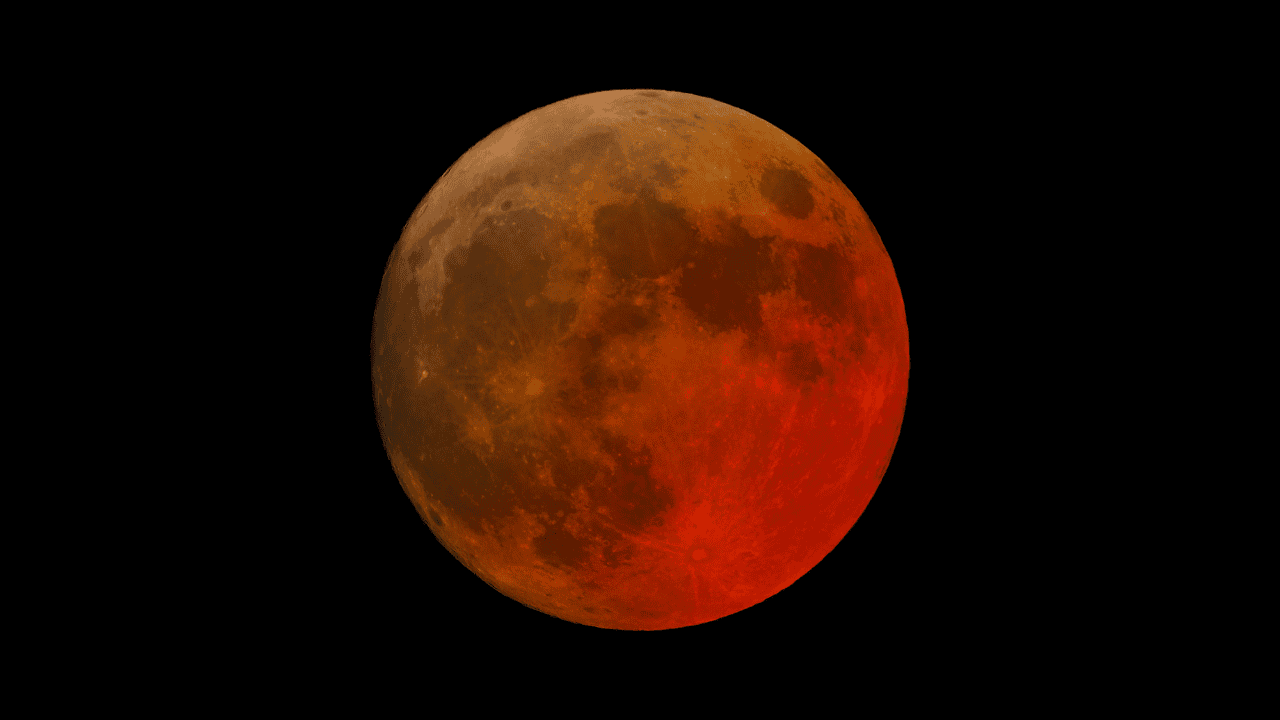
March’s full moon is set to rise over Ontario this month, bringing with it a rare and mesmerizing sight. As the moon reaches peak illumination, it will also undergo a total lunar eclipse, casting a deep red glow across the night sky!
RELATED: All the full moons in 2025 and when they will appear in Ontario
The Worm Moon follows February’s Snow Moon and is traditionally thought to be named after the earthworms that emerge from warming spring soil.
However, according to The Old Farmer’s Almanac, an alternate origin comes from the late 1700s when explorer Jonathan Carver suggested the name actually refers to larvae that emerge from tree bark and other winter hideouts during this time.
This full moon also signals the start of maple sap collection, a key marker of early spring in Canada.
Unlike a typical full moon, the Worm Moon will coincide with a Total Lunar Eclipse, creating a Blood Moon.
According to NASA, a Total Lunar Eclipse happens when the Earth moves directly between the Sun and the Moon, casting its shadow over the lunar surface. The reddish hue of the Moon is caused by sunlight filtering through Earth’s atmosphere before reaching the Moon’s surface.
This lunar eclipse will be fully visible across North America, with the following key phases:
- Penumbra begins: March 13, 11:56 p.m.
- Enters umbra (Earth’s shadow): March 14, 1:09 a.m.
- Total eclipse peak: March 14, 3:30 a.m.
- Exits umbra: March 14, 4:48 a.m.
- Penumbra ends: March 14, 6:02 a.m.
For the best viewing, find a dark location away from city lights after midnight on March 14 to witness the full eclipse in its deep red glow.
For those tracking the moon phases, here is March’s full lunar schedule, according to The Old Farmer’s Almanac:
First Quarter – March 6 at 11:31 a.m.
Full Moon (Worm Moon) – March 14 at 2:55 a.m.
Last Quarter – March 22 at 7:29 a.m.
New Moon – March 29 at 6:58 a.m.
PollView All
WIN A $100 GIFT CARD
Subscribe to INsauga’s daily email newsletter for a chance to win a $100 Amazon gift card.