
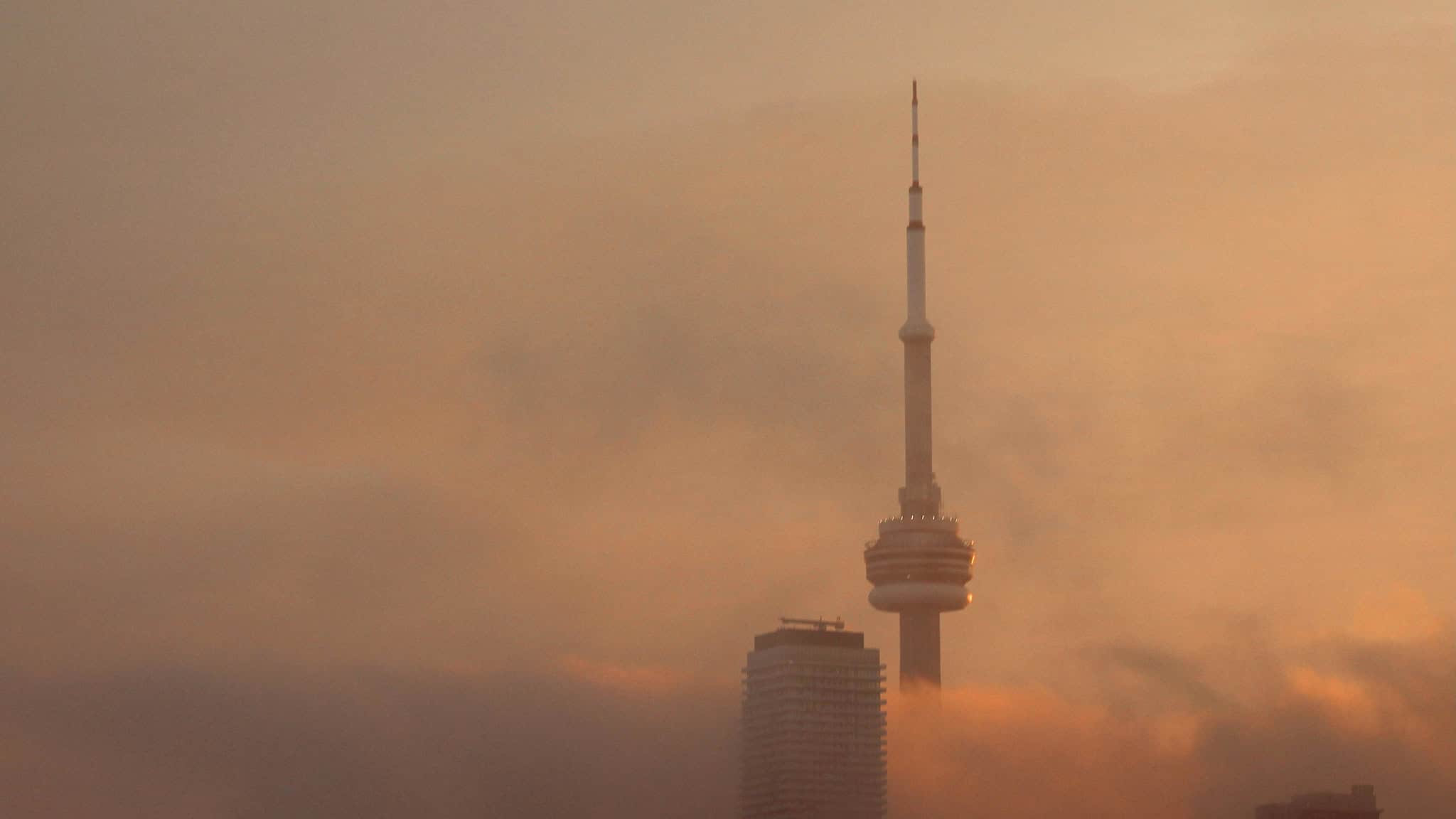
Toronto moved up a global ranking to have the worst air quality in the world on Wednesday morning.
As wildfire smoke moves across Ontario, IQAir, a Swiss air quality technology company, ranked Toronto as having the worst air quality across the globe.
Toronto had a US Air Quality Index of 184, putting the city ahead of Kinshasa in the Democratic Republic of the Congo and Dehli, India.
The ranking is due to a high concentration of particulate matter, which was at 22.9 times the World Health Organization guideline value, according to IQAir.
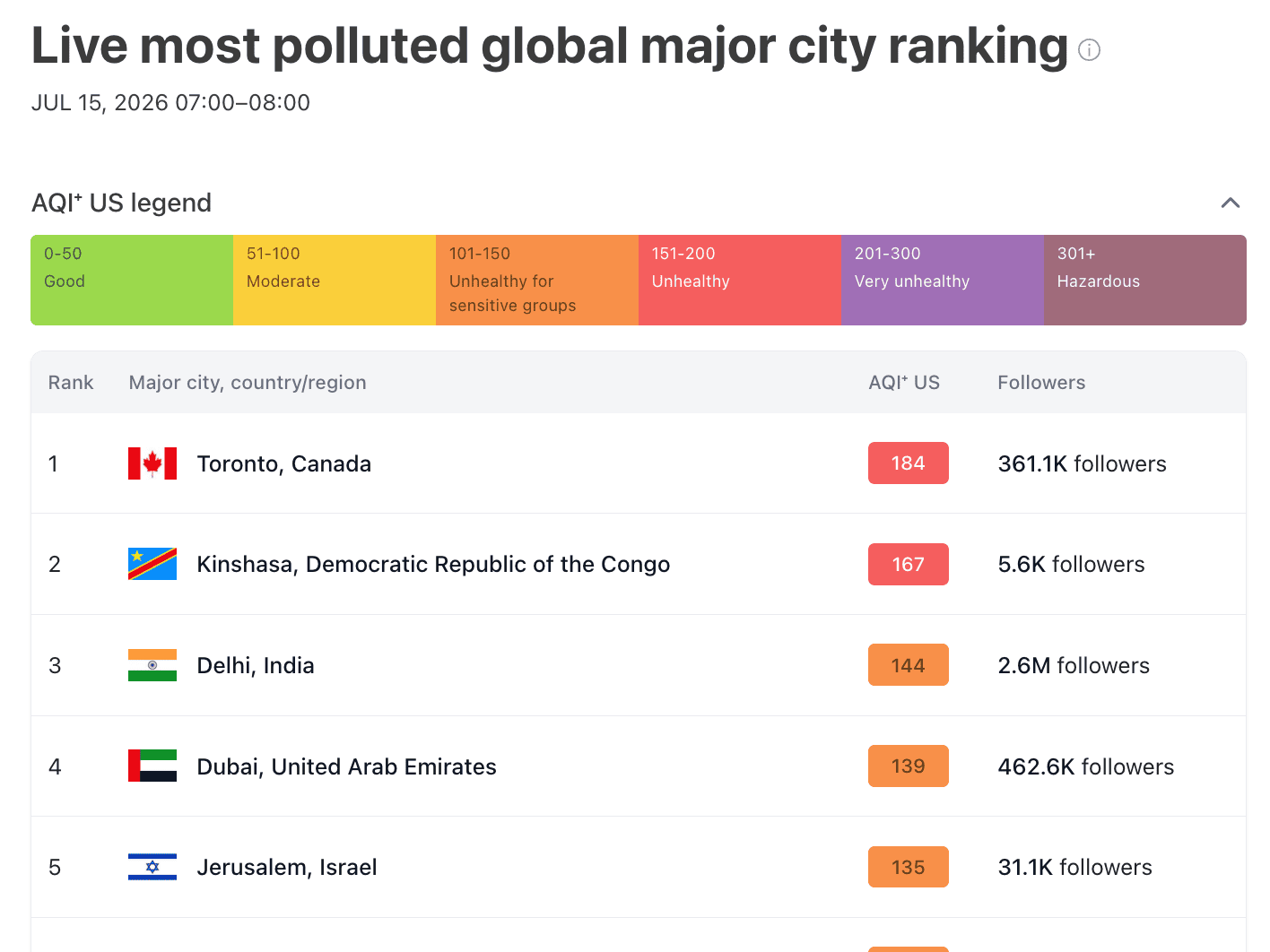
Chart: IQAir
Dozens of wildfires have forced evacuations across many communities in northwestern Ontario.
As the smoke rolls across the province, much of southern Ontario is under an orange-level warning for “very poor air quality and reduced visibility,” according to Environment and Climate Change Canada.
The smoke is causing very poor air quality and reduced visibility, Environment Canada said.
The smoky conditions are affecting communities including Toronto, Mississauga, Brampton, Hamilton, Burlington, Oakville, Milton, Halton Hills, Oshawa, Whitby, Ajax, Pickering, Markham, Vaughan, Richmond Hill, Aurora, Newmarket, Barrie, Guelph, Kitchener, Waterloo, Cambridge, London, St. Catharines, Niagara Falls, Welland and Windsor.
Conditions may improve Friday morning, Environment Canada said.
During periods of poor air quality, people may experience mild and common symptoms such as eye, nose and throat irritation, headaches or a mild cough. More serious but less common symptoms include wheezing, chest pains or severe cough.
People aged 65 and older, pregnant people, infants and young children, people with an existing illness or chronic health condition and people who work outdoors are more likely to be impacted by wildfire smoke.
Environment Canada offers the following advice during the warning:
- Limit time outdoors.
- Reschedule or cancel outdoor sports, activities and events.
- If you think you are having a medical emergency, seek immediate medical assistance.
- Avoid strenuous activities outdoors and seek medical attention if experiencing symptoms.
- When indoors, keep windows and doors closed as much as possible.
- During an extreme heat event with poor air quality, prioritize keeping cool. Protect your indoor air from wildfire smoke.
- Use a high-quality air filter in ventilation systems and/or a certified portable air cleaner that can filter fine particles.
- A well-constructed, well-fitting and properly worn respirator type mask (such as a NIOSH-certified N95 or equivalent respirator) can reduce your exposure to the fine particles in the smoke. Even though exposure may be reduced, there can still be risks to health.
See the IQAir ranking here.
Lead photo: Omar Flores
INsauga's Editorial Standards and PoliciesPollView All
WIN A $100 GIFT CARD
Subscribe to INsauga’s daily email newsletter for a chance to win a $100 Amazon gift card.