

During the ongoing tariff fight with the United States, many Canadian consumers have looked to buy more Canadian products.
And amid those efforts, it turns out that some food products have been found to be mislabelled.
The Canadian Food Inspection Agency told INsauga.com in a statement that it has seen a jump in the number of complaints related to country of origin claims on food labels or in advertisements.
READ MORE: Nearly 8 in 10 Canadians have changed their shopping habits since U.S. tariffs announced: survey
“Now, more than ever, Canadians have been clear that they want to support Canadian businesses and buy Canadian products,” the agency said.
“The Government of Canada is working with provinces, territories, and industry associations to promote clear and transparent product labelling and the CFIA is reminding the food industry and importers of their responsibility to ensure that their labels are accurate and not misleading consumers in Canada.”
Between Nov. 1 and Sept. 1, the agency received a total of 167 complaints, with the majority coming after the beginning of the trade war in February.
The CFIA said reviews of those complaints are underway and as of Sept. 1, 137 were evaluated.
Of the 137, “non-compliance” of regulatory requirements was found for 48 of the complaints.
“Most non-compliances are related to country of origin labelling or advertising for produce at retail,” the CFIA said, without identifying which businesses were responsible or where it occurred.
-
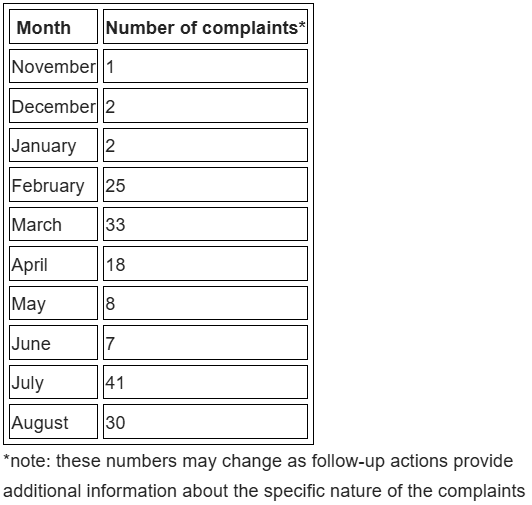
- The number of complaints received by the CFIA.
No issues were identified with 53 of the complaints.
“For example, some complaints were about compliant products that do not require country of origin labels,” the CFIA said.
Thirty-two of the complaints fell under provincial jurisdiction and were handed over to provincial authorities, while four were left without a determination due to insufficient information from the person who reported it.
“The CFIA takes food mislabelling seriously and took action in every case of non-compliance and the implicated companies took corrective actions to address the cause of the error,” the statement said.
“This has included reviewing the labelling processes in place at the retail location, raising awareness of the importance of accurate labelling, issuing letters reminding the business of their regulatory responsibilities, and following up to verify that corrective actions have been taken.
“If a food business is found to not be meeting their legal requirements, the agency would take this into consideration in determining further enforcement actions.”
Consumers who think a product is labelled in a misleading manner should report it, the CFIA said.
More information about food labelling can be found on the agency’s website.
PollView All
WIN A $100 GIFT CARD
Subscribe to INsauga’s daily email newsletter for a chance to win a $100 Amazon gift card.