

An ill coyote has residents concerned in a Mississauga neighbourhood.
The coyote appears to be suffering from mange and has been seen multiple times on Sunday, including during daylight hours, in Cooksville, area resident Freeda Ricardo told INsauga.com.
The animal was seen in the Hurontario and Dundas streets area and the Parkerhill Road and Hillcrest Avenue area.
Ricardo said the coyote has left faeces on her front patio and other neighbours’ lawns. She is concerned about the spread of the illness. She called the city on Monday but didn’t get an immediate response. Other community members also contacted the city.
In an emailed statement, the City of Mississauga told INsauga.com that they are aware of the coyote and believe the animal is suffering from mange – a common and treatable skin condition.
“We have been aware of this individual coyote since May 2025, with multiple sightings and public reports received,” a statement from the city reads. “Throughout this time, our team has maintained regular monitoring and proactive engagement with the community, including patrol efforts to observe the coyote. While the coyote is clearly affected by mange, it remains otherwise healthy, alert, and active.”
Staff has recently been working in partnership with the Toronto Wildlife Centre to facilitate the humane capture and rehabilitation of this coyote, with the goal of supporting a full recovery and return of the coyote, the statement reads.
In regards to community health concerns for an animal afflicted with mange, the city said mange is primarily spread through direct contact between infected and healthy animals. Transmission can also occur through contact with contaminated surroundings, such as dens, bedding, or shared resting areas.
Ricardo said she also contacted the Toronto Wildlife Centre, which offered her tips on how to deal with situation. They hope to find the coyote to treat the illness.
She contacted INsauga.com to warn residents to keep pets indoors.
“We have small dogs and children around, so I’m concerned,” she said.
A condition known as “sarcoptic mange” is common in coyotes in Ontario, according to the Toronto Wildlife Centre website.
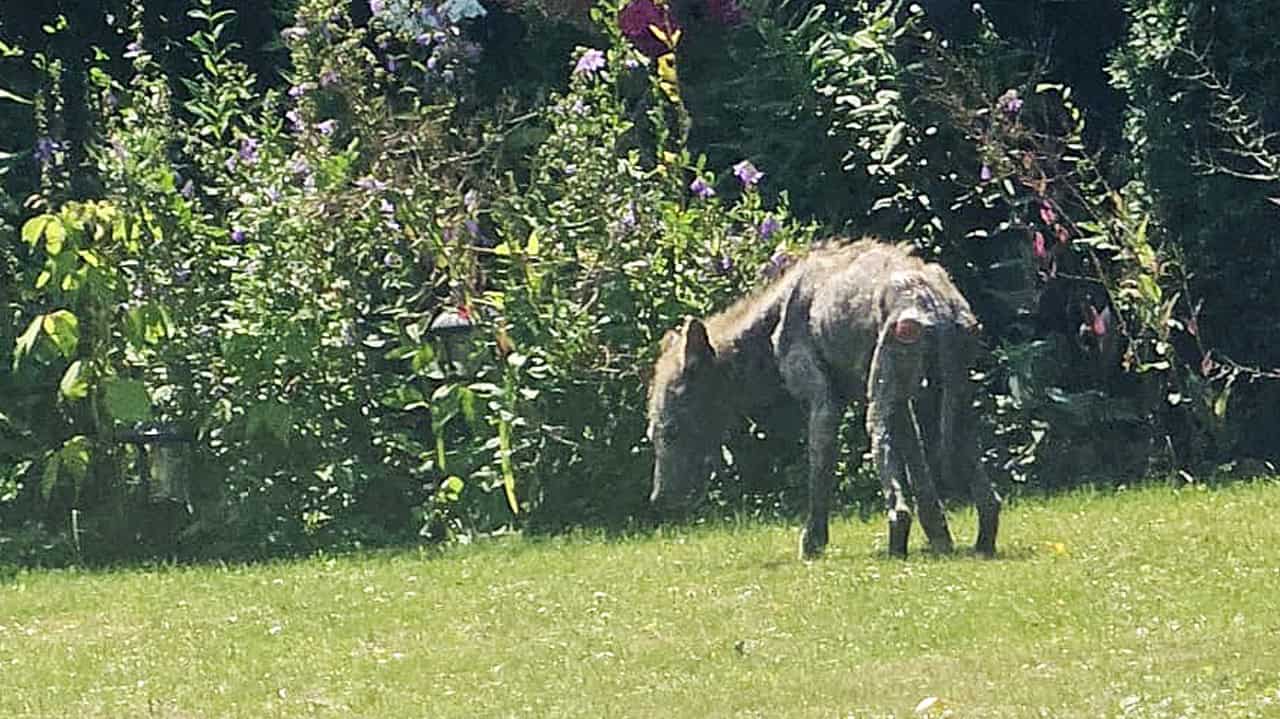
Mange is a parasitic mite that burrows into the host’s skin, causing relentless itching, resulting in noticeable fur loss and self-inflicted wounds, the centre notes. The illness is treatable but poses a threat to coyotes’ lives, particularly in winter.
When coyotes are ill, they may exhibit behaviour perceived as bold or passive by commonly showing up during the daytime despite human activity, due to a range of factors linked to their compromised health. The stress and discomfort can disrupt their usual habits, the centre notes.
Coyotes live throughout the Greater Toronto Area. Coyote bites to humans are always associated with coyotes that have lost their fear of humans, often due to feeding or a lack of aversive conditioning tactics, the Toronto Wildlife Centre states.
Generally, coyotes are beneficial for the ecosystem. They keep numbers of smaller mammals in balance, such as rodents and rabbits. They eat organic waste, they contribute to the cleanup of urban spaces, reducing the risk of disease transmission and promoting overall cleanliness, the centre says.
The City of Mississauga maintains a coyote map and information page here. More information about living with coyotes can also be found here.
Photos: Freeda Ricardo
Editor’s note: This story was updated on July 29 with a statement from the City of Mississauga.
INsauga's Editorial Standards and PoliciesPollView All
WIN A $100 GIFT CARD
Subscribe to INsauga’s daily email newsletter for a chance to win a $100 Amazon gift card.