
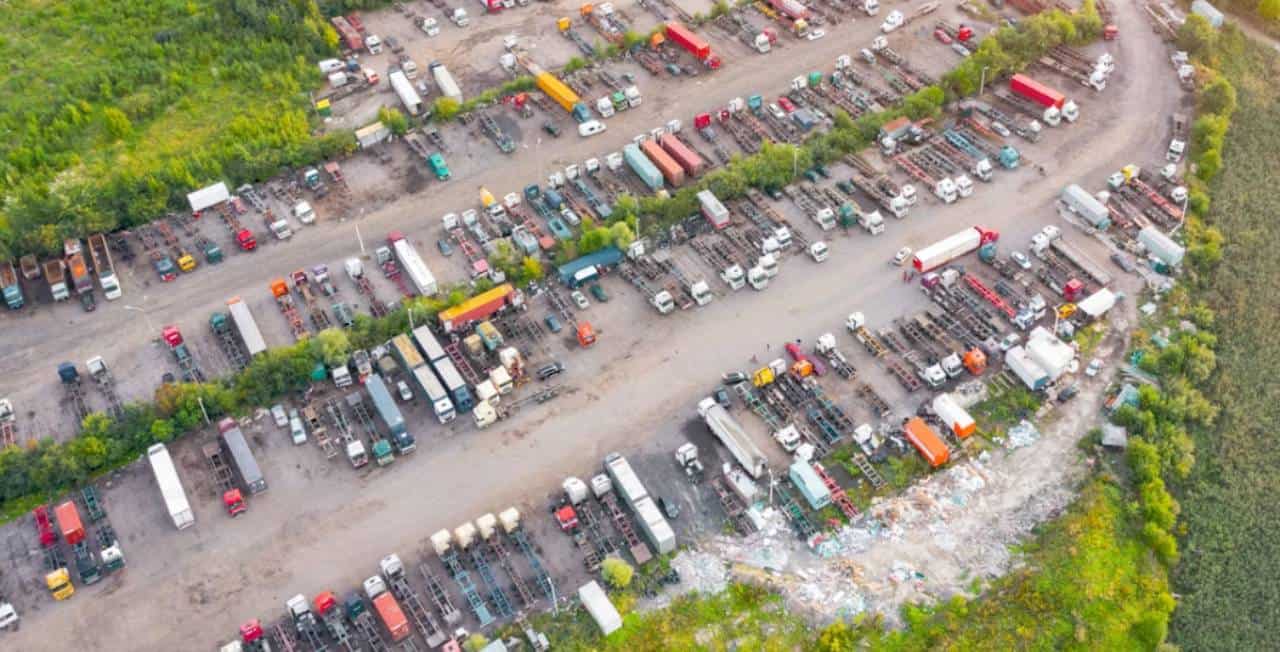
A successful prosecution in Halton Hills is highlighting a growing problem that municipalities across Ontario say has been plaguing rural communities for years: illegal truck yards operating on farmland and other properties not zoned for industrial use.
The Town of Halton Hills announced it has secured convictions against Nishan GTA Inc. and one of its directors for operating an illegal truck terminal on Eighth Line.
The company and its director were convicted on zoning and site alteration offences, resulting in fines totaling $35,000. The court also issued a prohibition order preventing the illegal use from continuing and requiring the property to be restored.
Municipal officials say the case is part of a broader challenge facing communities throughout the Greater Toronto Area and beyond, where agricultural lands have increasingly been used to store large numbers of commercial trucks and trailers.
According to Halton Hills, illegal truck depots can house hundreds of transport trucks, contributing to traffic congestion, safety concerns and the loss of farmland.
“I often speak to the great quality of life we have in Halton Hills,” Mayor Ann Lawlor said in a statement. “One of the ways we uphold this high standard of living is by enforcing our bylaws, and I appreciate that work by our Enforcement Services staff. Our beautiful farmland should not be used, illegally, for truck yards.”
The issue has become significant enough that the Ontario government is proposing new legislation aimed at giving municipalities stronger enforcement powers.
In April, the province introduced measures that would allow municipalities to issue administrative monetary penalties for illegal land uses, including truck yards operating on agricultural, rural and residential properties.
“Several municipalities have asked the government for more tools to address illegal land uses, including trucks illegally parked on agricultural, rural, and residential lands,” said Rob Flack, Ontario’s Minister of Municipal Affairs and Housing. “That is why we are pleased to support this locally led solution, protecting our communities, including the surrounding farmland, and ensuring the health and safety of residents.”
The province says illegal truck depots can damage local roads, create safety hazards and generate noise, lighting, drainage and environmental concerns for nearby residents.
Municipal leaders have argued that existing enforcement tools are often slow and costly because violations must typically be pursued through the courts.
Last month, Bill 119, the Protecting Ontario’s Streets and Communities Act, passed second reading at Queen’s Park. If approved, the legislation would provide municipalities with additional enforcement options to deal with illegal land uses more quickly.
Halton Hills officials welcomed the proposed changes, noting that while the Eighth Line prosecution ended successfully, it required a significant investment of municipal staff time and legal resources.
Lawlor said municipalities have been advocating for stronger enforcement tools for years and called the province’s proposed legislation an important step forward.
For communities across Ontario struggling with unauthorized truck depots on farmland, the Halton Hills case serves as both a warning to operators and an example of the growing pressure on governments to address the issue.
PollView All
WIN A $100 GIFT CARD
Subscribe to INsauga’s daily email newsletter for a chance to win a $100 Amazon gift card.