
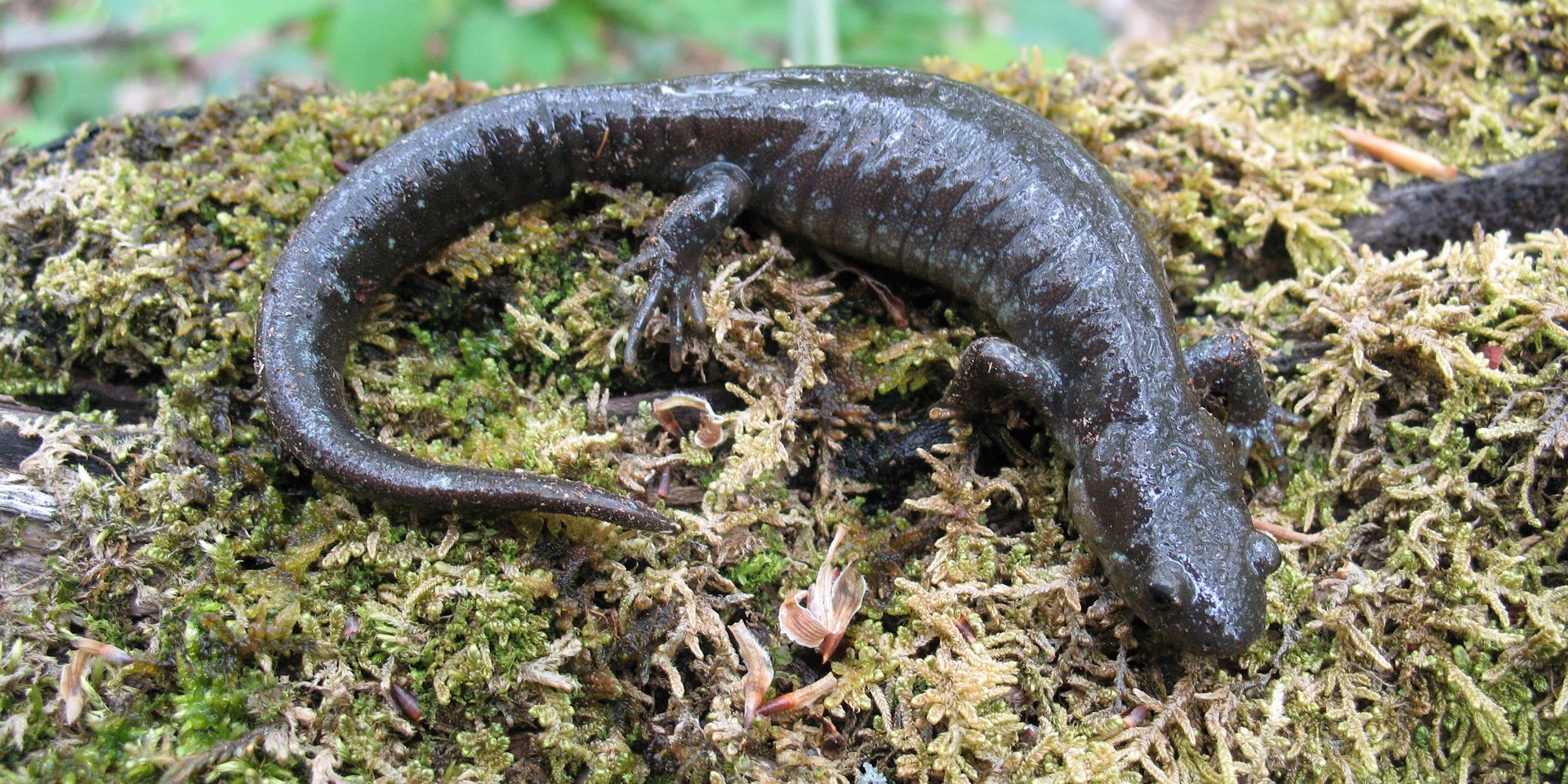
Why did the Jefferson salamander cross the road?
To get to the other side, of course, but more importantly, to find a mate.
The City of Burlington has once again shut down a usually busy road to allow the salamander safe passage to its breeding ground.
King Road will be closed to traffic until April 9 so that the Jeffersons can get to nearby run-off ponds to begin their annual ritual.
Since 2012, Burlington has closed the same section of road at this time each year for the salamanders to cross, which has proven to be a lifesaver for the salamander.
Jefferson salamanders spend most of their life underground. But during wet, spring rainy nights, adult salamanders migrate to their breeding ponds.
They are drawn to the ponds where they hatched and can be very determined to reach it, sometimes crossing busy roads to get back to their birthplace. That’s why Burlington has stepped in to provide safe passage.
Once safely at the ponds, they lay their eggs in clumps attached to underwater vegetation. Adults leave the ponds after breeding. By late summer, the larvae lose their gills, become air-breathing juveniles and leave the pond to head into nearby forests.
The Jefferson salamander is grey or brown-coloured back, with lighter underparts. Blue flecks may be present on the sides and limbs. They can grow up to 20 cm long, and the tail makes up half their length.
When they are not dodging traffic, the salamander can live as long as 30 years.
PollView All
WIN A $100 GIFT CARD
Subscribe to INsauga’s daily email newsletter for a chance to win a $100 Amazon gift card.