
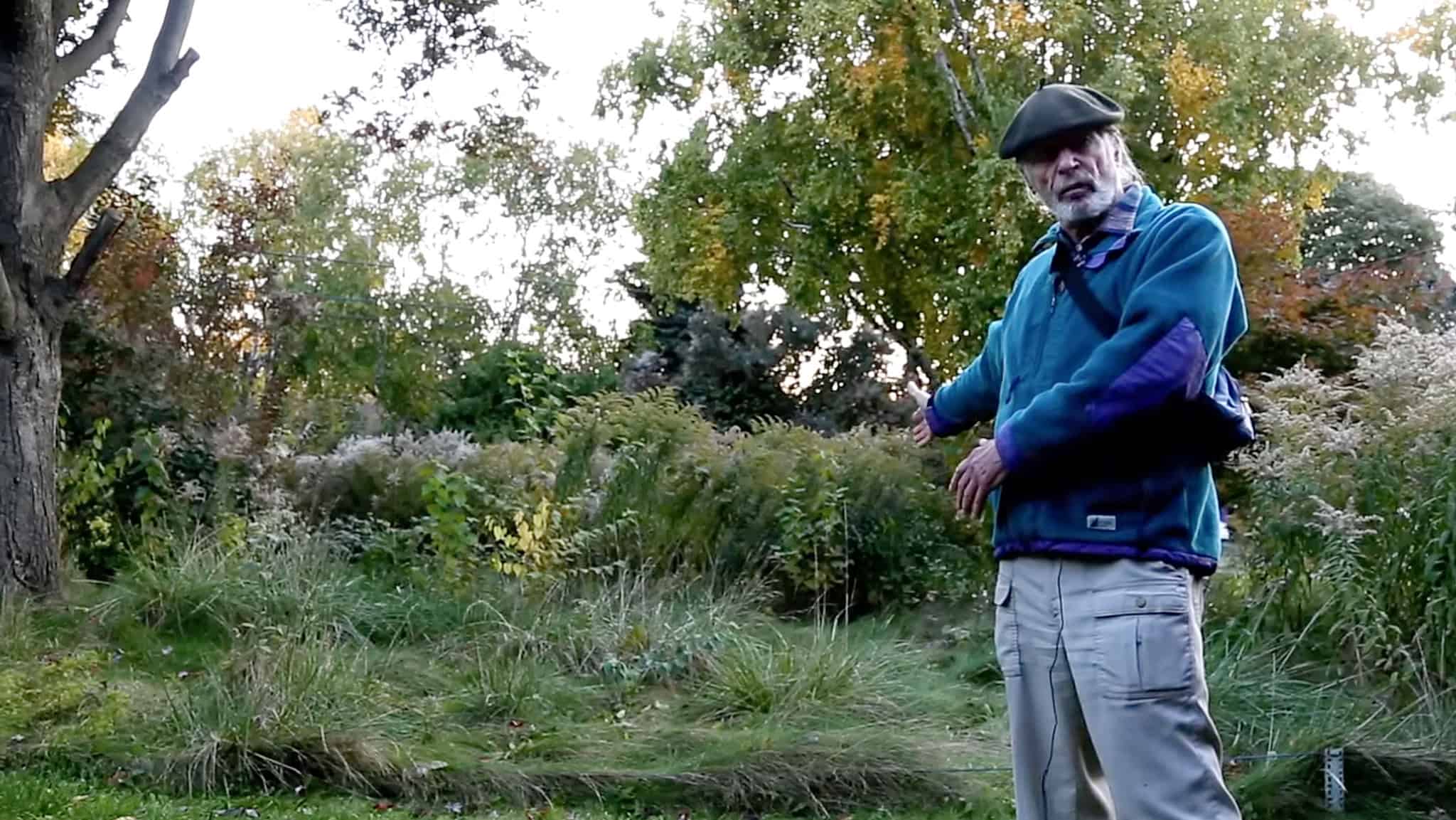
A court decision reaffirms the right to keep a naturalized garden with tall grass on lawns and native plants in Mississauga and across Ontario.
Mississauga resident Wolf Ruck has fought a City of Mississauga bylaw that prohibits grass over 20 centimetres in height and certain nuisance weeds on personal property for several years.
Ruck moved to his property, near the Etobicoke Creek in the city’s east end in 1973, but since 2021, he has allowed grass grow to a height of over 20 centimetres in the front lawn. Certain areas of the property have wildflowers, including golden rod and sow thistles, that have become dominant to the point of overtaking the grass.
In 2022 and 2023, the city hired contractors to cut down the grass and remove plants on Ruck’s property, acting on complaints from neighbours. They added the costs to his property tax bill.
But this month, a judge recognized Ruck’s right to “maintain a naturalized garden on his property with tall grass and nuisance weeds” as it is protected under the Charter of Rights and Freedoms.
The case was heard in the Superior Court of Justice on July 2, 2025, and Justice Michael T. Doi released his decision last week, on Jan. 6.
“I find no basis to exclude Mr. Ruck’s non-conventional gardening activity from protection under s. 2(b) of the Charter,” Doi said in the written decision. “As an environmentalist, Mr. Ruck has adopted a landscaping form on his property to convey his views about the importance of co-existing with nature, the need for biodiversity and wildlife-friendly naturalization efforts in urban areas, and the value of maintaining harmony with the natural environment.”
The decision comes after a long fight.
“I’m absolutely thrilled,” Ruck told INsauga.com this week.
Representing himself in the case, it was initially dismissed. The Canadian Constitution Foundation stepped in with lawyers who didn’t represent Ruck but acted as interveners, he said.
The Canadian Constitution Foundation lawyers, Lauren Baker and John Mather, said they were also thrilled with the judge’s decision.
“Ruck stood up for his constitutional rights. Even when the first judge ruled against him, he respectfully pursued his appeal rights and ultimately had the decision reversed in a significant decision not only for him, but all natural gardeners in Canada,” Mather said in a press release. “He is a self-represented litigant to be admired.”
Ruck noted that this right is not a total freedom, but the city needs to provide evidence of a safety or health hazard.
In the court document, the city said that the bylaw was enacted to address public health and safety risks and to achieve reasonable minimum property standards within the neighbouring environment.
But the city also conceded that the bylaw provisions infringed on Ruck’s right to freedom of expression.

A view of Wolf Ruck’s garden. Photo: Wolf Ruck
Bylaw reform?
A City of Mississauga spokesperson said in an emailed statement that they have not made any decisions regarding next steps at this time.
“As the Superior Court of Justice ruling in the Ruck v. City of Mississauga case was issued very recently (Jan. 6), City staff are still reviewing the decision and considering next steps,” the statement read.
It’s not clear yet if the city will consider updating the Nuisance Weed and Tall Grass Control bylaw as other communities, including Toronto, have done.
Lorraine Johnson, a writer and community advocate who has been following the case, told INsauga.com that community health and safety are important. Sight-lines and other hazards must be considered. But any city enforcing bylaws must provide evidence of such concerns.
Concerns such as rat infestations and increased mosquito populations need to be proven. Rats are drawn to human garbage, and mosquitoes breed in standing water — neither of which is typically found in naturalized gardens, Johnson said. Conventional gardens often have as much vegetation as a garden with native plants.
“These are long-standing and entrenched fears that just aren’t based in evidence,” she said. “The court said, ‘if you are going to infringe on our rights, you need evidence.'”
Johnson said the ruling, now the third in Ontario, should make clear the need for bylaw reform and wider acceptance of naturalized gardens.
“In this era of climate change and biodiversity loss, we need landscapes of resilience and naturalized and native plant gardens can contribute to ecosystem resilience,” Johnson said.

Common milkweed. Photo: Ryan Hodnett
Future for Ruck’s garden
The judgment in Ruck’s case stopped short of making findings regarding the city’s enforcement conduct or awarding damages. The fees to hire contractors to cut the grass and remove weeds will be taken off Ruck’s tax bill.
Ruck told INsauga.com he plans to keep his front lawn natural.
“ I’m not making any changes in terms of my re-wilding process,” he said.
Even in the wintertime, Ruck said his garden is alive with deer and birds visiting for food.
Perfect lawns create a “totally sterile monoculture” that don’t contribute to biodiversity and pollen production, he added.
There has been a preference for a green front lawn in western culture for the last several decades, but people such as Christine Van Geyn, the Canadian Constitution Foundation litigation director, hope Ruck’s case will help change minds.
“Wolf’s garden is a wonderful expression of his views on beauty, about ecology, environmental protection, and climate change,” Van Geyn said. “The City’s attempts to enter his property and destroy his beautiful naturalized garden were completely unnecessary. The City has no business deciding what is or is not beautiful.”
Lead photo: Wolf Ruck, screenshot
INsauga's Editorial Standards and PoliciesPollView All
WIN A $100 GIFT CARD
Subscribe to INsauga’s daily email newsletter for a chance to win a $100 Amazon gift card.