
Based on posts on social media and conversations in living rooms, no one (or at least not many people) wants to return to the office five days a week after six or so years of the remote work that entrenched itself in Mississauga (and much of the western world) during the pandemic.
But with both private– and public-sector employees being called back to their offices years after the end of the COVID emergency, some companies are looking to entice workers to trade the conveniences of the home office for quick (and complimentary) access to gym equipment, yoga rooms, lounges, gourmet coffee, and more.
And while not everyone is happy about returning to in-person work, offices are indeed filling up again.
“There’s a stigma out there that the office is dead, but it’s the exact opposite,” Reuben Barkin, director of operations at commercial construction and renovation company BUILD IT, tells INsauga.com. “The office isn’t dead, it’s being rebuilt with purpose. We’re not building offices the way we did prior to 2019. Companies are investing in environments that justify the commute.”
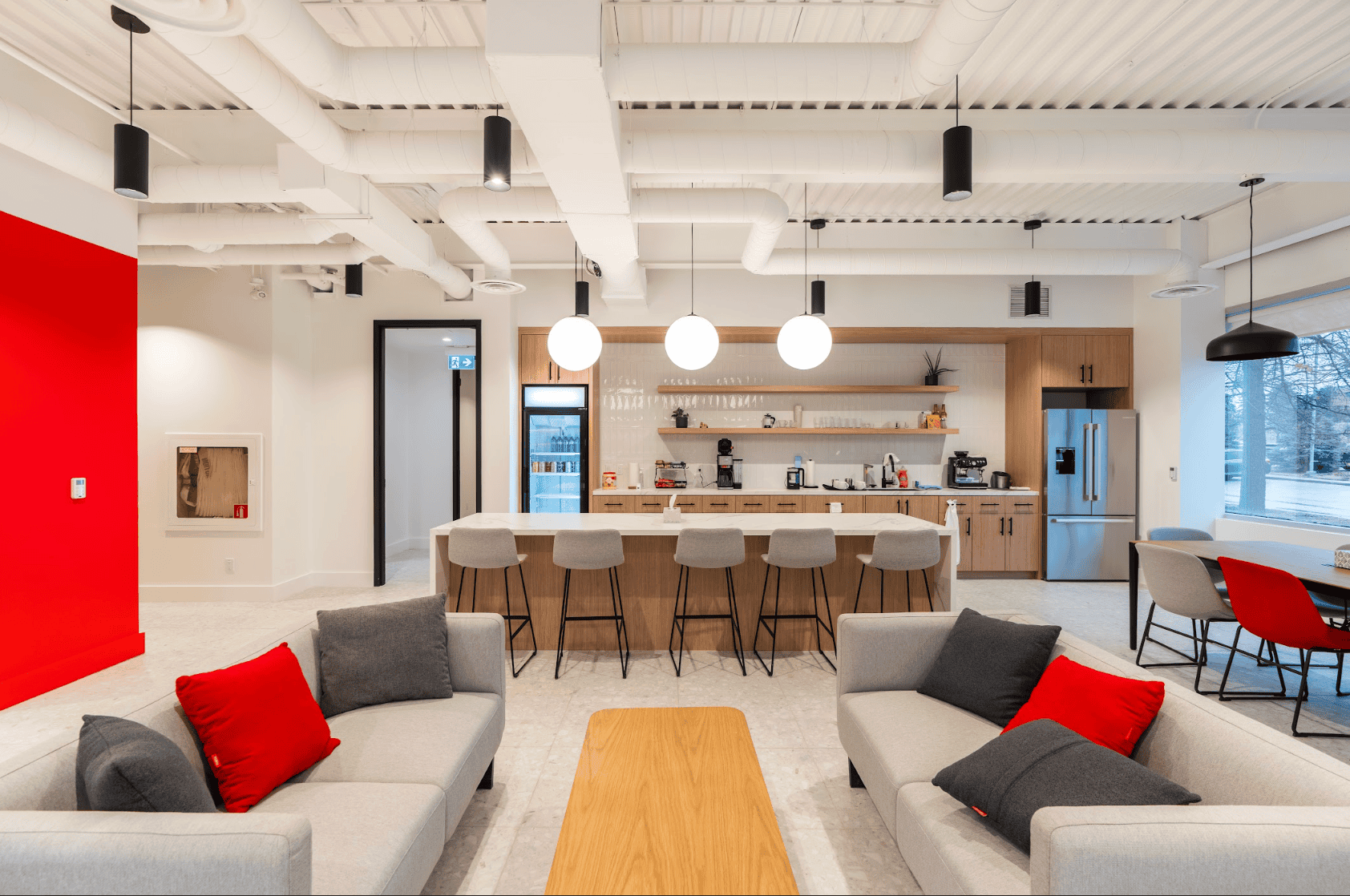
One project that showcases the trend of embracing stylish aesthetics and alluring amenities is the new Mississauga office for international toy company ZURU. Barkin says ZURU’s new office, renovated by BUILD IT over a six-month period, spans approximately 20,000 square feet and has been completely reimagined from the ground up.
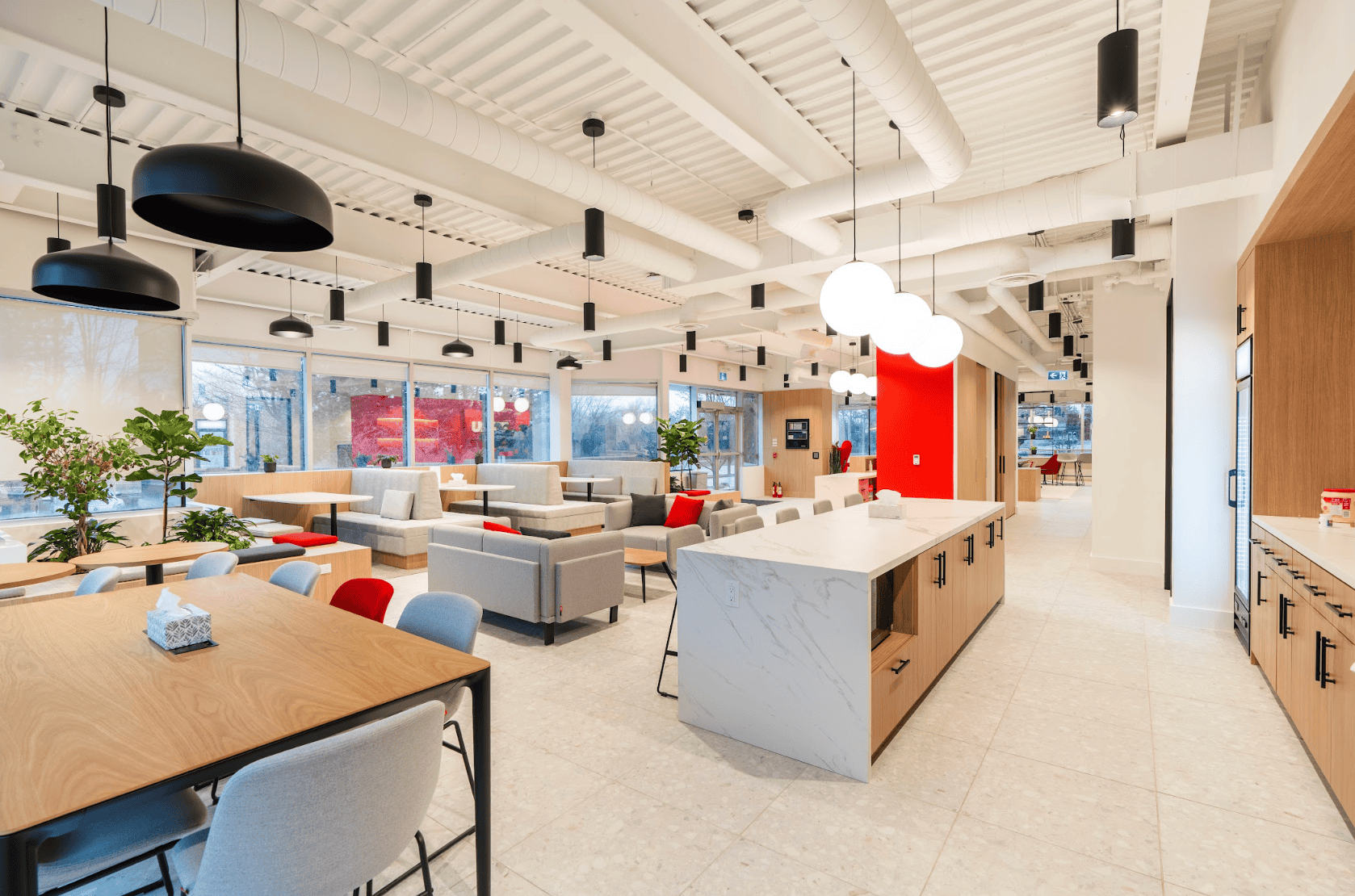
The office offers workers an open-concept space with booths, couches, communal tables, stylish hanging light fixtures, a kitchen with a sizeable island, house plants, product showrooms designed to look like sections of a chic department store, glass-walled boardrooms, and private workspaces.
“Pre-COVID, we saw heavy desk layouts, minimal collaboration zones, and very generic and bland workplaces. Now, in order to justify the commute back to the office, we’re seeing collaborative and planning zones, amenity-driven places like cafes and kitchens, brand-forward design and interesting tech and breakout spaces,” Barkin says, adding that some companies are also incorporating health and wellness into their facilties, going so far as to, when possible and feasible, include gyms, yoga studios or plant walls.
Barkin says the demand for office space is rebounding, and the data bears this out.
A recent Colliers report indicates that in the last quarter of 2025, the vacancy rate of top-tier office space around Union Station in Toronto dropped to 3.2 per cent from 5.8 per cent over a two-year period, with rents for such in-demand properties rising 21 per cent from 2020 to hit about $50 to $55 per square foot.
The report notes that the vacancy rate in the GTA fell to 11.8 per cent from 12.9 per cent, with the west end of the GTA at 10.8 per cent. With no major towers planned until 2031, rents for top-tier office space (which also climbed four per cent year-over-year) are expected to continue to rise.
In Mississauga, data contained in the city’s Market Conditions report indicates the availability rate of top-tier office property sits at 19 per cent, while less prestigious properties boast 15 per cent availability.
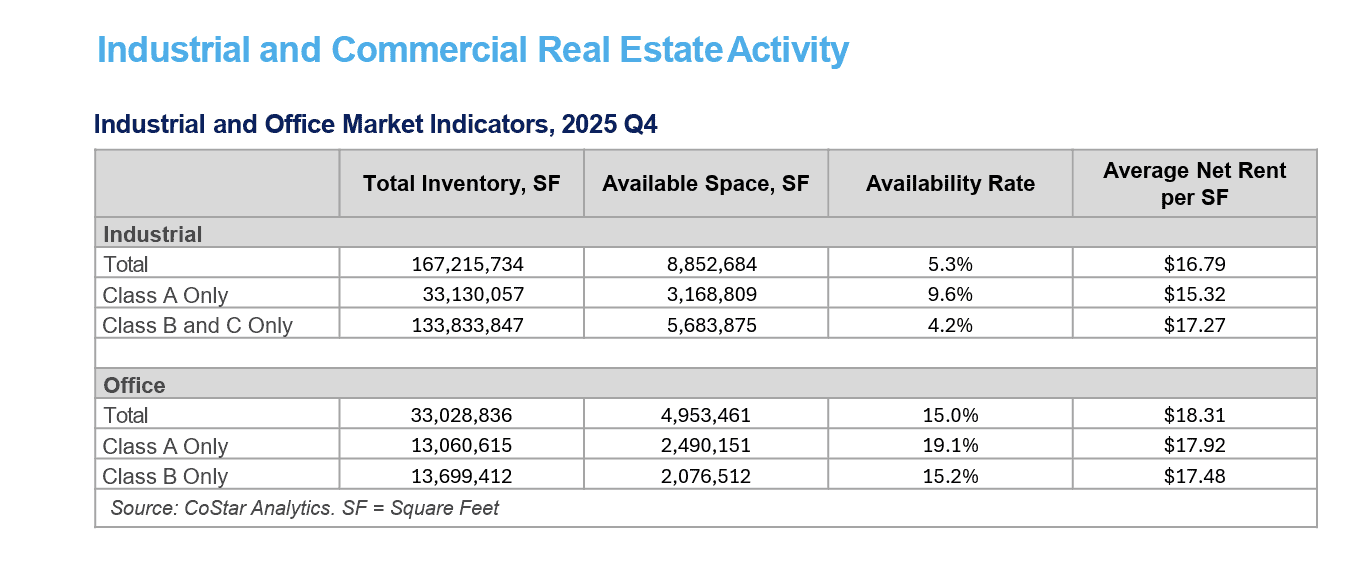
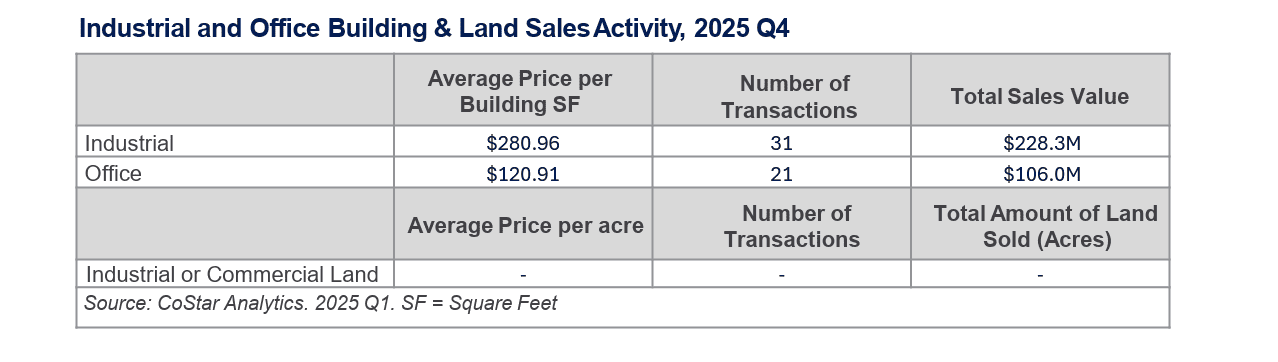
The report says the availability rate of all types of office real estate space combined is 15 per cent. It also notes that in the fourth quarter of 2025, 31 industrial spaces and 21 office properties changed hands.
But while the trend lines are clear, Barkin says the spaces people are returning to can look quite different.
“Demand is rebounding, but it’s a little bit different. We’re seeing renewed momentum in office construction and companies realize spaces need to work a little bit harder or differently than they did before,” he says, adding that some companies are reducing their physical space due to hybrid work policies or a trend towards more collaborative methods.
“We’ve done a few projects where companies that had three floors and are going to one floor because, traditionally, everyone had their own office or offices were larger, but now it’s more open and collaborative. They realize they need 25,000 square feet instead of 60,000,” he says.
Landlords, Barkin says, are investing in common areas.
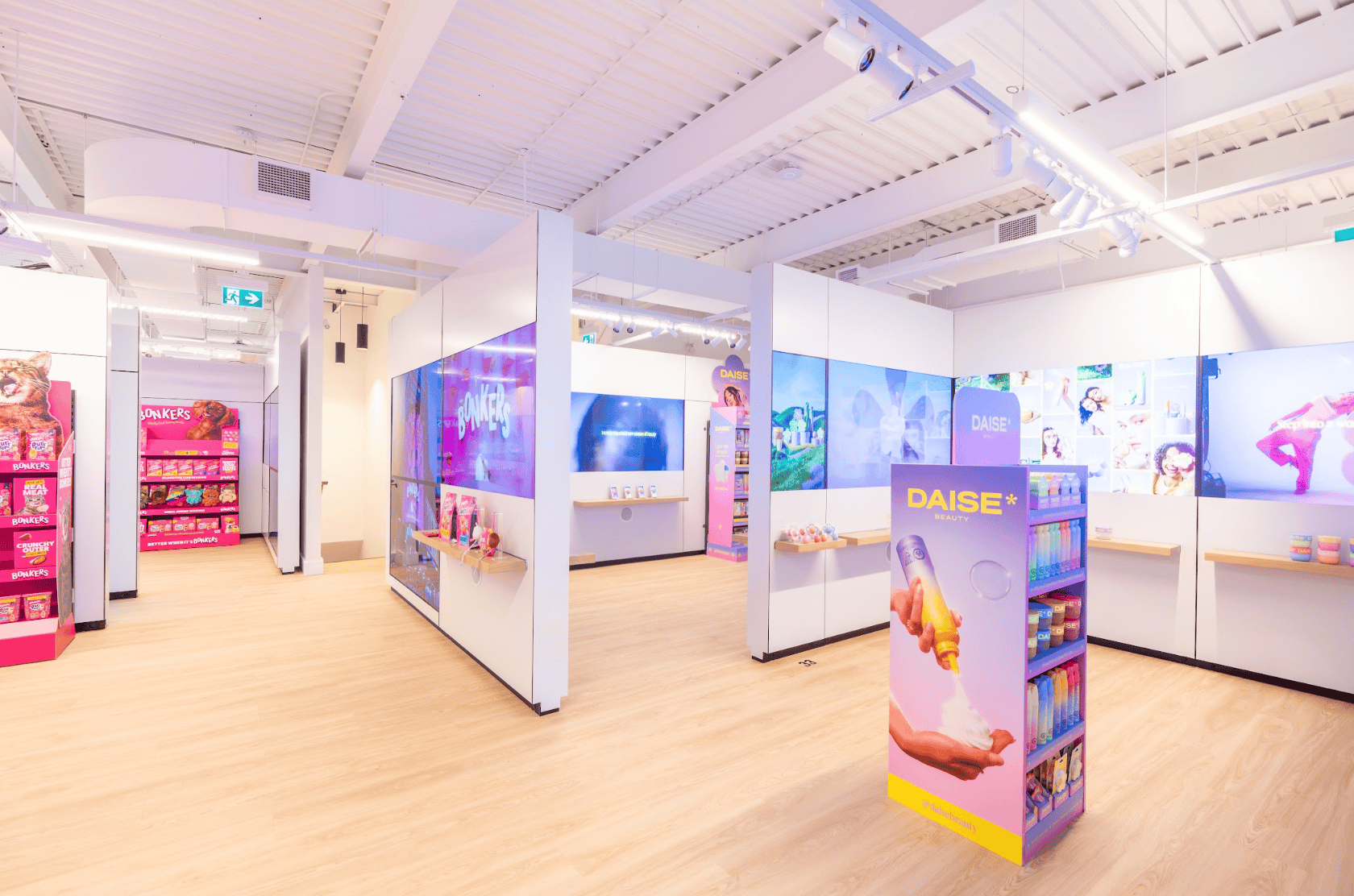
In recent years, BUILD IT has seen an increase in demand for on-site food offerings in commercial spaces, along with gyms. Companies are also looking for more customizable workspaces complete with collapsible walls to make large or small meeting rooms, along with smart lighting and upgraded technology to support video conferencing.
People, Barkin says, are looking for workspaces with more recreational appeal.
“People really want hospitality amenities, the lounges, wellness spaces and coffee shops. It’s interesting to see because the office is not what it traditionally was. It’s more complex on the design and construction side, especially with technology and collapsible features,” he says, adding that there’s a sustained interest in eco-friendly materials, cleaner air and natural light.
Despite many companies and governing bodies maintaining hybrid work policies (Mississauga, for example, plans to continue with the current hybrid arrangement of three days a week in the office for the 20 per cent of its workforce that does not need to work on-site), the city is bullish on future occupancy.
The city’s market conditions report notes that Mississauga has the second-largest economy in Ontario, with over 115,000 businesses generating over $63.3 billion in economic output. The city, the report said, also boasts the province’s second- and third-largest inventories of industrial and office building space, respectively.
Commercial development activity in 2025 was, according to the report, strong, with an eight per cent year-over-year increase in activity.
Barkin says that, based on what he’s seeing, the office isn’t going anywhere.
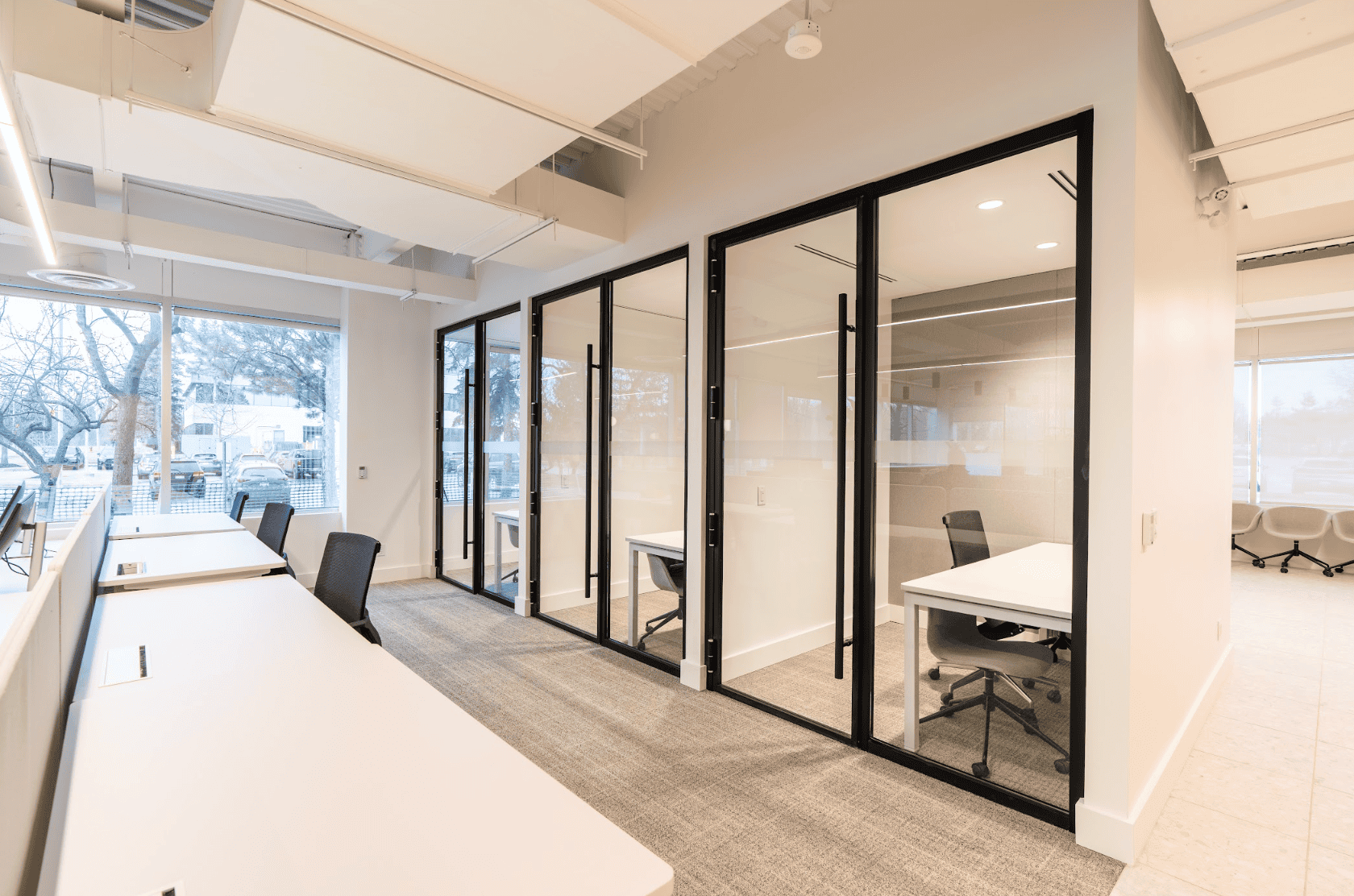
“The key thing is the office is not going away, it’s going to evolve. The vacancy rate hit a high level during COVID, but it’s definitely changing. Companies that are succeeding are treating workplaces like strategic places for culture, community and collaboration. We’re building smarter, more flexible, more experience-driven environments than ever before,” he says.
But while more creative environments are gaining popularity, they might not be feasible for all companies, especially given the rising construction material costs.
But budgets aside, Barkin is noticing distinct trends in new commercial construction–and demand is far from declining.
“Painted walls, carpeted floors and the fluorescent lights that blinded you back in the day, we’ve deviated quite a distance. Some designs include beautiful millwork, gorgeous reception areas, fancy lighting and plants,” he says.
“We’re seeing more office tenders than we ever have. Vacant spaces are getting snatched up, more companies are opening, and there’s been a re-emergence of international companies. Canada is still a first-class country, Toronto is a first-class city, and it’s always on the map.”
All photos of ZURU Mississauga courtesy of BUILD IT
INsauga's Editorial Standards and PoliciesPollView All
WIN A $100 GIFT CARD
Subscribe to INsauga’s daily email newsletter for a chance to win a $100 Amazon gift card.