
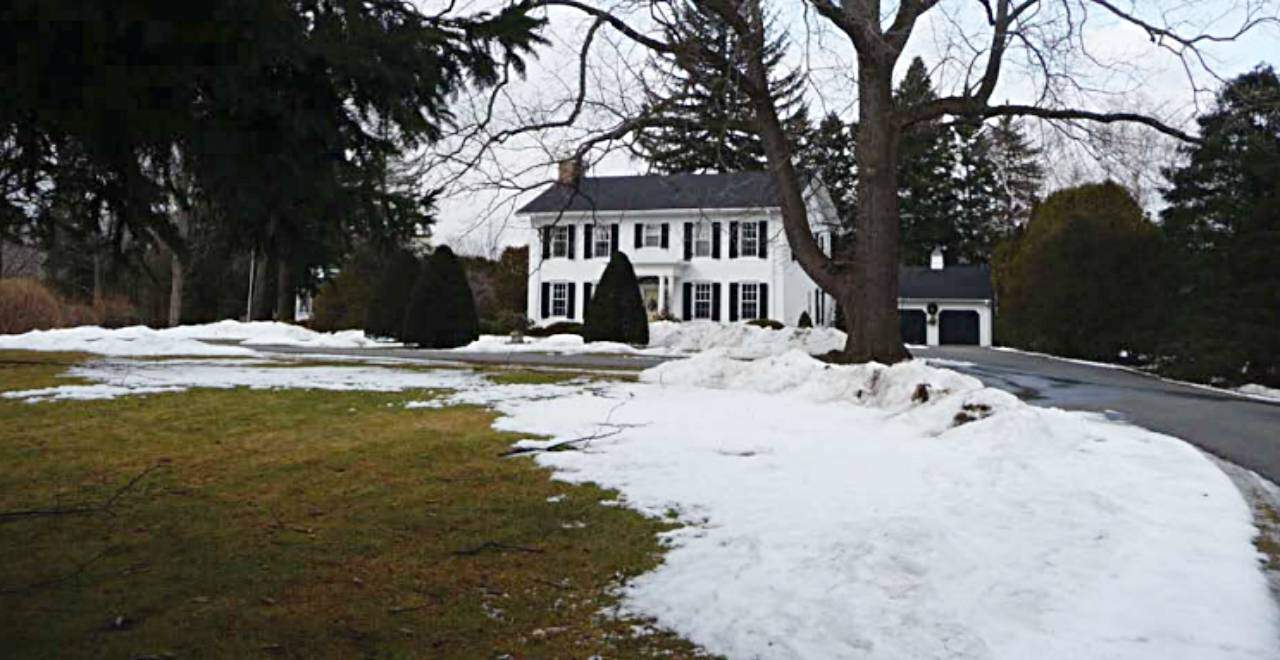
A home with historical significance is gone forever, but the legal battle over its unauthorized demolition could have a lasting impact on heritage preservation across Ontario.
The Town of Oakville says a court ruling that resulted in more than $800,000 in penalties against the company that demolished the designated heritage property sends a strong message that protected buildings cannot simply be torn down without consequences.
On July 9, the Ontario Court of Justice in Burlington heard a guilty plea from 1475 Lakeshore Road East Inc., which was charged after the century-old property was demolished without the required approvals.
The company was ordered to pay a total of $822,000 in penalties within 30 days.
The penalties include:
- $700,000 for demolishing a designated heritage property contrary to the Ontario Heritage Act;
- $50,000 for demolishing a building without a permit under the Building Code Act;
- $72,000 through a court order to rehabilitate the damage caused by removing a mature tree without a permit under Oakville’s Private Tree Protection By-law. The funds will go toward the town’s reforestation efforts.
While the ruling cannot bring back one of Oakville’s oldest homes, town officials say the decision reinforces the importance of heritage protection laws.
“While the loss of the heritage home cannot be undone, the outcome reinforces the importance of complying with provincial legislation and municipal by-laws that protect Oakville’s heritage resources, urban forestry and community character,” the town said in a statement.
The property, located at 1475 Lakeshore Road East on the north side of Lakeshore Road East between Maple Grove Drive and Trelawn Avenue, was demolished in the summer of 2025, sparking outrage among local historians and residents.
The home was originally built around 1830 and was known as the Halfway House because it served as an inn and stagecoach stop along the route between Toronto and Hamilton. It was also known as the Barnett Griggs House and the Ryrie Estate.
The two-storey Georgian-style building had been designated under the Ontario Heritage Act, meaning any major changes — including demolition — required approval from the municipality.
Following the demolition, Oakville launched legal action against the property owner, eventually laying multiple provincial offence charges.
At the time, heritage advocates called for strong penalties, warning that allowing historic properties to be demolished without serious consequences could undermine heritage protections across the province.
Under the Ontario Heritage Act, unauthorized demolition of a designated heritage property can carry penalties of up to $1 million and, in some cases, jail time. However, heritage advocates have often argued that maximum penalties are rarely pursued.
The Oakville case could now serve as an example for municipalities across Ontario dealing with similar conflicts between redevelopment pressures and heritage preservation.
As communities across the province continue to balance the need for more housing with the protection of historic buildings, the outcome demonstrates that heritage designation is more than just a symbolic label.
For Oakville, the town says the case is a reminder that protecting historic properties and natural features remains a priority.
“The Town would like to thank residents who brought concerns forward and supported efforts to protect Oakville’s cultural heritage and natural environment,” officials said.
INsauga's Editorial Standards and Policies
PollView All
WIN A $100 GIFT CARD
Subscribe to INsauga’s daily email newsletter for a chance to win a $100 Amazon gift card.