

The fate of a heritage home known as the Robert McLaughlin House, the former home of the father of Oshawa icon and GM Canada founder Col. Robert ‘Sam’ McLaughlin, has been decided by the Ontario Land Tribunal.
Last month, the OLT sided with the City of Oshawa and agreed that the owner of the property should not be permitted to demolish the heritage home, even though it was damaged – through no fault of the owner – in a 2018 fire.
The application to demolish the property was initially denied in 2023.
In 2018, the house suffered severe damage when a man who had barricaded himself inside from police set it on fire. In 2023, a murder and double-stabbing took place next door and in between, the 139-year-old home suffered “rot by neglect” as property owner Nantuck Investments sought approval to have the house demolished to make way for a new development.
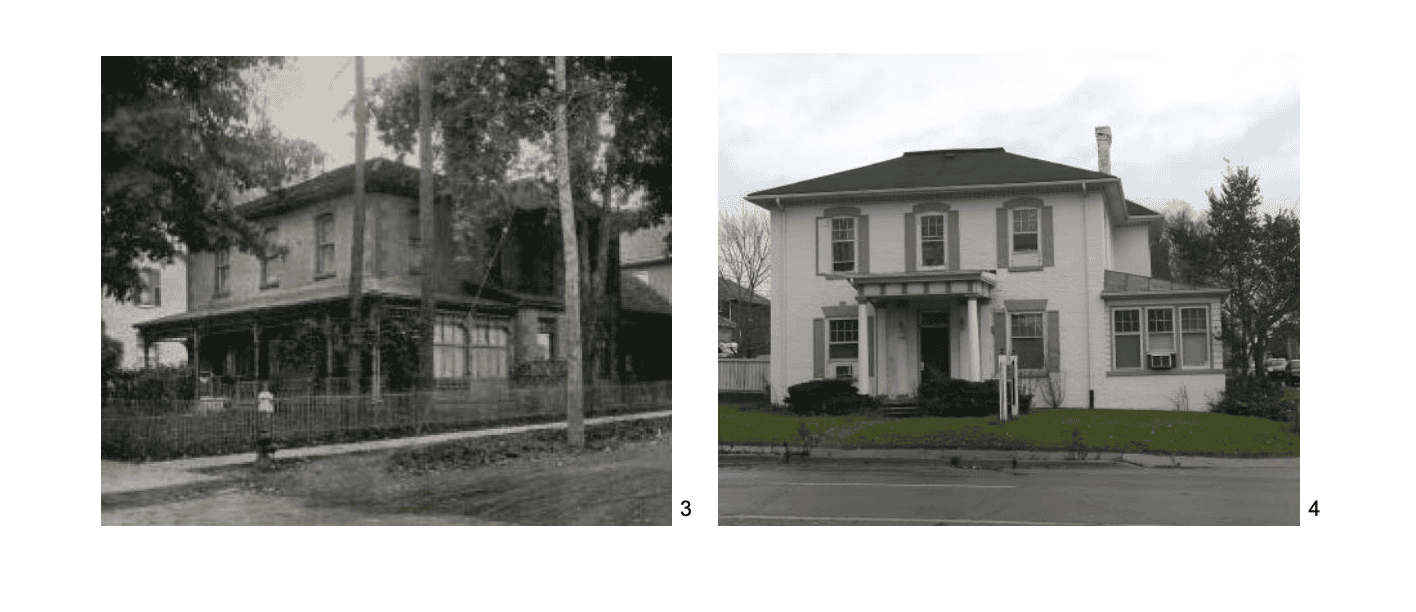
Photo from OLT report
The house, built in 1887 in the ‘Classical Revival’ style, was the residence of senior McLaughlin, his third wife, Eleanor, and their servant, Elizabeth Welles, between 1901 and 1919.
It was one of four homes McLaughlin lived in and the only one still standing.
Former Oshawa Mayor RH James also lived there for a time, and the house was converted to professional offices in the 1960s.
Nantuck Investments submitted the demolition application in March 2023 and initially promised to preserve the front façade before subsequently amending that statement, with Nantuck representative Gagan Hajatri saying the fire damage would make it “unfeasible” to preserve the entire façade.
At the time, Nantuck said it wanted to rebuild with two commercial units and six residential units.
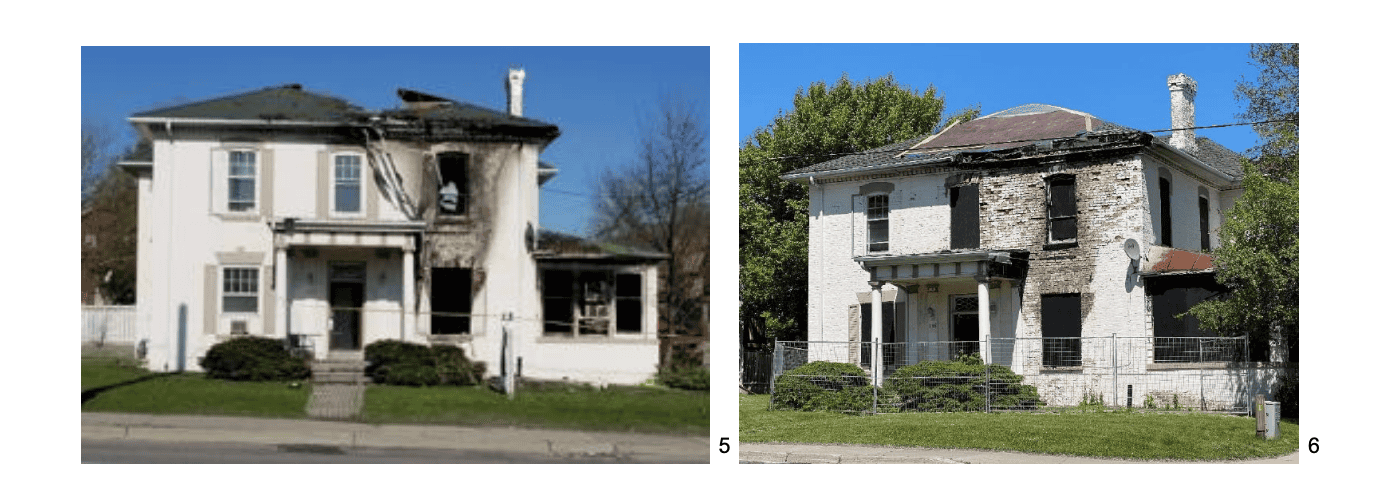
Photo from OLT report
The OLT report said Nantuck argued that the damage is irreparable, restoration would be prohibitively expensive and that forcing restoration would infringe on the company’s private property rights.
The city, the report notes, argued that the site remains protected by its designation as a heritage property and that, despite the fire, important historic attributes are intact and would be irreversibly destroyed if demolished. The city also said the owner did not provide a proper Heritage Impact Assessment (HIA), a strategic conservation plan or evidence from a heritage expert.
The report said that Hajatri expressed the company’s commitment to recycling materials from the existing structure, where feasible, to rebuild the front façade, but the tribunal found that his evidence suggested Nantuck could not commit to a partial demolition with conservation of portions of the front façade due to structural uncertainty and cost concerns.
The municipality also said that a rebuild that simply mimics the old facade does not qualify as genuine heritage preservation.
In the report, the tribunal indicated that issues around costs are not applicable, as the law prioritizes the Heritage Act over an owner’s financial hardship.
The report also notes that the city argued that, while restoration might be costly, it’s neither unfeasible nor impossible. The tribunal argued that while cost concerns are understandable, the fundamental issue at the core of the conflict is not the company’s financial resources, but the home’s heritage value and the evidence that its historic attributes can be preserved.
Ultimately, the tribunal said its decision to preserve the building hinged on reinforcing the Ontario Heritage Act rather than litigating allegations of unfairness, practicality or financial hardship.
While the report notes that the tribunal sees a path forward for Nantuck to adapt the property through partial demolition, it indicates that the city was justified in prohibiting a full and complete demolition.
“The tribunal orders that the appeal is dismissed and the City of Oshawa’s refusal of the application to demolish the structure at 195 Simcoe Street North, Oshawa remains in force and effect,” the decision reads.
– With files from Glenn Hendry
Cover photo from Google Maps
PollView All
WIN A $100 GIFT CARD
Subscribe to INsauga’s daily email newsletter for a chance to win a $100 Amazon gift card.