
A quarter-century after the giant Knob Hill Farms grocery store pulled out and more than a decade since Metrolinx pulled in with grand plans to turn it into a GO station, the residents of Oshawa are still waiting to be amazed.
For the first time since crews assembled in June to stabilize and preserve part of the site – the location of an iron factory dating back 128 years – there is finally some tangible progress being made.
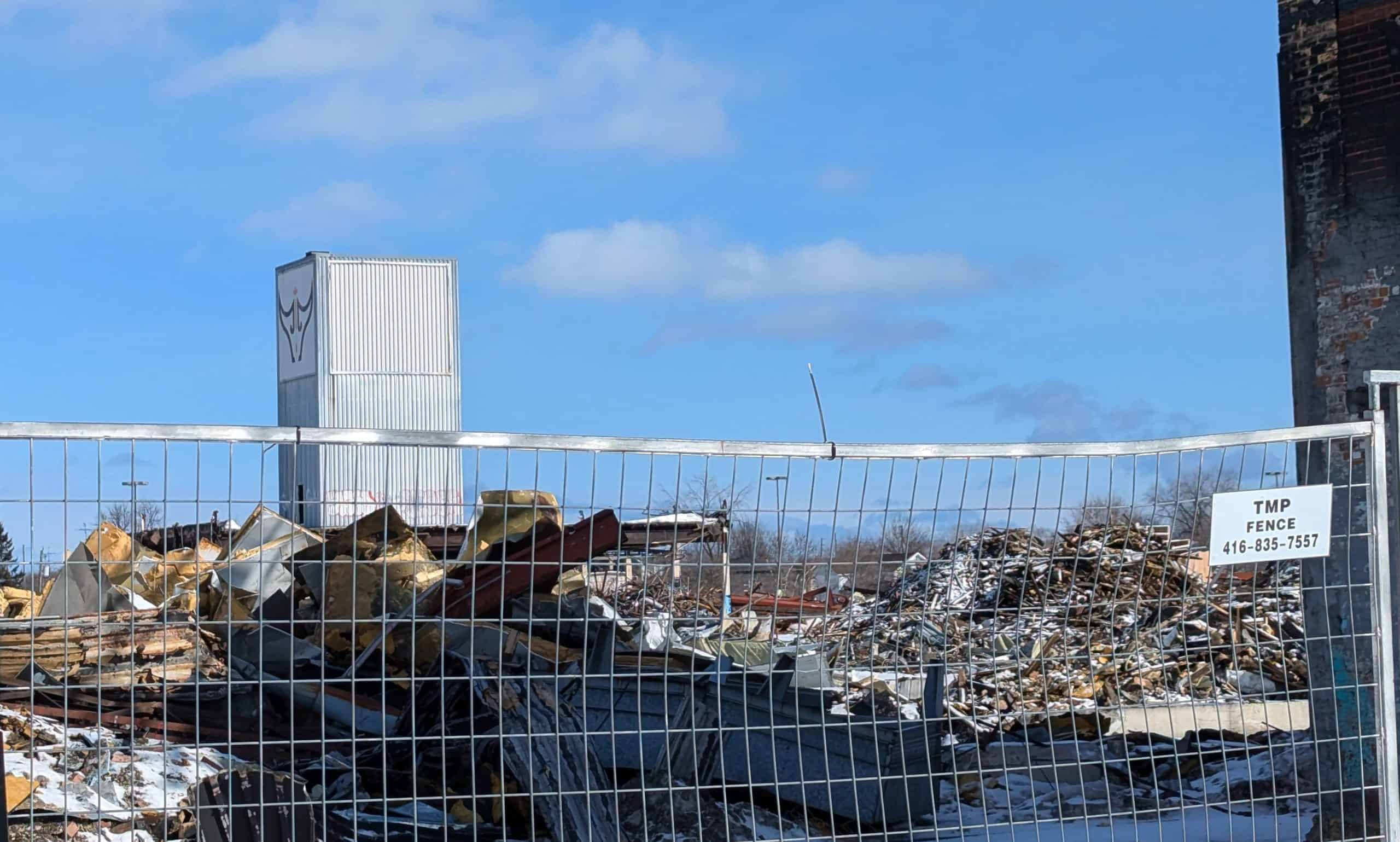
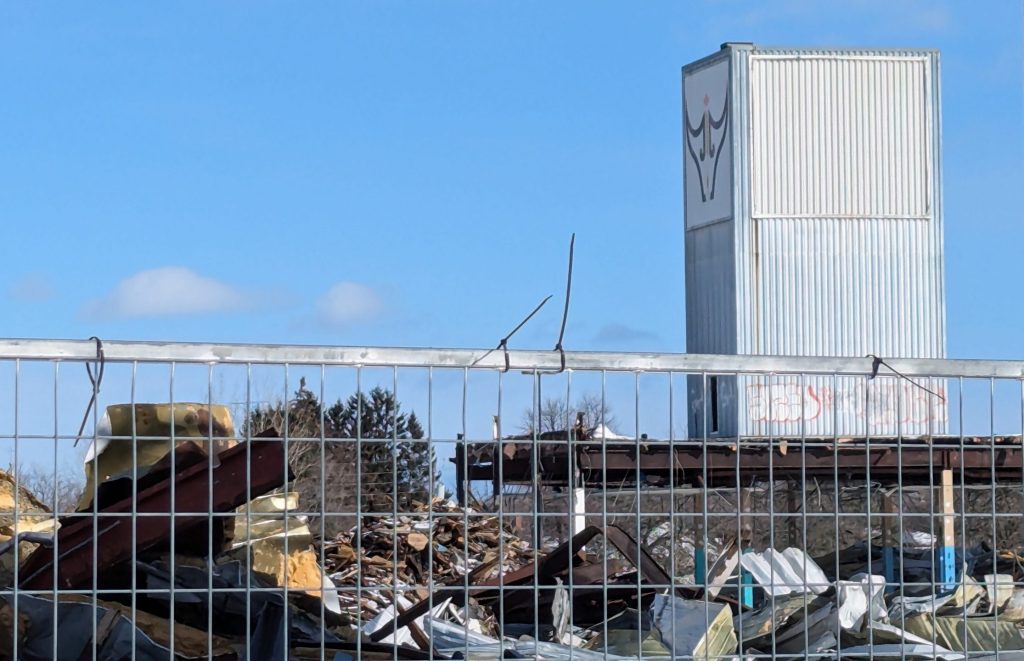
The massive building – home to Ontario’s biggest grocery store when it opened in 1983 – has been demolished, with only the iconic tower with the ‘Knob Hill Farms’ logo still standing and rest reduced to giant piles of scrap metal.
Metroland spokesperson Andrea Ernesaks said work crews began the work to take down the building in January but she was not able to offer a timeline of next steps for turning the site into Oshawa’s new central GO station, one of two new stations in Oshawa and four in Durham Region promised as the commuter line is extended into Bowmanville.
“Further updates will be provided publicly as work progresses,” she said.
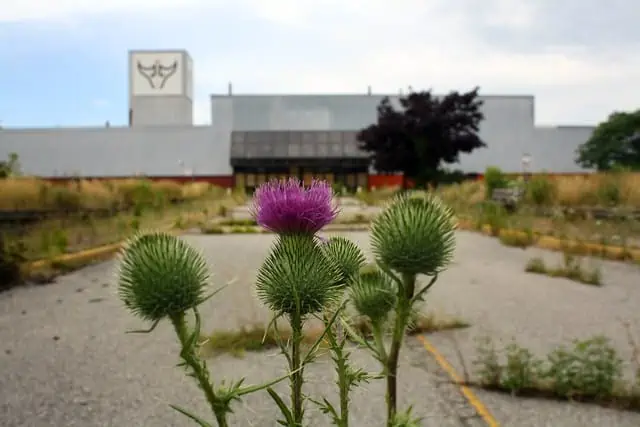
The Knob Hill tower, pre-demolition.
It’s been eleven years in total since the land was expropriated by Metrolinx (after negotiations with the landowner went nowhere) and more than eight years since the former provincial government announced they would be building the new station.
It was all going to be done by 2024, too.
The actual time frame to get the new stations built and service to Clarington is still a mystery, though it appears to be the end of the decade at the earliest and progress on the project is illusive, at best.
Specialized crews mobilized in the summer to begin the preservation and structural rehabilitation of the heritage component, a two-storey redbrick façade from an 1897 re-build of the Ontario Malleable factory.
More than half a year later preservation activities of the heritage elements continue while the main part of the structure is finally reduced to rubble.
Everything appeared to be on schedule, Oshawa Councillor John Gray said in November, though he also dryly noted that expectations of speedy infrastructure work by the province’s transit arm was never on anyone’s bingo card.
“I don’t think anyone’s going to go to Metrolinx if they want something done promptly,” he said, citing the much-delayed Eglinton Crosstown project in Toronto. “We’re all pretty anxious to get this thing started.”
Metrolinx purchased the property at 500 Howard Street in 2014 as part of GO train expansion plans that will see the new stations built in Oshawa and Clarington and train service pushed to Bowmanville.
The project was promised by the Liberals in 2016 and then delayed when Doug Ford and the Progressive Conservatives came to power before Ford made the extension a campaign plank during the 2022 election.
Last year Ford declared the project is “one step closer to getting shovels in the ground” after announcing Bowmanville Construction Partners – a general partnership between Ledcor CMI Ltd. and Dragados Canada – as the construction manager.
The new station, and the revitalization of the surrounding neighbourhood has been on Oshawa’s wish list since former Toronto Maple Leafs owner Steve Stavros abruptly closed the 226,000 sq. ft. food terminal in 2000.
The history of the site pre-dates wholesale groceries by nearly 90 years, with the west side of the building home to an iron foundry that from 1872and 1977 played a huge part in Oshawa and Canada’s industrial and labour history. It was the site of one of the country’s first strikes in 1900 and there were strikes in 1940 (leading to a five-day, 45-hour work week and time-and-a-half for overtime) and in 1945 and 1966.
Employees were locked out of the plant in 1976 over a pay dispute and never returned to their jobs as the plant was closed by owners ITT Grinnell 14 months later in the spring of 1977.
Six years later Stavros (the man who said no to Wayne Gretzky finishing his career in Toronto) expanded his Knob Hills grocery empire to Oshawa. The site was the go-to discount shopping experience for miles around until the Macedonian-Canadian businessman, racehorse owner and philanthropist – facing huge losses from new competitors like Costco – made the call to shut all 10 terminals down.
His divested his stake in the hockey team three years later and died in 2006 of a heart attack.
The next First Avenue icon to go was the glass factory across the street in 2009. There had been a glass factory on the site since the 1920s and the plant employed about 160 people making windshields for the auto industry when Pittsburgh Glass Works bought the place and, after waiting a couple of months for the dust to settle and the cheques to clear, said see ya, we’re shutting you down.
The lands are now being turned to a mixed-use, mostly residential community.
Since then the abutting First Avenue had been mostly forlorn and forgotten and far from first in the eyes of planners until the extension was announced, which will see Metrolinx build the four new stations to the new end-of-the-line in Bowmanville.
The $730-million (2023 numbers), 20-kilometre extension will include new tracks and signals, seven new bridges and at-grade crossing upgrades. Once completed, it will provide all-day service in both directions between Bowmanville and Union Station, including peak weekday service every 30 minutes, and is expected to reduce in-vehicle travel times between Bowmanville and Union by 15 minutes.
PollView All
WIN A $100 GIFT CARD
Subscribe to INsauga’s daily email newsletter for a chance to win a $100 Amazon gift card.