
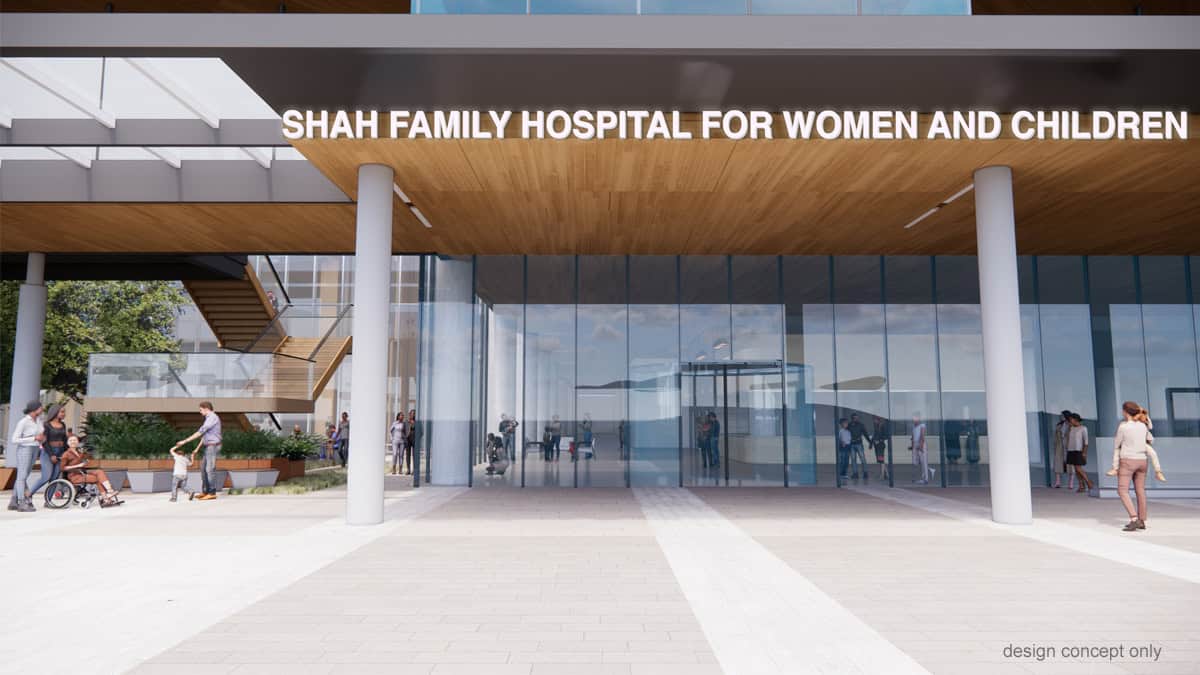
A new hospital being built in Mississauga that will be Ontario’s first health-care facility to focus exclusively on the well-being of women and children is currently taking shape and while the physical facility is not yet ready, programming is already reaching community members who need help post-partum.
Recently, Trillium Health Partners, which operates hospitals in Mississauga and Etobicoke, announced that it’s already serving patients through its perinatal community care program, a program designed for post-partum women who stand to benefit from additional support (including infant weight checks, feeding and breastfeeding support, mental health support and more) in the six to eight week period after birth.
The program, led by midwives, opened last summer. A THP spokesperson says it has already supported 450 families and provided more than 800 visits to patients–including those who do not have a family doctor, are new to Canada, or might otherwise struggle to receive follow-up care.
“When I was pregnant, I knew I wanted to work with a midwife, but I could not get in with any because it’s their policy not to take on high-risk pregnancies,” Nova Starr, a recent PCCP patient, tells INsauga.com.
“Fortunately, when I was in the hospital recovering, one nurse told me there was a new program that offered support and asked me if I was interested. I said ‘yes, absolutely.’”
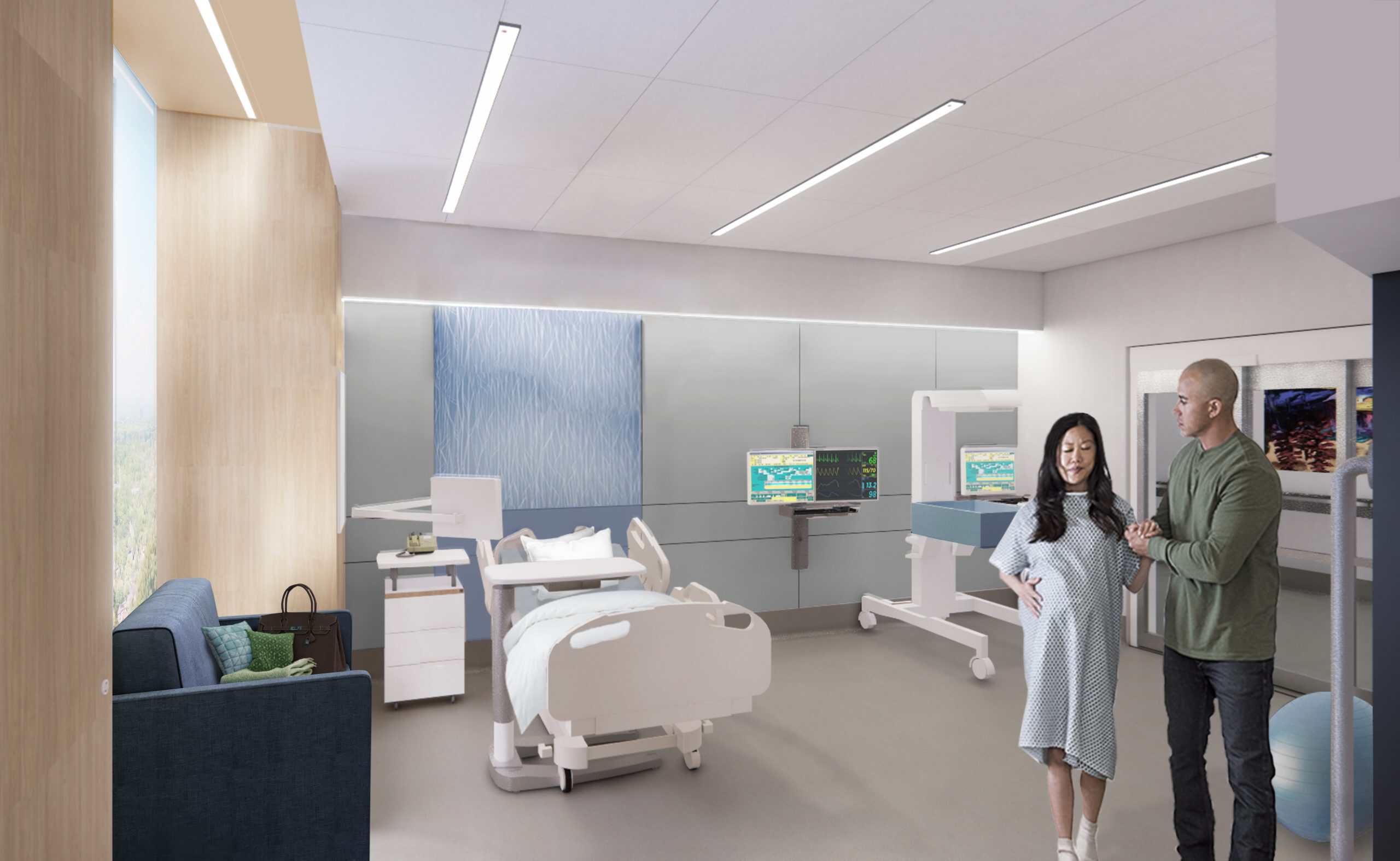
Rendering from THP
Starr gave birth nine months ago to twins–a boy named Malcolm and a girl named Francis. While she was unable to receive midwife care because twin pregnancies are automatically considered high-risk, she said the challenging post-partum period was mitigated by support from a program that will be just one service available at the future Shah Family Hospital for Women and Children.
The 200,000-square-foot hospital, announced in 2023, will be located at the site of the current Mississauga Hospital. This state-of-the-art facility will be built over the next decade or so on the same site as the current hospital at Hurontario Street and The Queensway.
Starr says the PCCP program was hugely helpful because health care professionals were able to come to her, allowing her to avoid carrying two babies to appointments while recovering from a c-section.
“One of the first benefits is logistics–they were able to come to my house because I wasn’t only recovering from a c-section and having twins, it was hard to wrap my mind around leaving the house. I couldn’t lift their carseats,” Starr says.
“Just the level of personal care made it such a special experience.”
Calling the two midwives who visited her post-birth “kind, patient and encouraging,” Starr says another huge benefit was having an expert there to walk her through some of the earliest–and scariest–stages of parenting.
“When you’re doing something for the first time, it’s so good to have someone tell you you’re doing such a good job. You can prepare as much as you can, but once you’re in the thick of it…there are so many things you don’t know and don’t think about, so getting that encouragement and support was so good.”
‘Remi Ejiwunmi, vice president of the Shah Family Hospital for Women and Children, says that the two-floor facility, dedicated to in- and out-patient reproductive, gynecological, pediatric and postpartum care, will allow the new hospital to serve a particularly vulnerable community.
“With our focus on building better healthcare in the community, we identified that there are folks who are most vulnerable and have the least amount of attention paid to their needs,” she tells INsauga.com.
“It focuses on our most marginalized people–women and children whose voices are not often heard in the health care system.”
The hospital is also coming to a community with many young families. In a news release, THP said over 8,000 births take place annually—more than any hospital in Canada. As of now, THP delivers health care to over 2.2 million residents of Mississauga and the western GTA, and that number is expected to grow to 3.2 million by 2041.

Rendering of new hospital
Ejiwunmi says the goal is to build a facility (and, by extension, a whole health care community) that recognizes that a new family’s journey doesn’t end when a child is born.
“We want to follow them on their journey as they go through their lives,” she says, adding that thought and care has gone into envisioning the hospital experience from a variety of patient perspectives, including a young child needing medical care or a teenager needing an ultrasound for a reproductive health complaint or concern.
When the project was first announced, THP said the facility will include dedicated mental health inpatient beds for children and youth (a first for Mississauga), specialized care for low- and high-risk pregnancies, modern labour and birthing suites, one of the largest NICUs in the province (including specially designed couplet care suites to accommodate parents and babies staying together) and state-of-the-art surgical suites to accommodate specialized procedures closer to home.
The hospital will also include private, all-gender washrooms, infant feeding areas and a dedicated pediatric zone in the emergency department.
Ejiwunmi says the space will be designed with both health care providers and patients in mind, offering patients access to private rooms with external-facing windows for natural light, outdoor terraces, family waiting spaces, birthing tubs, immersion tubs and more.
“There’s a whole continuum of care for uncomplicated births for more mobile patients and at the other end, operating rooms with everything necessary to monitor more complex situations and flex back and forth along that continuum,” she says.
Ejiwunmi says the PCCP program works to bridge the gap between hospital and home, allowing patients–especially those without a primary care provider–to lean on experts during the first few weeks of their child’s life.
“It’s a seamless program that can allow anyone to make a referral for a patient who is vulnerable or doesn’t have a family doctor. Someone who will check in from a clinical standpoint to make sure the person who gave birth and the baby are doing well, but also connect them to support services if they don’t have people around them who can do that for them,” she says.
Starr says the program allowed midwives to meet her where she was–literally.
“Visits were scheduled and [the midwives] came once a week for six weeks,” Starr says.
“What was also great was that they could meet me where I was, like in the kids’ room in the glider. I didn’t have to clean up for visitors. Zero judgment, they’d meet me right in the room and help me there.”
Ejiwunmi says everyone involved in the hospital has been working hard over the last 18 months to make the project a reality. Since the hospital is still in its infancy (no pun intended), Ejiwunmi says listening to feedback from the community is key.
“We’re really working to understand what our community wants to see. Our vision includes deeply embedded, culturally responsive care provided in the hospital and outside of it. Making access to health care equitable and seamless is something everyone is excited about.”
Starr says the PCCP offering new mothers a helping hand at home is incredibly helpful and encouraging–and something she would recommend other women take advantage of.
“It was a really positive experience and I think everyone should go for this instead of the traditional route. I was sad to have my last appointment. It’s just nice having someone check up on you when you’re home alone.”
Ejiwunmi says anyone who gives birth at THP could be connected to the PCCP.
“Anybody who comes into contact with a patient through the program can make that referral. Someone can come into triage midway through their pregnancy and if a nurse thinks they’ll benefit from the program, they can make a referral right then and there. An obstetrician can refer a patient if they don’t think they have enough support.”
As for what she would have liked to see more of, Starr says she wishes the program lasted longer.
“Honestly, it was really great and it would have been nice to have it last longer than six weeks, which is standard, because it was so great to get that support. Everyone should have this level of care. I would recommend it to anyone looking for it. It really was personal. That really stood out to me.”
All images provided by Trillium Health Partners
INsauga's Editorial Standards and PoliciesPollView All
WIN A $100 GIFT CARD
Subscribe to INsauga’s daily email newsletter for a chance to win a $100 Amazon gift card.