
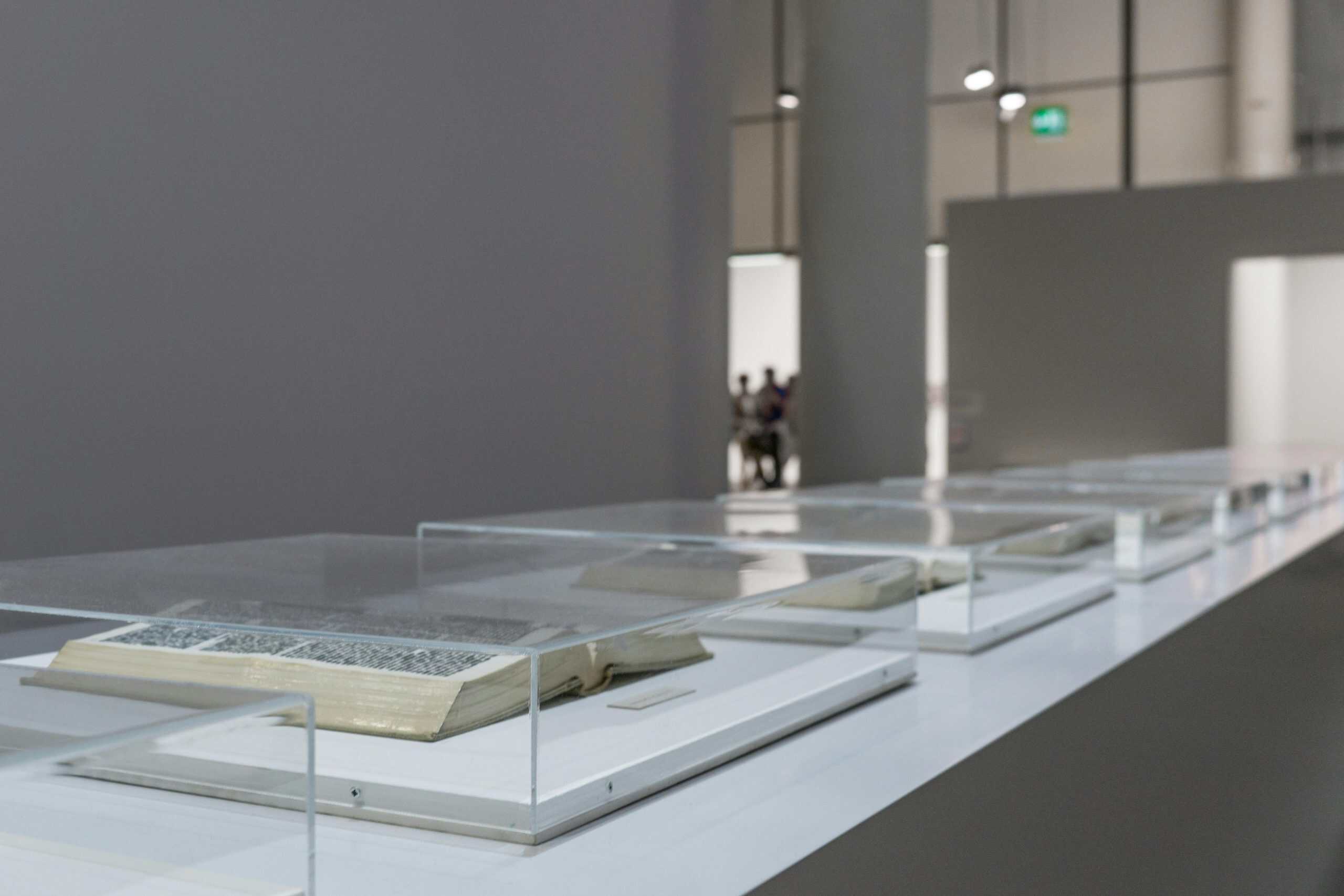
A growing Ontario region whose history dates back to 1816 is home to over 35,000 heritage objects that historians fear could be lost to time–or even damaged or destroyed–should nothing be done to halt the move to download heritage preservation onto four lower-tier municipalities that might not be able to accommodate the historic documents, photographs and artifacts.
On Dec. 10, three heritage experts appeared before Halton Region Council to urge councillors to push back against plans to deaccession tens of thousands of heritage objects, including about 3,100 photos, 13,000 archival materials, 18,400 natural artifacts, Indigenous artifacts, farming equipment, artwork, furniture, and clothing.
The deputations followed a decision by Halton Region Council, made during a closed session on July 9, to “cease delivering heritage services” by the end of the year and to deaccession its vast collection.
The items are currently being held in the former Halton Region Museum, which closed to the public in 2016 and now serves as the Halton Region Heritage Services archive.
Michelle Hamilton, a history professor at Western University, spoke to council and INsauga.com about the challenges inherent in shifting the responsibility for 35,000 objects from the region to four municipalities, two of which (Milton and Halton Hills) do not have museums.
“First of all, getting rid of an entire collection is…you’re dispersing something that’s 35,000 objects and that’s a problem. The timeline, the budget and the way they’re doing it is very unethical,” she tells INsauga.com.
Hamilton says that following deaccessioning guidelines set by the Canadian Museums Association, as well as by other provincial and international organizations, is not feasible with a modest budget and a tight timeline. She also argues that the move to deaccession the objects is financially motivated and represents a significant pivot from a 2021 plan to build an $8 million facility to store and display the historic objects.
The plan for the facility was previously removed from the regional budget and there’s currently no indication that it will be built.
Hamilton and other historians and heritage workers also say the decision to deaccession the objects was made with little to no meaningful stakeholder consultation.
Following the summer 2025 decision, Halton Region–which consists of Oakville, Burlington, Milton and Halton Hills–spokesperson Isabel Contin told The Canadian Press that the region was dismantling its heritage services because of the passage of Bill 23, a 2022 law passed by the Ontario government to spur the creation of up to 1.5 million new homes by 2031.
Contin told CP the decision was due to “shifting land use planning responsibilities from the Region to the local municipalities. This includes heritage, but also economic development, agriculture, and forestry.”
John McDonald, a Milton-based historian and author of Halton’s Heritage: William Halton and Halton County, tells INsauga.com that he doesn’t believe Bill 23 necessitates the dismantling of general heritage services at the regional government level.
“I actually spoke to a few of the councillors [after the July 9 decision] and the one response that I got initially was that it had to do with Bill 23 and budgetary considerations. With Bill 23…it doesn’t say you have to close your heritage funding. I know there are priorities and considerations for a council, but once again, if this measure were to be taken, one would hope there would be consultation and thought provided from those familiar with the artifacts and documents and so on,” he says.
At the Dec. 10 meeting, Halton Region CAO Andrew Farr told council there was no set timeline for allocating the objects to individual towns and cities.
“The next step is to bring back a fulsome report on the deaccessioning process in 2026 that will contain the entire plan. The process will take as long as it takes,” he told council, adding that a new report will be presented early next year.
While the Halton Region Heritage Services archive, where the objects are currently stored, is slated to close on Jan.1, Halton Region’s spokesperson Contin also told the CP earlier this year that the deaccessioning will take place “well beyond that date.”
In a staff report to council, Halton Region said its preferred approach is to transfer the artifacts to a local institution in another municipality or region and, if they cannot be assumed by a town or city, auction off items that don’t have a “clear connection” to the region’s history.
The report says there will be a “separate and distinct” process in partnership with Halton Region’s Indigenous relations team to rehome Indigenous artifacts.
Despite assurances that the deaccessioning process won’t be rushed, heritage experts say the risks are too great and that the responsibility to preserve historically significant objects for current and future residents is being punted in favour of reducing costs.
“Financial reasons are one [unethical reason for deaccessioning], and I believe it’s purely motivating Halton Region’s decision,” Hamilton says.
“If you were to deaccession all the artifacts and find homes for them following the guidelines, it’ll take over 12 years and several million dollars. In some areas of Halton, there are no museums. They say they’ll be accessible and more available at the local level, but there’s no museum in Halton Hills, so where are [the objects] going? Burlington does have a number of museums focused on Burlington, so they won’t take Oakville or Milton objects. If the objects are accepted, who is paying for labour, storage, new supplies, etc? It’s ignoring how the museum world works. It’s just not possible.”
Mark Hopkins, a former archivist with the City of Toronto, agrees with Hamilton that the move is ultimately unnecessary and suggests council hastily adopted the fifth and final option in a lengthy report that he believes indicates the collection can be held and maintained by the region.
“This is completely discretionary,” he tells INsauga.com, adding that the Museum Collection Administration study prepared for the region by Lord Cultural Resources has been used to “window dress” the decision.
The Lord Report offers the region five options: Restructuring Halton Heritage Services; launching a contract model that allows other organizations to participate in handling heritage objects; launching a region-wide museum network; or diminishing Halton Heritage Services and dissolving it entirely.
In the report, consultants note the drawbacks of the final option include a lengthy deaccessioning process, public backlash, loss of service for local heritage organizations, and the possible relocation of parts of the collection out of the region. Benefits include cost reductions, better alignment with the region’s strategic business plan and “potential programmatic enhancements for local heritage and cultural organizations.”
Hopkins says that based on reactions from council members, many of whom raised concerns about the reported lack of consultation and capacity constraints in local museums, he suspects councillors voted without fully understanding the implications.
“When you listen to the questions and answers between staff and councillors, you’ll see that all of a sudden, people say there will be collaboration and discussion and meetings, but that’s a real turnabout if they’re serious about doing that,” he says.
During the Dec. 10 meeting, Halton Hills Mayor Ann Lawlor and Councillor Jane Fogel both acknowledged that the municipality would have difficulty showcasing any objects because there are currently no facilities fit to hold or display them, with Fogel telling council she didn’t believe local groups would have agreed to deaccessioning the region’s collection.
Lawlor, who said she’s ultimately optimistic that regional staff will be mindful and careful with deaccessioning the objects, told council that the decision to download responsibility for the collection did cause some concern.
“ I have a bit of history with heritage designations, heritage preservation, heritage matters…and when I understood what the region was doing, I was somewhat nervous about the path going forward, and so when the decision was taken to deaccession the collection, I was very much concerned about ensuring that the stories weren’t lost and that important artifacts weren’t lost. I made a public statement to that effect that I would commit to ensuring that in Halton Hills, nothing of value would be lost,” Lawlor told council.
Hopkins says he believes councillors care about the objects, but are not fully aware of how complex deaccessioning heritage documents, photos, and artifacts can be. Following the latest meeting, he’s more hopeful.
“I think at the political level, they want to protect the objects, but don’t understand the complexity of doing it and how to do it. I expect that staff will be a lot more careful now about what they put forward,” he says.
“They now know what we’re looking for. The bar has been raised and there are members of council who are really concerned about this. We have elections soon. The deputations will, I think, have a result and at a minimum, staff will be urged to produce more transparent reports and understand the need for collaboration. Councillors will be more challenging when they come forward with their next report.”
One heritage worker, who asked to remain anonymous, tells INsauga.com that the decision to download heritage responsibilities onto lower-tier municipalities still remains, at its core, an abdication of the government’s responsibility to be a steward and preserver of heritage–especially since some Halton County artifacts pre-date the existence of the four modern-day municipalities.
“We’re worried because whatever precedent is set in Halton will have ramifications across the board. Museums are not legislated…the only reason we maintain them is that we believe we have a community-level obligation and responsibility to maintain history and have an understanding of history,” she says.
“Halton is saying it’s no longer their responsibility to manage and maintain the history of their level of governance. Not all municipalities have money and staff to maintain museums.”
For Hamilton, one of her biggest fears is that most of the objects won’t be successfully rehomed in a local museum or property and will need to be auctioned. While this is common, she says it sits in an ethical gray zone because families turn objects over to regions with the expectation that they will be preserved and shared with others in perpetuity.
She also says deaccessioning can present legal challenges.
“It’s considered hugely unethical because they were given by families and organizations with the understanding that they’d be held forever for the public. This violates the public trust. When a donor gives an object to a museum, there’s a deed of gift that’s signed, and that deed of gift says, generally, that the museum will keep it forever. The donor walks away thinking it’ll be protected, so that can break a legal agreement.”
Hamilton also says she has worked with heritage objects in the past that were irretrievably lost to neglect and time.
“Things get damaged, lost, covered in mould, etc. Records are lost and we don’t know anything about the objects anymore. That’s what happens, and that’s what’s going to happen to this. Instead of doing this in 20 years, let’s stop it before it starts.”
As for what experts believe the best course of action is, some say keeping the collection at the regional level is infinitely better than a lengthy and costly deaccessioning process that could result in some objects leaving the region they’re tied to.
While many believe the region has made up its mind, all say last week’s meeting made them hopeful that more questions will be answered and more care will be taken. That said, experts expressed disappointment that questions are being raised long after the July 9 vote.
“Only Oakville and Burlington have museums, but they don’t have the space. The Town of Milton doesn’t have a facility or a museum and Halton Hills doesn’t have a museum per se,” McDonald says.
“It leaves everybody in a bad position but once again, hopefully, these things will be taken into consideration as things progress into the new year. Again, this is after the fact. The deed has been done and now we’re getting an opportunity to have input, but only after the fact. This could have been a collaborative process, much more collaborative than it has been so far.”
With files from Cassidy McMackon, The Canadian Press
INsauga's Editorial Standards and PoliciesPollView All
WIN A $100 GIFT CARD
Subscribe to INsauga’s daily email newsletter for a chance to win a $100 Amazon gift card.