
‘Necessity is the mother of invention,’ as originally uttered by Greek philosopher Plato, conveyed the idea that when faced with a problem or a need, people are driven to find “creative and innovative solutions.”
Nearly 75 years ago, long before tariffs and the ‘Elbows Up’ slogan became a thing and while war raged around the world, those creative solutions led to a short-lived ‘golden age’ of comic books in Canada, with our own national superheroes and local storylines.
It was a different time, and Canadians were being asked to roll up their sleeves and make do with less, with wartime restrictions on non-essential products imported from the United States, including chocolate bars, candy and yes, comic books.
For the first time, Canadian kids were reading stories about Canadian heroes, usually written by kids themselves, with adults off in Europe serving their country in World War II.
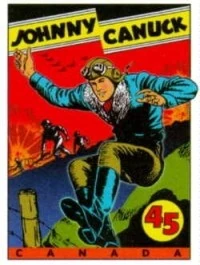
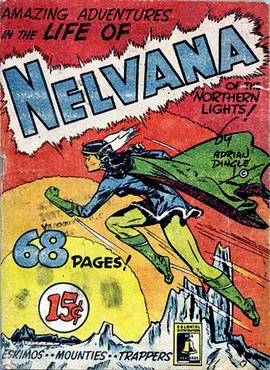
There was Johnny Canuck (not to be confused with Captain Canuck, who debuted in 1975), a man with no super powers (and a penchant for losing his shirt in battle) who fought Nazis and once socked Hitler in his Nazi face; and Nelvana and the Northern Lights, a half-Inuit Demi God created by prolific artist Adrian Dingle, who made her first appearance several months before Wonder Woman.
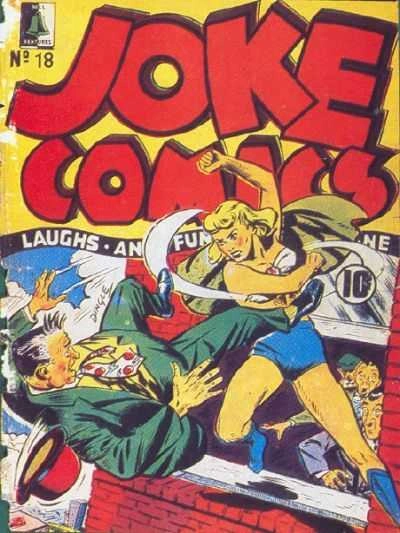
There were dozens more, mostly created by teenagers too young to be drafted into the war, and are usually referred to as the ‘Canadian Whites,’ since only the front and back cover were printed in colour, while the pages inside were kept in black and white.
Companies like Bell Features, Anglo-American Publishing and Maple Leaf Publishing were quick to take advantage of the opportunity, with names like WOW Comics and Dime Comics soon becoming popular with the Canadian youth of the early 1940s.
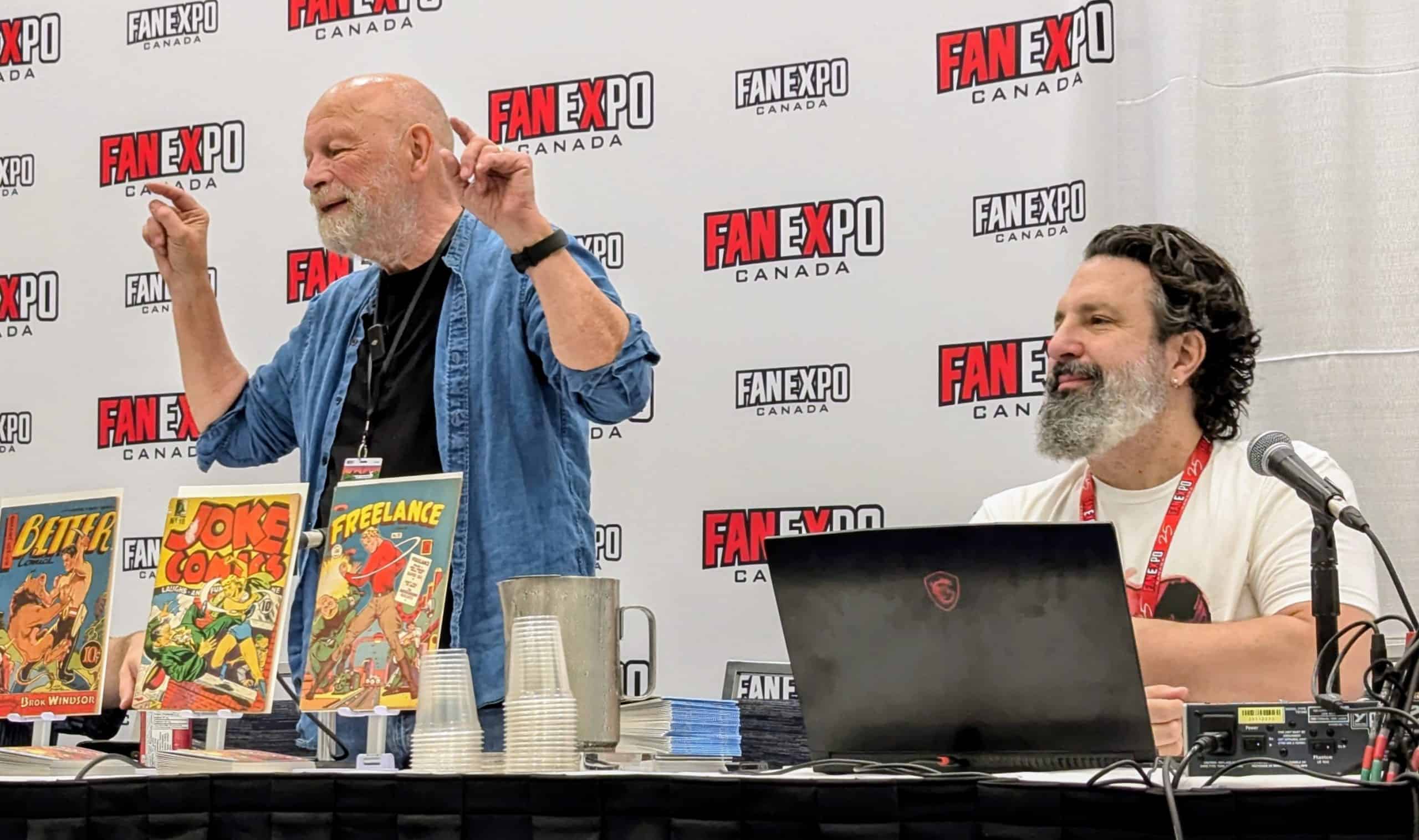
Ivan Kocmarek, who taught ESL to inner city kids in Hamilton before morphing into a comic book historian upon his retirement in 2012, wants to bring these long-forgotten stories back into the Canadian consciousness.
“Now there’s tensions with tariffs and the 51st state stuff, but back then there were different tensions,” he said at a panel at last weekend’s Fan Expo convention in Toronto.
In 1940, the War Exchange Conservation Act deemed American comic books non-essential luxury goods, which could not be imported during World War II. By 1941, Kocmarek said, there were people who were “ready” and young artists and creators and Canadian publishers began responding to the new demand for comics by creating their own superheroes.
The first Canadian hero off the mark was The Iron Man,’ created by Vernon Miller, which rolled off the press in Better Comics #1 in March 1941 – 22 years before Marvel’s iconic character.
Many others soon followed, including Speed Savage, another Dingle creation, a race car driver who fought crime; Penguin, who came out – beak and all – to fight crime a year after DC’s Batman villain; and Freelance, who was raised in a crate in the arctic and would fight Nazis in Africa and around the world.
“He was the biggest and most-read character in the Canadian golden age of comics,” Kocmarek said.
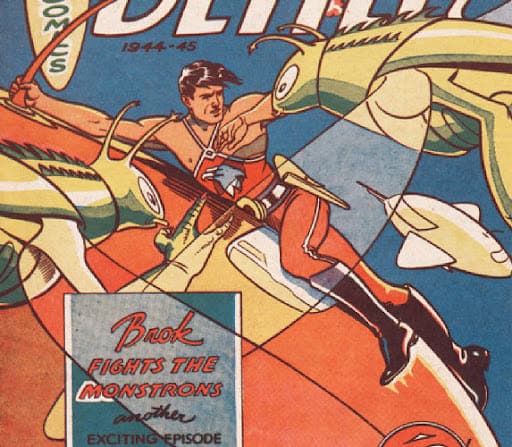
Canada Jack fought crime and Nazi arsonists and taught kids about being a hero; Brok Windsor, a He-Man type, also inspired Canada’s youth during the war years. Created by Jon Stables, Brok was a Winnipeg doctor who travelled through a mysterious mist on Lake of the Woods and woke up 12-feet tall in a strange land.
Brok would fight creatures like horned lions while searching for the antidote for his new powers before they killed him.
Trixie Rogers was a comic artist who moonlighted as a crime fighter named The Wing; Doc Stearne battled monsters. And perhaps the wildest crimefighter was Major Domo, a war hero who lost both arms and fought crime, thanks to his partner, a legless dwarf named Jo-Jo.
“When they fought crime Jo-Jo jumped on Major Domo’s back and became his arms.”
The bizarre duo, created by Avron Yanovsky – the son of political activists who participated in the Winnipeg General Strike of 1919 – became one under a trench coat and went throughout Europe bringing saboteurs and evildoers to justice.
“Sometimes it was difficult to be a proud Canadian back then, with the Union Jack or the Red Ensign flying and no maple leaf,” Kocmarek noted. “So those comics gave kids a chance to puff out their chest for the first time.”
Alas, that heady period when homegrown comics kept Canadian youth entertained didn’t last long, as American publishers soon flexed their muscles again after the prohibition was lifted by Ottawa in 1946.
“We had our own lineup of comic book heroes by 1946 but when the ban was lifted it killed our Canadian comics,” Kocmarek said. “By 1947 they were gone.”
Some of the more notable creators of the time would later be inducted into the Joe Shuster Award’s Canadian Comic Book Creator Hall of Fame, including Dingle, Stables, Ted McCall (Freelance) and Leo Bachle, who was just 16 when he created Johnny Canuck.
Most of the books were lost to antiquity and to the recycling nature of the times but hundreds were saved as well, including many by Kocmarek himself, who has been collecting comics since the 1970s and made compiling Canadian comics from the war years his passion for the last baker’s dozen years.
“I knew there were all these Canadian comics out there but no one knew about them.” he said. “So I started a blog and I haven’t stopped. I want people to know about them.”
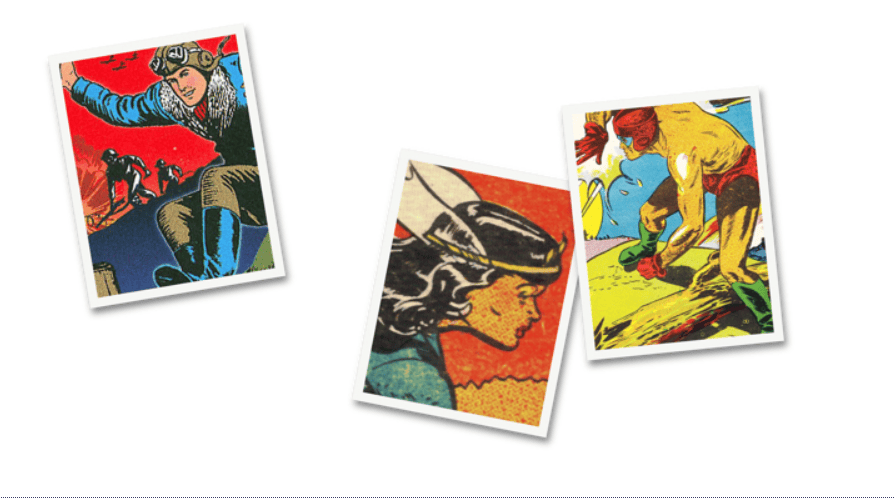
Ryerson Special Collections has a large collection of more than 180 World War II Canadian Whites comics and a bunch of comics were discovered in the 70s and sold, with some of the proceeds helping to bankroll Nelvana Studios, who had bought an ownership share. One of Nelvana Studio’s first productions, in fact, was a documentary about the Canadian Whites, The Great Canadian Comic Books.
Kocmarek would go on to edit Heroes of the Home Front, a 2018 compilation containing more than 300 pages of the history of those war-era comics from Bell Features artists and 150-plus pages of original art, and curate a book entitled Trailblazers – A Tribute To Canada’s WWII Comic Creators.
He was joined at the Fan Expo panel by Ramon Perez, an award-winning artist and creator who grew up in Oshawa and now helps run RAID Press, a creator collective in Toronto’s Parkdale neighbourhood which is all set to launch a Kickstarter for Heroes on the Homefront Comic Creators & Covers Collection, with more than 600 pages over two volumes featuring Canada’s WW2 superheroes, with volume 1 spotlighting the creators and volume 2 collecting all the golden age comic covers.
The teaser for the collection even name drops the very real top secret spy camp located on the Oshawa-Whitby border established by Sir William Stephenson (The Man Called Intrepid). Camp X trained Allied secret agents in sabotage, intelligence, and covert operations for dangerous missions behind enemy lines and later became a communications hub, intercepting coded messages from the Nazis.
From the recently declassified files of Camp X comes a tale long buried…
In the darkest days of the Second World War, when the fate of nations hung by a thread, a secret Canadian initiative gave rise to something extraordinary — not weapons, but warriors. Born of science, mysticism, and sheer maple-blooded grit, these masked marvels emerged from the shadows to stand as the last line of defense between freedom and fascism.
Now, uncovered from the vaults of silence, comes complete collection of a forgotten league of heroes — defenders of the homefront, champions of a new Golden Age!
Perez said he started talking to Kocmarek a couple of years ago, with the idea of doing another anthology series.
“There were just so many strange characters. So I started to dive in,” he said.
He has a soft spot for Major Domo and Jo-Jo for the bizarre characters, he said, but Johnny Canuck will always be special, even though he never had a book of his own and usually appeared at the back of another publication.
“He was important,” Perez said with a laugh, “because he punched Hitler in the face.”
The Kickstarter for Heroes on the Homefront Comic Creators & Covers Collection will be launching soon at RAID Press.
INsauga's Editorial Standards and Policies
PollView All
WIN A $100 GIFT CARD
Subscribe to INsauga’s daily email newsletter for a chance to win a $100 Amazon gift card.