

High-rise building construction fuelled a multi-residential boom in Ontario, a new report finds.
New data from MPAC (the Municipal Property Assessment Corporation) shows Ontario’s multi‑residential sector is the fastest‑growing business property group in the province.
“Development activity over the past five years has reached levels not seen since the 1970s,” MPAC said in a press release.
Released today, MPAC’s first-ever Business Properties Report examines activity over the last five years (2021–2025) across six key sectors: retail, standard industrial, small commercial, office, multi‑residential and hospitality. The report identifies trends in development activity, sales patterns and income performance across Ontario.
MPAC is an independent, not-for-profit corporation funded by all Ontario municipalities. It assesses and classifies all properties in Ontario in compliance with the Assessment Act and regulations set by the Government of Ontario.
The increase in development activity is driven largely by high-rise construction, MPAC said. However, recent data shows a growing balance of high‑rises and walk‑up building development.
In 2025, sales activity in the multi‑residential sector was driven by walk‑up apartments, accounting for 80 per cent of transactions, MPAC found. The median price per unit recorded a modest year-over-year decline (2.5 per cent), with Toronto exhibiting a similar trend.
“New supply is increasingly being driven by one- and two-bedroom units, while additions of larger units have declined from what we saw historically,” Greg Martino, chief assessor and data officer at MPAC. “The shift reflects a balance between housing demands and rising construction costs.”
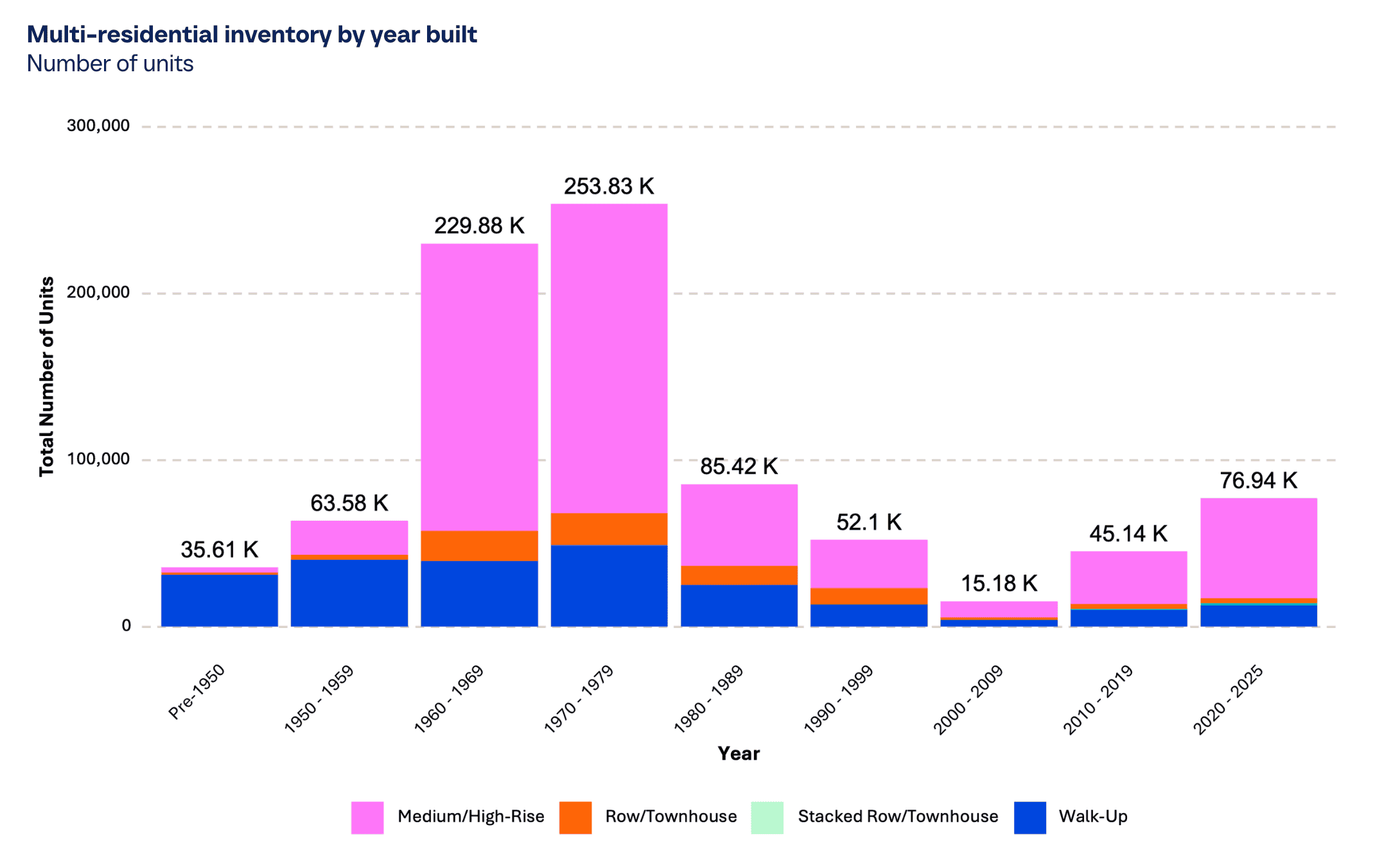
Chart: MPAC
The limited supply of larger units appears to have contributed to rent growth, the report found, with the median rent for a four-bedroom unit in western Ontario and Ottawa increasing by 60 per cent since 2021.
At the same time, an oversupply of “small and micro-unit condos” in cities may be lowering rents for smaller units, with one-bedrooms in Toronto experiencing a modest decline in median rental rates from $1,990 in 2024 to $1,945 in 2025, according to the report.

Construction on a residential building was in full swing this spring near Kipling Station in Etobicoke. Photo: Karen Longwell
Over the same period, new development activity slowed in the office sector.
Office vacancy rose provincially as new construction slowed, while the sector continues to reset following the pandemic, MPAC said.
New supply has been limited in recent decades; however, when development has occurred, it has increasingly taken the form of medical and dental office buildings. Since 2010, these properties have accounted for over 20 per cent of new buildings, compared to a historical average of 12 per cent.
Recent development of office space has been highly concentrated in Toronto, with downtown Toronto containing 53 per cent of the gross leasable space built in Ontario since 2020. From 2020 to 2025, downtown Toronto saw 8.4 million square feet of new office space built and now represents 33 per cent of the share across the province as of 2025 year-end.
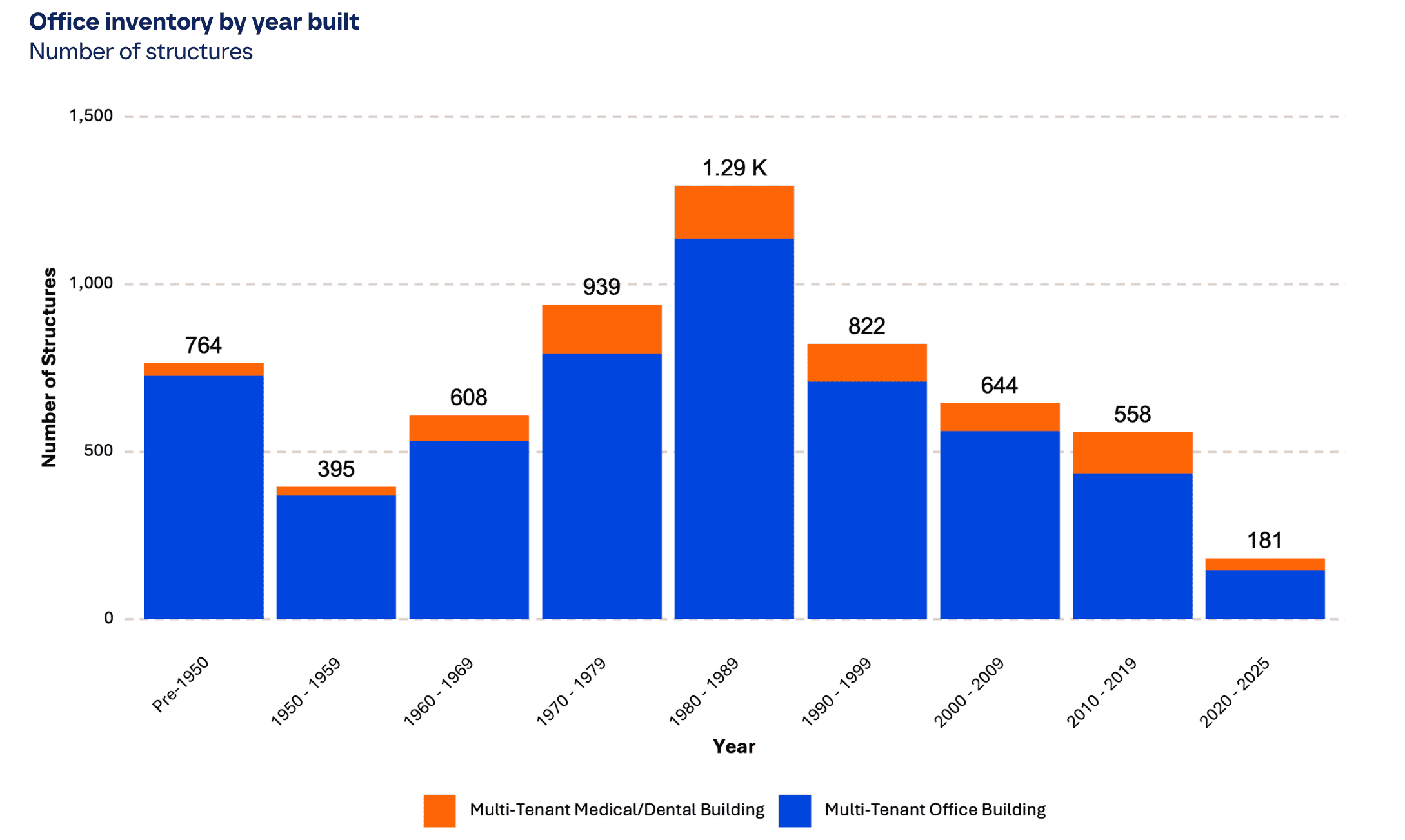
Chart: MPAC
In 2025, Ontario’s office market saw softer sales activity alongside rising vacancy rates. Office sales declined from recent highs, with most transactions involving multi-tenant office buildings.
Province-wide, the office vacancy rate rose steadily to 16.1 per cent, while median rents remained stable at approximately $17 per square foot.
Toronto continued to post the highest rental rates in Ontario, with a median rent of $24.05 per square foot, alongside a notable increase in vacancy.
The report also noted a growth in warehouse development with the rise of e-commerce.
There is a need for “faster, last-mile delivery capabilities” along well-developed transportation corridors.
For more information, including insights on retail developments and the hospitality sector’s revenue gains, see the full Business Properties Report.
INsauga's Editorial Standards and PoliciesPollView All
WIN A $100 GIFT CARD
Subscribe to INsauga’s daily email newsletter for a chance to win a $100 Amazon gift card.