
The developer planning a massive mixed-use project adjoining the future Central Oshawa GO station in Oshawa is hoping a new major transit station area in the works will lead to plenty of business incentives, including the elimination or reduction of development charges and property taxes during construction.
The proposed Central Oshawa Protected Major Transit Station Area is the focus of a joint public meeting of the Economic and Development Services Committee and the Corporate and Finance Services Committee Monday evening and Fotenn Planning + Design, representing First Avenue Investments, wants to ensure it can take advantage of all available incentives.
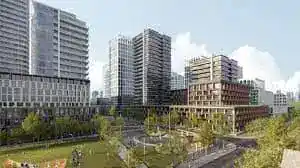
First Avenue Investments announced its plan for the lands immediately south of the future GO station two years ago, with eight builds in the works – five to soar more than 30 stories, the tallest at 42 stories – containing 5,435 residential units, more than 63,000 sq. ft. of commercial space and a 1.28-acre public park.
The first phase will be focused on delivering rental housing.
The new protected area will help guide city planners as development happens when the new GO station – one of four new stations announced by the provincial government more than eight years ago, with progress slow since – is eventually built on First Avenue on the former site of a Knob Hill Farms grocery complex.
The proposed Central Oshawa Protected Major Transit Station Area Community Improvement Plan will provide various financial incentive programs and a municipal property acquisition and investment and partnership program for the rehabilitation, development and redevelopment of properties within the area.
Jayati Trivedi, an urban planner with Fotenn Planning, said he welcomed the planning and financial incentive programs to “support urban development and facilitate new housing supply” in key intensification areas in the city.
“These proposed initiatives represent a critical step toward making projects like our clients financially viable in today’s economic climate.”
The planners will be asking for a variety of incentives, including:
- Elimination or reduction of business and school development charges on rental construction
- Elimination or reduction of Parkland and Community Benefit charges and planning and building application and permit fees on rental construction
- Elimination or reduction of property taxes “for a period of time” related to rental construction
- Zero-interest loans for development activities such as preparation of supporting studies
- A Tax Increment Equivalent Grant where the increased tax assessment from the development is rebated back to the developer for a fixed period of 5–10 years
- Green Building incentives or grants which provide funding or bonuses for energy-efficient buildings, supporting long-term operational savings
- Forgivable loans or repayable grants for site servicing
- Fast-track planning approvals
- Brownfield Grant program for remediation of land for redevelopment purposes
- Housing Accelerator funding and apartment construction loan funding directed towards rental construction
Trivedi said in his letter to Oshawa Principal Planner Laura Brown – who will be making a presentation to the joint committee – that his client’s lands are “ideal” for supporting high density, transit-oriented development. “Supporting (this) development … aligns closely with the city’s intensification and affordability goals,” he said, urging the city to adopt the recommendations “so that projects like our clients can proceed with assurance under a supportive financial and policy framework.”
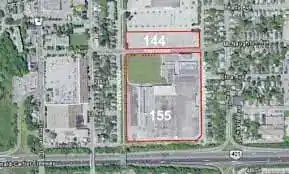
The development site, known as 144 and 155 First Avenue, is located on both sides of First Avenue, between Howard Street and Front Street and immediately south of the proposed Central Oshawa GO Station.
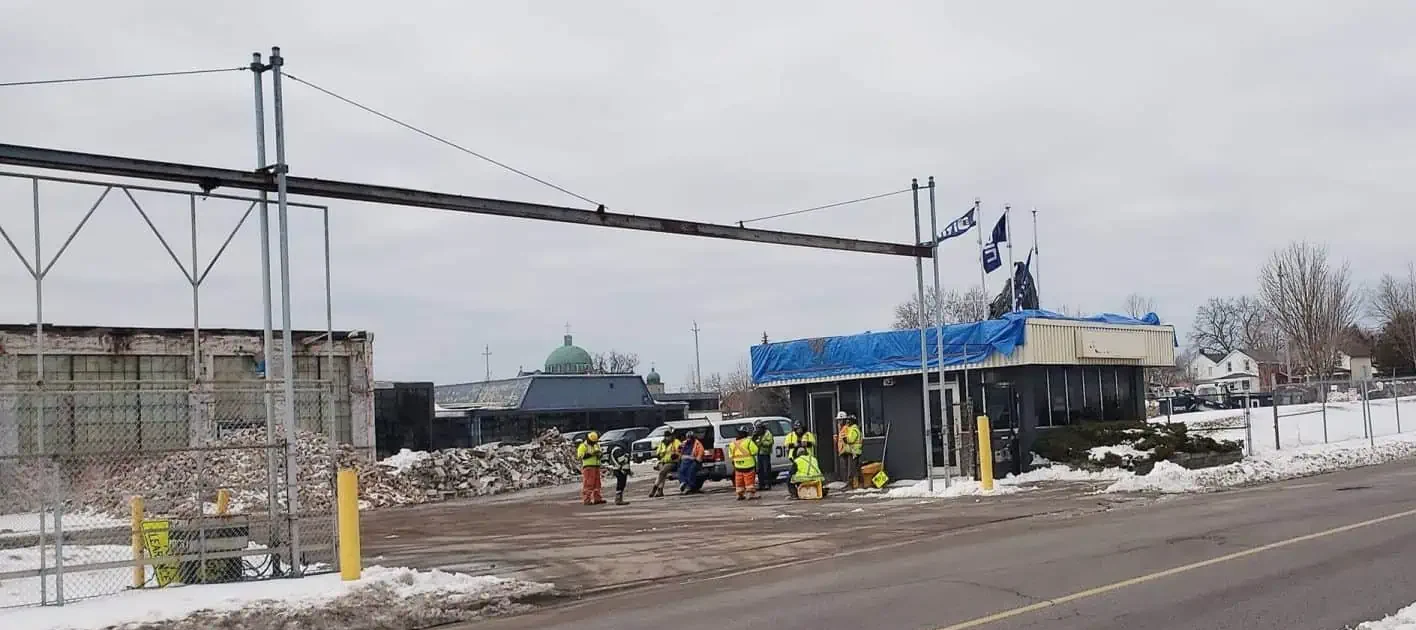
The land on the south side of First Avenue was the site of a glass factory for more than a century before it shut down in 2009.
The lands on the north side were most recently used as a transit parking lot and were part of the giant Knob Hill Farms grocery complex for nearly two decades until it was abruptly closed in 2000.
Previous applications to amend the Official Plan to permit a flea market and professional offices were approved by council in 2014 but no development ever proceeded.
The public meeting will take place in the council chamber at City Hall at 6:30 with public invited to provide feedback.
PollView All
WIN A $100 GIFT CARD
Subscribe to INsauga’s daily email newsletter for a chance to win a $100 Amazon gift card.