
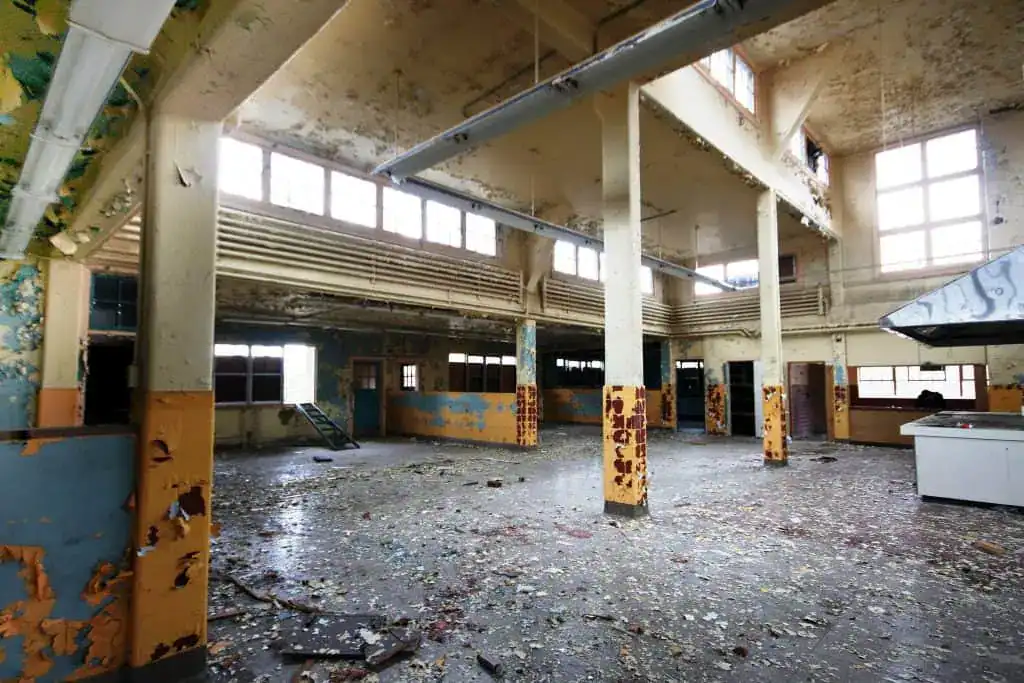
Despite some positive conversations with Clarington Mayor Adrian Foster and his councillors last week, the unanimous decision at Monday’s planning and development committee to save the historic Cafeteria Building at Camp 30 took the group tasked with saving the former prisoner of war camp by surprise.
“A week ago I didn’t think we’d get this far,” said Marilyn Morawetz, who chairs the Jury Lands Foundation. “I have to say we’re very pleased.”
The pushback from council on preserving the nationally significant building – the site of the Battle of Bowmanville, the only battle fought on Canadian soil during the Second World War – was always about money, but with more than $1 million secured to support the preservation and rehabilitation of the Cafeteria Building at Camp 30 – including $500,000 from the municipality – Clarington Council made the call to save it from demolition and support the work required to preserve it.
Morawetz called the committee decision both a major milestone and a turning point in the campaign to save the Cafeteria Building – the best preserved of a handful of structures that served as a World War II camp for high-ranking German officers.
It was not long ago when Foster was expressing doubt the community could afford to save the crumbling building, ravaged by decades of neglect and vandalism – “I worry that the cost will be prohibitive, even to simply stabilize the structure. There may be difficult decisions ahead of us yet,” he said in October – so the vote on Monday was more than just a pleasant surprise, Morawetz said.

Marilyn Morawetz
“We’ve been in this position a few times and if (council) had gone in another direction that would have been devastating to all of us who had worked so hard on this,” she said. “I spoke to the mayor and the councillors last week and we were able to have good conversations … and I have to say we’re really pleased.”
“We’re really happy the choice was mad to let us rehabilitate the building. It gives us so many opportunities for re-use and to tell the story of this unique place.”
The decision also sends a “clear message” that the community believes “history matters,” she added.
“We are grateful for council’s confidence and we’re ready to get to work.”
The vote at the January 19 committee meeting follows months of community advocacy and volunteer-led outreach to protect Camp 30 for future generations, including attendance at council meetings and a petition that topped 5,000 signatures.
The motion confirms the foundation will assume responsibility for securing the funding required to support the preservation and rehabilitation of the Cafeteria Building and declares council has “full confidence” in the foundation’s ability to fundraise for the work ahead.
The campaign has secured $500,000 in federal Legacy grant funding and a matching amount from the Municipality of Clarington, as well as additional community donations and private fundraising support.
The real work now begins as the foundation look to secure funds from prospective large donors, with another $1.6 million to be raised by the end of the year.
“It’s very hard to get money from people if they’re not sure the project is moving forward, so we’re just getting started.”
Morawetz said the foundation is now ready to move into the next phase of the project, beginning with required abatement work and site preparation to support safe rehabilitation of the building.
Manorville Homes completed an updated professional structural assessment and presented a budget proposal to council confirming the building can be preserved and outlining the estimated costs. Based on that budget proposal, approximately $1.6 million in additional needs to be raised to complete Phase 1 work, the foundation said.
The work being done will fix the exterior of the building and the basement and clean out any hazardous materials. The goal of the first phase is to bring the structure to a state where it can be enclosed for a few years before work begins on the interior, Morawetz said.
There is no word on an offer Kaitlin Corporation, which owns five buildings that were once part of the camp, made last year to transfer those heritage buildings to the municipality – including the Triple Dormitory block and the lands within the Ring Road – in exchange for lands that were to be dedicated for parkland.
Estimates have been as high as $22 million for complete restoration of the Cafeteria Building, with a report released last spring pegging partial retention with active adaptive reuse at $7.7 million and complete demolition at nearly $1.44 million.
Saving the other buildings contained in the offer from Kaitlin could add another $14 million to $21million to the cost because of what Kaitlin wants in return for the transfer: a reduction in parkland requirements for the community they are building around the site, which would require Clarington to purchase land at market rate.
And that is in addition to the costs of restoration.
The cost simply to maintain the fencing around the property, as well as 24-hour security, is estimated at nearly $250,000 per year.
Morawetz said the foundation has a fundraising plan in place and with the former POW camp having an international flavour, her group can tap into groups around the world for funding.
“It allows us to engage people who have a passion for Canadian history,” she said. “We’re going to work on it.”
The structures were originally built in the early 1920s to establish the Ontario Training School for Boys before being converted into a prisoner of war camp known as Camp 30. In 1942, there was an uprising – dubbed the ‘Battle of Bowmanville’ – where German officers barricaded themselves inside the cafeteria and fought soldiers with hockey sticks and whatever else was at hand.
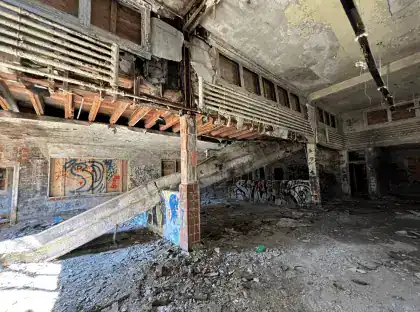
After the war the site resumed operation as a training school until 1979. It was used for various purposes until 2008 and has been the subject of neglect and rampant vandalism in the years since.
Last May a portion of the south-east roof collapsed, triggering an assessment that declared the building an “immediate safety hazard” because of “significant structural deterioration.”
The Jury Lands area covers some 48 hectares of land from Concession Street East to the south, Lambs Road to the east, the Canadian Pacific Railway to the north, and the existing residential development to the west. The lands will see some low and medium density residential development and as many as 1,200 homes built, with limited commercial opportunities based on location and proximity to Lambs Road, which is a local corridor.
The former Camp 30 campus area within the ring road would be designated as a future municipal-wide park and the hope is the buildings themselves will eventually be refurbished, allowing residents to “walk in the footsteps of history.”
Council has given the Jury Lands Foundation until December 31 to raise the required funds.
Supporters can donate at jurylandsfoundation.com/make-a-donation
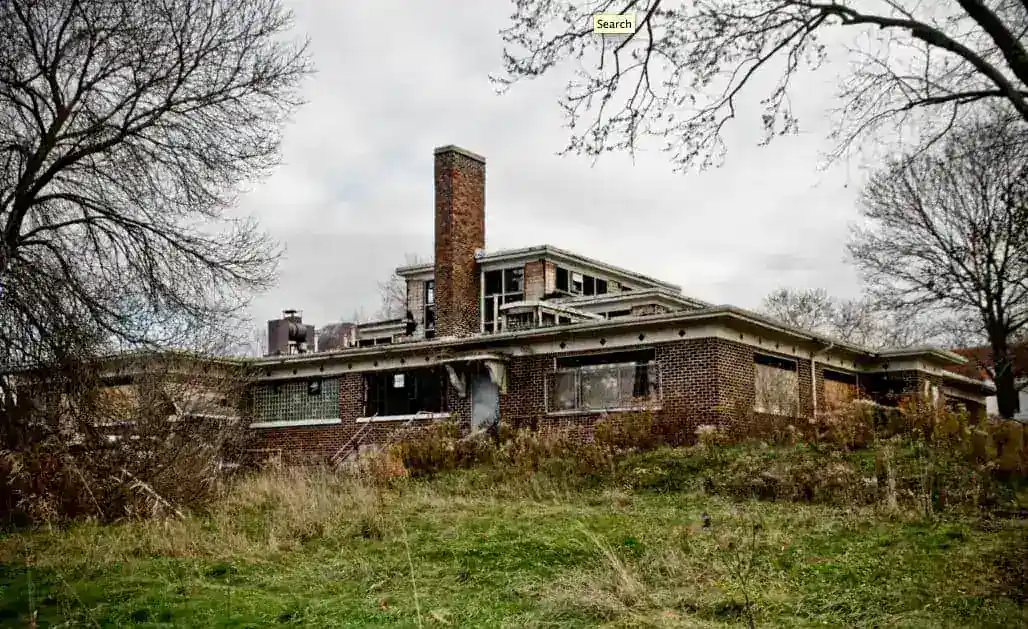
The Cafeteria Building at Camp 30
PollView All
WIN A $100 GIFT CARD
Subscribe to INsauga’s daily email newsletter for a chance to win a $100 Amazon gift card.