

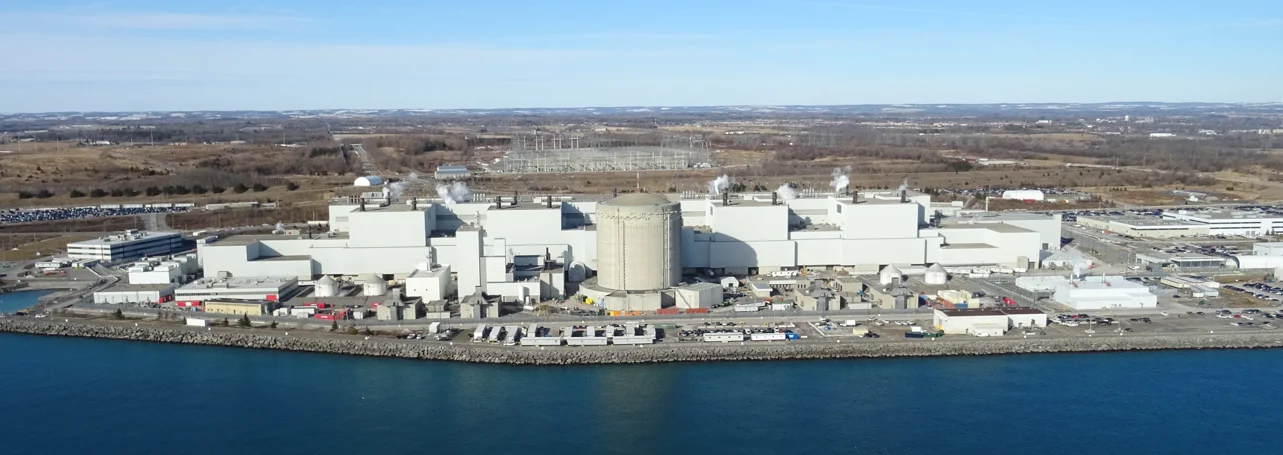
The Canadian Nuclear Safety Commission has approved a production expansion of life-saving medical isotopes at Darlington nuclear plant, the single largest isotope production system in North America.
Cancer patients around the world will benefit from improved access to treatments generated by the production of two critical medical isotopes – Yttrium-90 (Y-90) and Lutetium-177 (Lu-177) – inside Darlington’s nuclear reactors by Ontario Power Generation (OPG) subsidiary Laurentis Energy Partners.
The isotopes are part of a new wave of targeted radionuclide therapies that deliver radiation directly to cancer cells while sparing healthy tissue, offering new hope to patients with hard-to-treat cancers such as liver, neuroendocrine, and prostate. Demand for these isotopes is growing rapidly as new treatments are developed and approved in global markets.
Darlington’s unique CANDU design enables production of medical isotopes without interrupting electricity generation, ensuring a steady, reliable supply. The isotopes are produced using Laurentis’s isotope irradiation system, developed in partnership with BWXT Medical Ltd. and installed on Unit 2 at Darlington.
Once irradiated, Y-90 will be sent to BWXT Medical’s facility in suburban Ottawa to be packaged into Boston Scientific’s TheraSphere Y-90 glass microspheres and distributed to more than 30 countries around the world.
“Darlington Nuclear Generating Station is not only helping power Ontario’s growing clean energy needs; it is also powering the future of cancer care,” said OPG CEO Nicolle Butcher. “The isotopes produced at Darlington will have real-world impact for cancer patients around the world.”
The first patient in Ontario was treated with publicly funded Lu-177-based therapy for prostate cancer last year. Laurentis could produce enough Lu-177 at Darlington to supply nearly three million doses, enough to fully treat 500,000 patients annually and vastly increase the global supply capacity.
“For patients and families waiting for new treatment options, this is a moment of real hope,” said Laurentis CEO Jason Van Wart. “We’re proud to lead Canada’s growing role in nuclear medicine, and even prouder to know that our work will directly support life-saving care for patients around the world.”
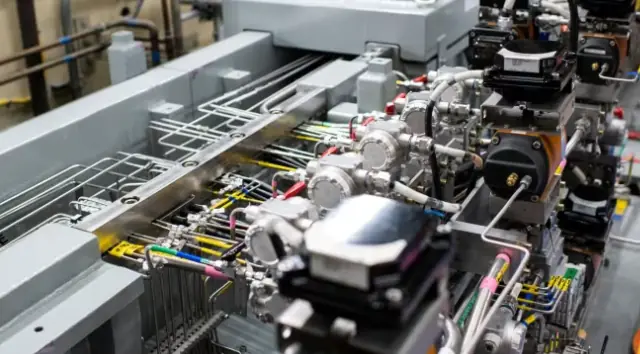
The expansion builds on Laurentis’s production of Molybdenum-99 at Darlington, the first commercial nuclear station in the world licensed to produce the isotope. Its decay product, Technetium-99m, is used in more than 30 million diagnostic procedures annually.
The system will convert the radioactive raw material into a cancer-fighting drug that has proven to downsize and destroy tumors; ultimately extending the survival of patients with Hepatocellular Carcinoma, the most common type of primary liver cancer. The drug enables targeted and personalized liver cancer therapy using millions of microscopic, irradiated Y-90 glass microspheres, to target tumors with a high dose of radiation without affecting other healthy parts of the body.
The announcement that Laurentis would produce a nuclear medical isotope at Darlington was made a little over a year ago, with the company at the testing stage for a targeted delivery system for the isotopes at the time.
The isotopes have been produced at Darlington since early 2023 and OPG and Laurentis hopes commercial production can turn the province into an isotope “super power” by helping Ontario’s nuclear facilities double production over the next half-dozen years.
Canada currently produces half of the world’s supply of medical isotopes – with manufacturing centred at Ontario nuclear power plants at Darlington and Bruce – and the expansion of production, processing and distribution will help resolve challenges in medical isotope supply that affect patients fighting cancer and other diseases.
According to the Canadian Liver Foundation, liver cancer is the fourth most common cause of cancer deaths worldwide and it’s estimated to affect nearly 5,000 Canadians, with the diagnosis leading to fatalities in about three-quarters of those suffering with the disease.
“The production of cancer-fighting isotopes at Darlington shows how our world-class nuclear sector is delivering real benefits to people – creating high-skilled jobs, driving innovation, and save lives,” enthused Ontario Energy Minister Stephen Lecce.
PollView All
WIN A $100 GIFT CARD
Subscribe to INsauga’s daily email newsletter for a chance to win a $100 Amazon gift card.