

With protests happening at Tesla dealerships around the world and U.S. President Donald Trump unleashing tariffs that could devastate the Canadian auto sector, now seems the perfect time for Project Arrow 2.0 to make its debut at Hannover Messe, the world’s biggest technology fair.
Project Arrow, Canada’s first locally made zero-emission vehicle, was designed by a student team at Carleton University in Ottawa and built – with 97 per cent Canadian components – in Oshawa at Ontario Tech University’s Automotive Centre of Excellence.
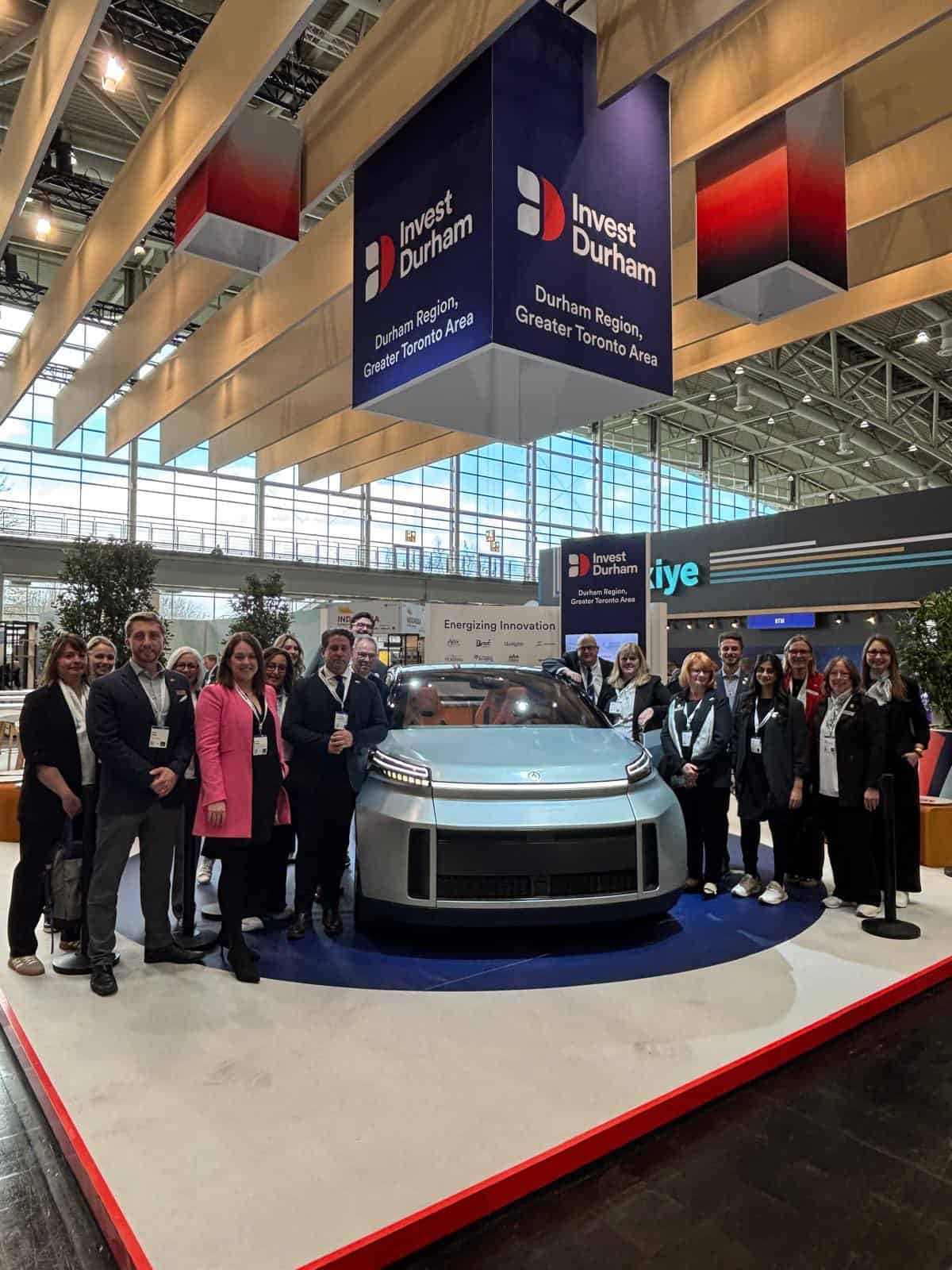
First unveiled in 2023 at the Consumer Electronics Show in Las Vegas, the car has since moved from concept to the brink of (almost) mass production. The latest version was presented in Hannover, where Canada is the partner country at the fair. Durham Region’s booth—with a handful of local dignitaries making the trip—is front and centre.
The zero-emission concept vehicle was developed by the Automotive Parts Manufacturers’ Association (APMA) of Canada. APMA President Flavio Volpe—a very vocal Canada booster amid the 51st state rhetoric during Trump’s tumultuous first two months as President—said the car showcases Canadian innovation, perseverance, and collaboration in the face of adversity.
“Project Arrow is about the entire Canadian movement into electric mobility, and creating a vision for a sustainable and innovative tomorrow. Canada has the power to change the automotive world.”
With Germans among the strongest voices opposing Trump and Tesla owner Elon Musk, the timing for Project Arrow 2.0 was impeccable and Volpe made sure German Chancellor Olaf Scholz had a first-hand look when he stopped by the Durham Region booth.
Volpe said Scholz’s first question was when the car was going to go into mass production. “We are building a fleet,” was the response.
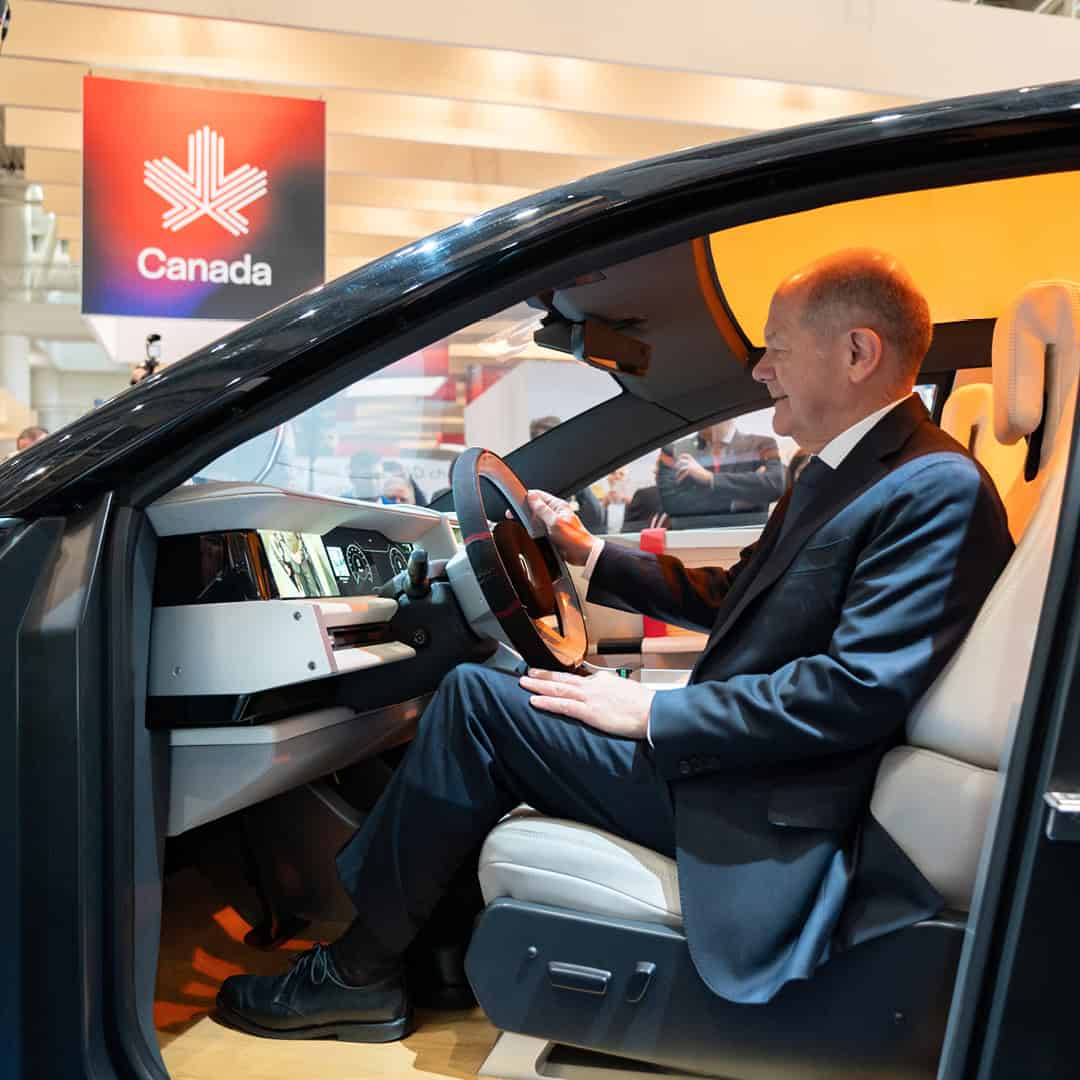
German Chancellor Olaf Scholz in the Project Arrow zero-emissions vehicle
There is no timeline yet on when that ‘fleet’ will go into production but Ontario Tech in Oshawa will continue to play a key role.
Designated as the lead academic institution in the vehicle’s initial development from 2021 to 2024, Ontario Tech will help drive innovation in the next phase as the official research and build partner for APMA.
“Project Arrow symbolizes what’s possible in Canada’s automotive industry when academia and industry partner to drive innovation,” said Dr. Les Jacobs, the school’s vice-president of research and innovation. “Ontario Tech was chosen as the build partner for its track record of on-time and on-budget innovation and its global reputation for research excellence in energy, automotive, smart mobility, and advanced manufacturing engineering. The Arrow is about creating a future where new and emerging technology is harnessed to make all of our lives better.”
With $11 million in new federal and provincial funding, Project Arrow 2.0 development will take place at Ontario Tech’s ACE Core Research and Testing Facility, an ecosystem for innovation and commercialization in the automotive industry and home to a Climatic Aerodynamic Wind Tunnel, which is capable of simulating extreme weather from blizzards to hurricanes.
The technical achievements of the team in developing the design prototype for the zero-emission electric vehicle led to the university winning the prestigious Engineering Research Project of the Year award from the Professional Engineers Ontario
“Durham Region is driving industrial innovation,” says Region of Durham Chair John Henry. “We are building a future where R&D leads to job creation and investment. Collaboration and a strong talent pipeline are leading innovators in Durham Region to solve some of the world’s biggest challenges.”
The campus group worked in collaboration with the APMA and industry leaders, startups and Tier-1 automotive industry suppliers across Canada and the vehicle integrates components from nearly 60 Canadian businesses, including Myant Corp of Mississauga, which provides knitted sensors and actuators into the steering wheel fabric. There is also an ‘open network’ computing system that functions as the car’s brain designed by a tech company in Kingston and a 3D-printed chassis developed by a Toronto-based startup and built on-campus in Oshawa.
“Project Arrow is a testament to what can be achieved when leading companies, research and post-secondary partners come together with a shared vision,” said Volpe. “Together, we are not just building cars, we are building the future of transportation.”
Oshawa Councillor Tito-Dante Marimpietri made the trip to Germany and called the experience of meeting Scholz and major industry leaders like catching “lightning in a bottle.”
“I’m honoured to help lead Canada’s global trade mission at a crucial time in our economic history,” he said. “There have been so many consequential conversations and vital leads of potential trade partnerships and global business expansion into Canada via Oshawa and Durham.”
Hannover Messe was launched in 1947 to showcase Germany’s post-war industrial transformation and quickly grew to a major international trade fair. U.S. President Barrack Obama attended the 2016 show.
Last year’s trade fair attracted 130,000 visitors and more than 4,000 exhibitors.
PollView All
WIN A $100 GIFT CARD
Subscribe to INsauga’s daily email newsletter for a chance to win a $100 Amazon gift card.