

A tropical holiday is always popular for Canadians looking to escape the long winter.
While money is tight for many people, there are some good deals out there.
But before heading out on a winter trip, travellers may want to check out the latest advisories.
Canada’s Travel Advice and Advisories website page helps travellers make informed decisions and travel safely outside the country.
They analyze trends and incidents affecting international travellers, monitor global events and collect updated reports from various sources.
Here are five popular destinations with travel advisories:
Trinidad and Tobago
Risks: Violent crime.
Reasons: On July 18, 2025, Trinidadian and Tobagonian authorities declared a nationwide state of emergency. While the state of emergency is in effect, security forces have increased rights, without warrants, to conduct searches of persons and property, and arrest and detain persons of interest.
Gang-related attacks, gun violence and drug-related crimes occur in Trinidad and Tobago. Weapons have been used on victims who refuse to cooperate.
Major roadways are generally reliable. However, robberies and carjackings along the East-West Corridor to and from Piarco Airport and Port of Spain continue to be reported despite an increased police presence.
Petty crime, such as pickpocketing, bag snatching, and theft, occurs in Trinidad and Tobago. Theft can occur at traffic lights or in slow-moving traffic.
Costa Rica
Risks: Crime
Reasons: Crime against property, such as house burglary, theft from cars, and vehicle theft, is frequent. Passport theft is also extremely common and increases in frequency during the peak tourist seasons, from November to May and from July to August.
Thieves often work in teams, in which one thief diverts the victims’ attention while the other snatches their possessions.
On the Caribbean coast, areas are of particular concern for theft include Cahuita, Puerto Limón and Puerto Viejo. Although not frequent, violent assaults against travellers have occurred on the Caribbean coast in Puerto Limón and Puerto Viejo. If you are threatened, hand over your cash and valuables immediately without resistance.
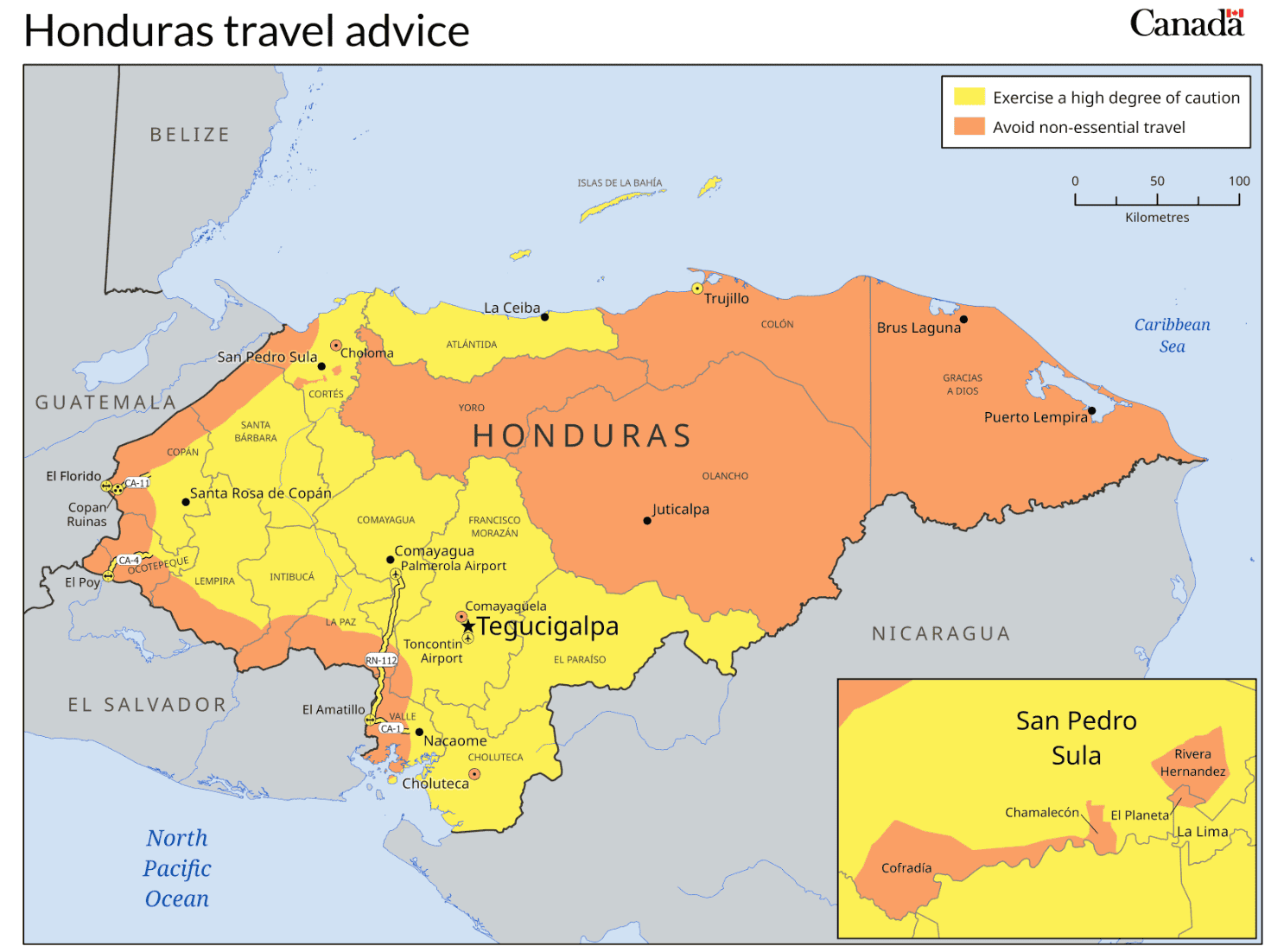
Honduras
Risks: Crime.
Reasons: Border areas often see higher criminal activity and violence. If you’re travelling by land to neighbouring countries, the advisory suggests using official border crossings only, and crossing borders in the morning as they sometimes close unexpectedly early.
The Bay Islands are generally safe. Violent crime is lower, but petty crime sometimes occurs. Some foreigners have been assaulted on beaches, mainly at night. Home burglaries have also occurred, sometimes in rental accommodations.
Most urban public buses are poorly maintained. Drivers are reckless and accidents are common.
Some taxis are an acceptable option for transportation.
When travelling to the airport, you may pre-arrange your pickup with your hotel prior to your departure. Authorized airport taxi drivers wear easily identifiable ID badges.
Mexico
Risks: High levels of criminal activity and kidnapping.
Reasons: Petty crime, such as pickpocketing and purse snatching, is common in Mexico. Remain vigilant in airports, bus stations, buses and the Mexico City metro system.
Criminal groups, including drug cartels, are very active across the country. Clashes between cartels or gangs over territory, drugs and smuggling routes are common. Armed clashes between security forces and drug cartels can occur without warning.
Mexican authorities have made efforts to protect major tourist destinations, resulting in lower levels of gang-related violence in these areas. However, incidents of violent crime still occur in major cities, popular tourist areas and resorts.
Canadian travellers have been physically and sexually assaulted. In some cases, hotel employees, taxi drivers and security personnel at popular tourist destinations were involved. Sometimes, hotel staff are not helpful and try to dissuade victims from reporting the incident to the police.
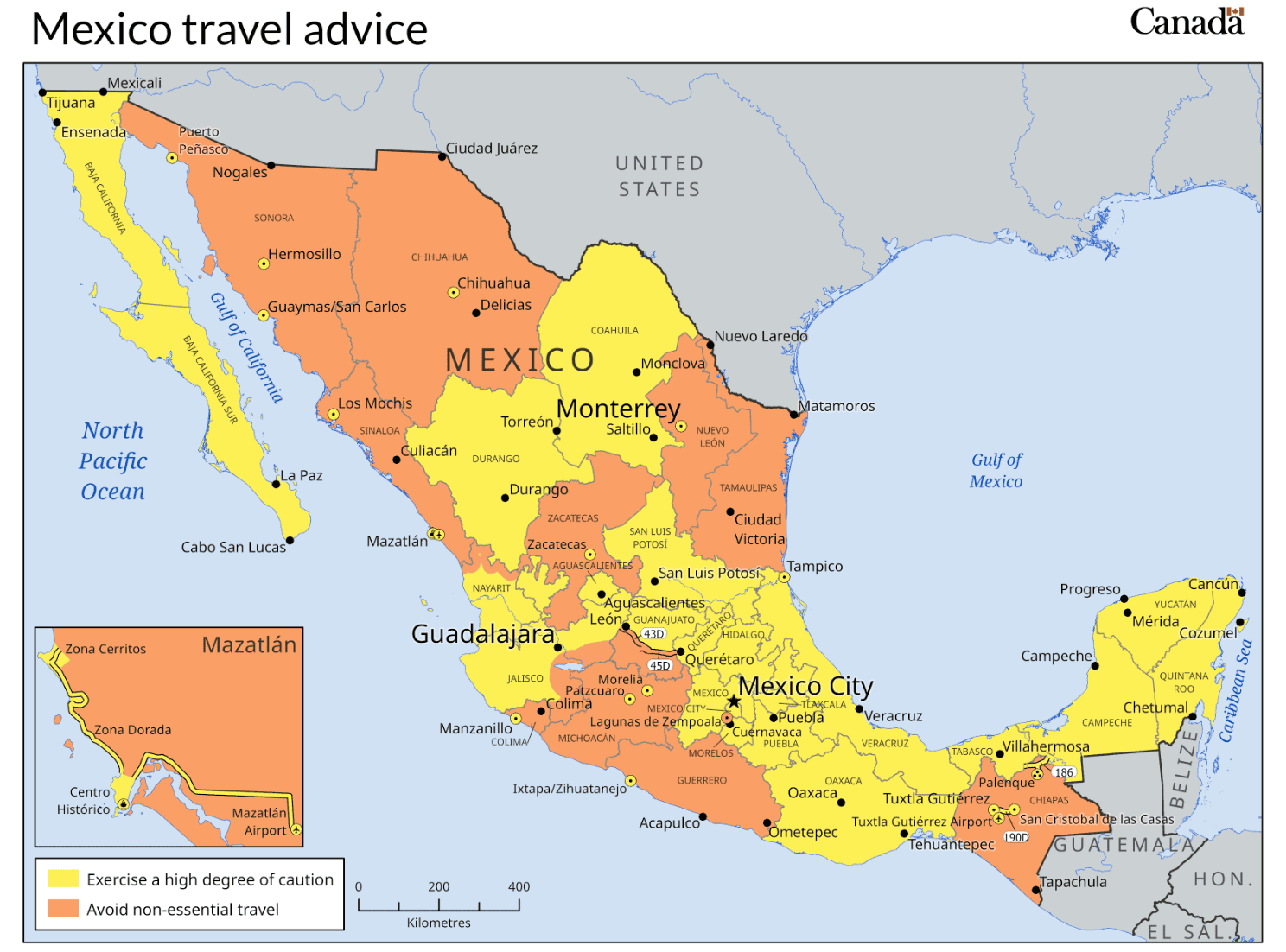
Visitors should avoid all non-essential travel to areas shaded in orange. Map: Government of Canada
Peru
Risks: High levels of crime, as well as social conflicts and strikes that may occur across the country.
Reasons: A state of emergency is in effect in the provinces of Lima and Callao to curb a rise in violent crime.
A state of emergency allows the military to assist police forces to respond to security incidents and natural disasters. When a state of emergency is in effect, security forces have increased rights to restrict freedom of movement, monitor correspondence, conduct search and seizures and detain persons of interest.
There has recently been a marked increase in violent crime in the Province of Lima, including in the city of Lima. Theft is very common, and thieves may be armed with guns.
Cocaine production and trafficking occur in Valley of the Apurímac, Ene and Mantaro rivers. Travel is particularly dangerous in areas where there is coca cultivation and processing.
For a complete list of advisories and additional information, see the federal website here.
Lead photo of Tabacon Resort in Costa Rica: Mike Swigunski
INsauga's Editorial Standards and PoliciesPollView All
WIN A $100 GIFT CARD
Subscribe to INsauga’s daily email newsletter for a chance to win a $100 Amazon gift card.