
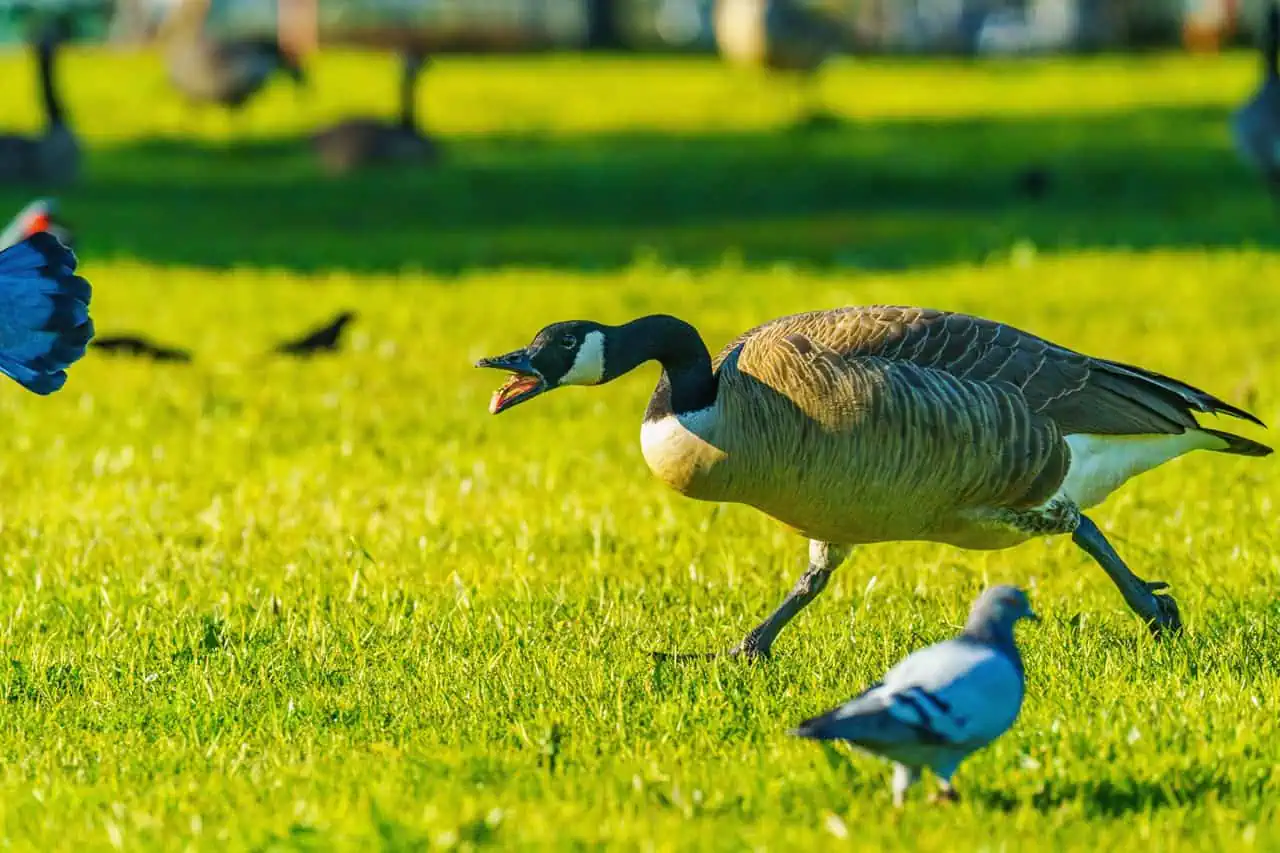
People out and about at parks and other green spaces in Mississauga are being warned that bothered Canada geese might create problems for pedestrians, cyclists, drivers and pet owners this time of year.
“From March through June, adult geese guard nests and their goslings. They can get aggressive and may hiss, lunge or block a path if they feel a person, pet or bike is getting too close,” City of Mississauga officials said in a recent notice to the public, adding the occassional “honk” or two directed at people can also be expected.
Though such behaviour can seem aggressive, it’s more of a natural defensive response from the large birds, who can be nuisances, the city noted.
This time each year, “Canada geese return to parks, pathways and open grass across Mississauga. During nesting season, their defensive behaviour can create problems for pedestrians, cyclists, drivers and pet owners,” officials explained.
While such confrontations aren’t uncommon, city spokesperson Irene McCutcheon told INsauga.com the municipality “is not aware of any reports of attacks in Mississauga this year” in which injuries to any people were sustained due to run-ins with the big geese.
“However, it is common for male geese to hiss and act aggressively towards humans this time of year, if residents knowingly or unknowingly get too close to their nests,” she added.
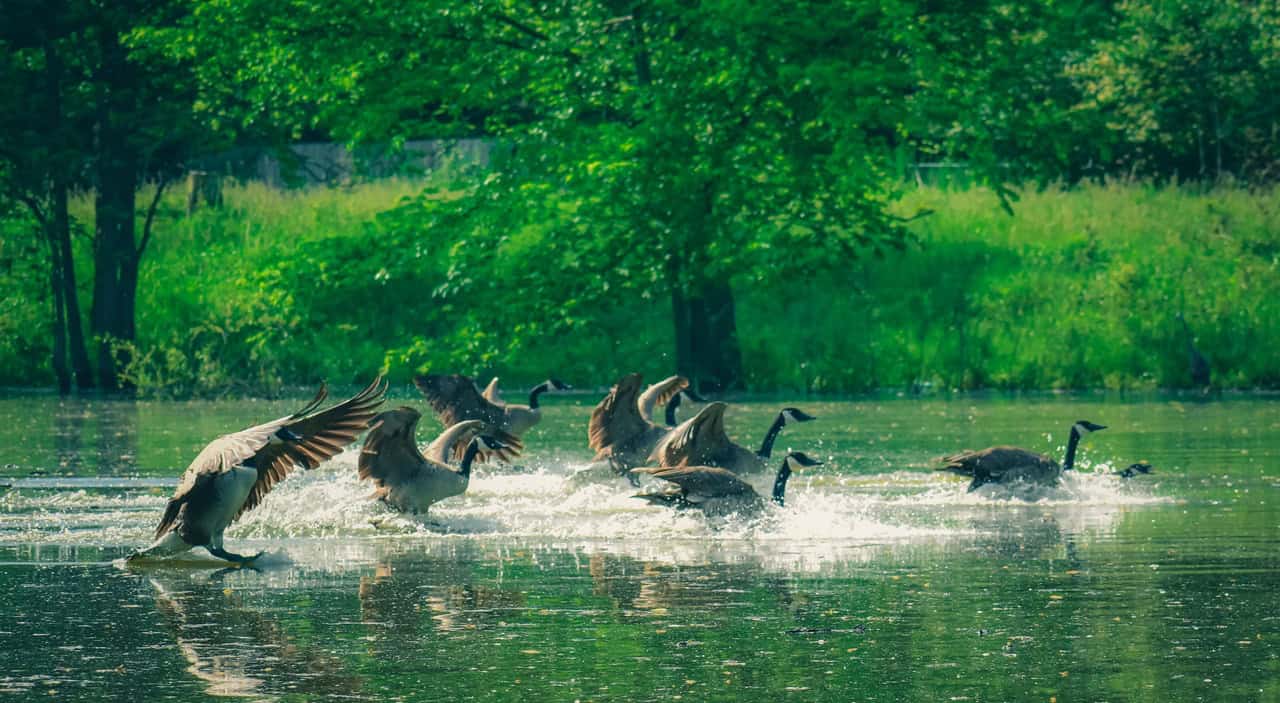
In Mississauga, Canada geese can most often be found at waterfront spots including Lakefront Promenade Park, Jack Darling Memorial Park and in areas across Port Credit, the city said. They’re also known to gather at stormwater ponds and neighbourhood parks and green spaces in other parts of the city such as Lake Aquitaine, Saigon Park and Lake Wabukayne.
“Nests can also be found in busy and inconvenient spots like boulevards, parking lots, sidewalks, sports fields and trails, and even your own backyard,” city officials added.
“In some situations, the city may use safe and humane wildlife management methods, such as relocation, to help people and geese share public spaces. These actions protect geese and reduce aggressive interactions.”
Hundreds of Canada geese sent out of town every year
Through the city’s Canada Goose Management Program, hundreds of the big water birds — and their messy poop — considered by many people to be a huge nuisance are once again being trucked out of town for good.
As part of the program, officials constantly monitor the goose population and, in key locations, make plans to relocate the winged residents.
Since 2019, Mississauga and Oakville have partnered to gather and send roughly 1,000 Canada geese between them each year to the Jack Miner Migratory Bird Sanctuary in Kingsville, Ontario.
McCutcheon said the two municipalities joined forces again this year, with the Canada geese expected to leave town for the southwestern Ontario sanctuary this month.
“Geese will once again be relocated from Lake Aquitaine and Saigon Park as well as all the parks along the waterfront, starting with Lakefront Promenade on the east end all the way across to Harding Estate on the west end,” she explained. “The number of geese varies year to year, but we relocate up to 1,000 geese per year. It’s been as low as 500 in recent years, but that speaks to the success of the program.”
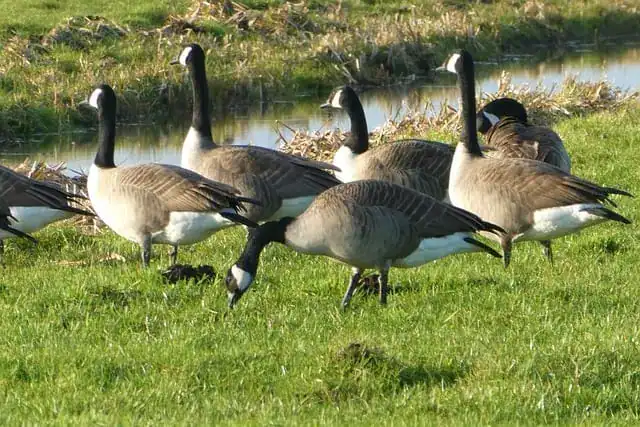
The sanctuary, located near Windsor, takes the unwanted geese from the urban settings of the two municipalities each June and helps them migrate and continue on into the wild.
Those who run the sanctuary have said that in addition to the large birds being prepped for more welcoming settings, they’ve become a somewhat popular attraction while they’re at the Jack Miner facility.
People, most of whom do not want to see the large waterfowl populating the waterfront and park areas in their own towns, enjoy watching them at the sanctuary in a more natural setting.
The City of Mississauga first started gathering the bothersome birds and shipping them elsewhere well over 25 years ago. The Canada geese have created issues for Mississauga and its residents since the 1990s, most notably at waterfront parks where their huge numbers have allowed them to overrun the areas.
The large birds are quite messy
The large birds can be messy, they destroy grassy areas and they’ve shown themselves to be an overall detriment to park lands, Mississauga officials say.
“At several city parks, large numbers of geese, known as flocks, may crowd the waterfront, block paths and leave droppings on seating, playground equipment and paved areas,” the city said earlier this month. “This makes it harder for people to walk, cycle, picnic or let their children play in parks.”
While officials note their relocation efforts over the years have resulted in “an overall decrease in the annual goose populations,” large numbers of the birds still don’t appear to be going anywhere.
The city said earlier that planning for relocation of the geese starts in the fall. Mississauga officials then work with their Oakville counterparts to prepare for the gathering and shipping out of the birds each June by truck.
The municipalities receive a permit from Environment Canada (Canadian Wildlife Services) each year to allow for the capture and release of the 1,000 or so birds to the Jack Miner sanctuary.
Prior to 2019, Mississauga and Oakville had sent their unwanted geese to an Aylmer, Ont. sanctuary for years. However, that site began to run out of room, prompting the municipalities to seek a new home for the birds.
At one point in the late 1990s, Mississauga sent large numbers of the geese to Canada’s East Coast.
What to do during an aggressive goose encounter
Mississauga officials note that, for the most part, Canada geese tend to stay away from humans.
“However, tensions are strongest from March through June when adult geese guard their nests and goslings. During this time, residents should be aware that geese will hiss, lunge or block a path if they feel a person, pet or bike is too close.”
Before a goose charges, officials continued, “it will often show that it wants more space. Typical warning signs include direct staring, a lowered head, hissing and spreading its wings to make itself look larger. If those warnings are ignored, a goose, or several geese, may lunge, rush forward or fly toward a person to push them away from their nest or goslings.”
City officials say people should do the following during an aggressive goose encounter:
- Make direct eye contact with the goose.
- Avoid turning your back or running, as it will chase you.
- Back away slowly and calmly without shouting, flailing or making sudden movements.
- If the goose gets very close, raise your arms only to protect your face and continue moving away from the nesting area cautiously.
Dogs can set the geese off, city says
Officials also noted that dogs “can quickly make a situation worse during goose season, even when they are calm or just curiously wandering around.
“To a goose, a dog may look like a direct threat to their eggs or goslings.”
The city also reminds people that feeding Canada geese is prohibited in Mississauga and can result in a fine of between $365 and $100,000.
Officials say feeding the large birds may seem harmless, “but it can have negative consequences. These include serious health and safety concerns for residents and birds. Food such as bread and crackers does not meet the geese’s nutritional needs. It also encourages birds to gather in larger numbers and makes them less wary of people, which can lead to more aggressive behaviour.”
To report Canada geese issues in city parks or other public spaces, people can call 311, the city’s information line.
INsauga's Editorial Standards and PoliciesPollView All
WIN A $100 GIFT CARD
Subscribe to INsauga’s daily email newsletter for a chance to win a $100 Amazon gift card.