
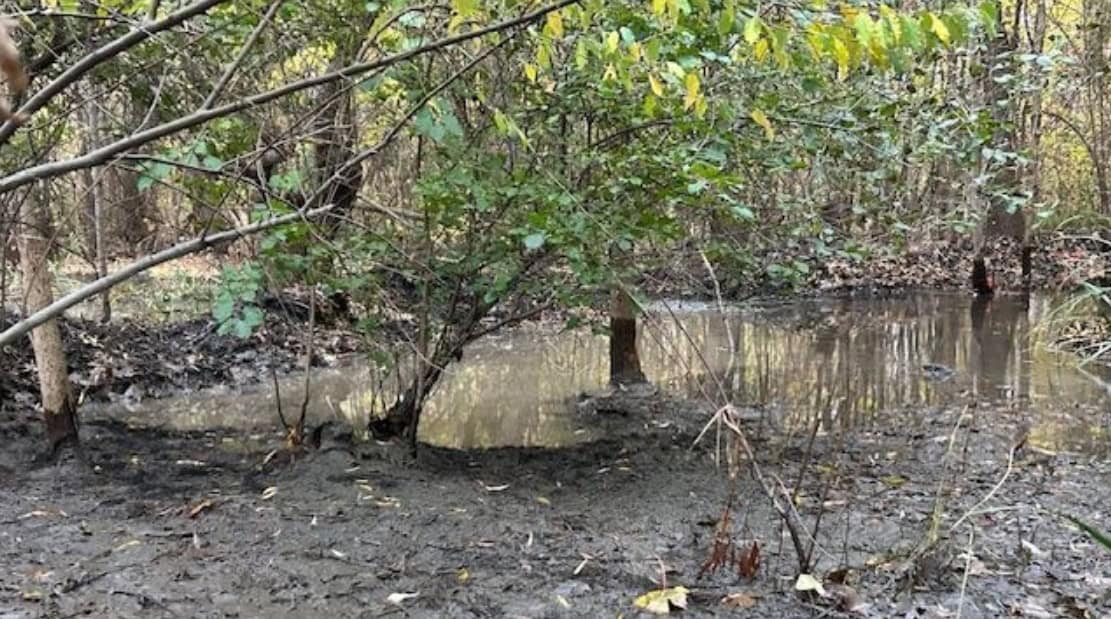
Several beaver dams that have been causing drainage problems near a creek and marsh in northwest Mississauga have been removed in order to restore crucial water flow in the area, the city says.
In addition, the City of Mississauga is looking to safely relocate the busy beavers so they don’t continue to upset conditions in and around Sixteen Mile Creek and Osprey Marsh in the heart of the Lisgar community.
The marsh, located to the immediate northeast of Britannia Road West and Ninth Line, is a man-made stormwater pond (or series of smaller ponds) that regulates the flow of rainwater and snow melt from storm sewers and the Sixteen Mile Creek upstream.
Essentially, it’s an important feature that’s designed to control flooding, which has impacted that part of Mississauga for years.
Mississauga Ward 10 Coun. Sue McFadden said her office has been working closely with city staff to address “the recent situation of stagnant water” along the creek that’s supposed to drain into Osprey Marsh.
“So far, two beaver dams have been removed — one south of the Osprey Boulevard bridge and one just north of it,” the councillor said in her latest newsletter to the community. “Reports of additional dams further upstream have been investigated and two more have been confirmed and will be removed shortly to restore proper flow and level of water in the creek. Relocation of the beavers to a more rural setting is also being considered in order to help manage proper operation of the stormwater system in the Lisgar community.”
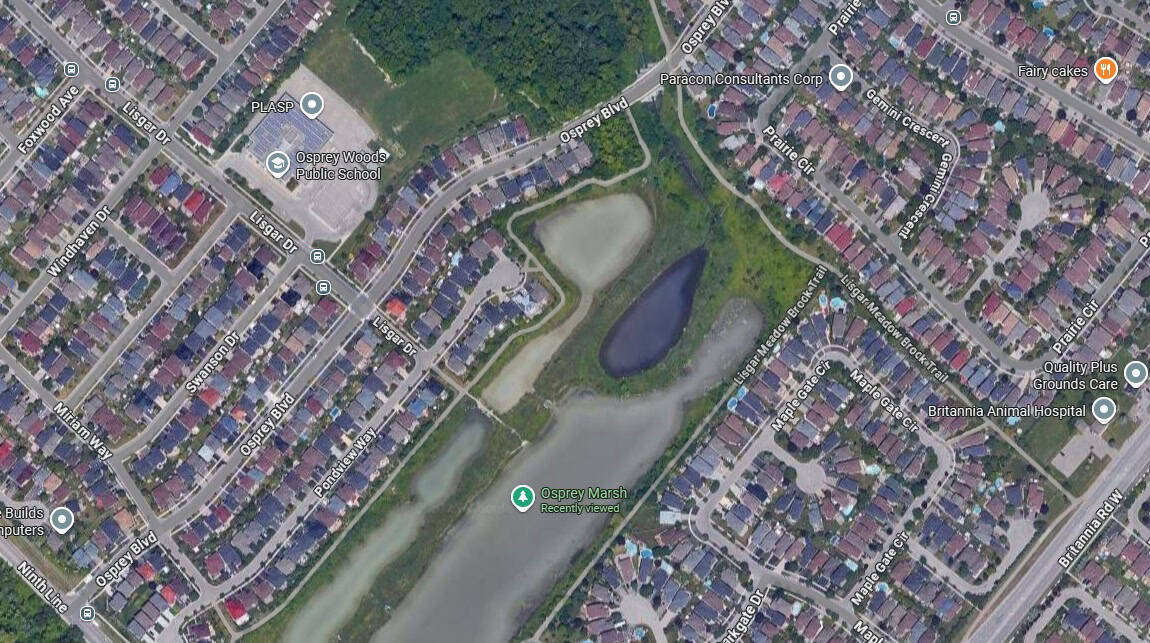
Aerial image shows location of Osprey Marsh and surrounding neighbourhoods.
The issue with the beavers, among the largest living rodents in the world, comes as Osprey Marsh is undergoing its first-ever dredging to allow it to better perform its important function, the city said earlier.
The marsh/stormwater pond was built in the mid-1990s and the work scheduled over the next year or so will remove sediment that has settled at the bottom of the pond the past few decades.
Osprey Marsh, much like nearby Lake Wabukayne to the east, has also become home to numerous types of birds and other wildlife over the years.
And this isn’t the first time the thick-furred, web-footed beavers have left an unwelcome mark on the site.
After a family of the semi-aquatic animals used their powerful jaws and strong teeth to destroy a number of trees along the trail that circles Osprey Marsh several years ago, the city looked to develop a beaver management strategy for all of Mississauga.

“Anyone who has walked the trail that circles Osprey Marsh will have noticed the damage to several trees by the family of beavers that call the marsh their home,” McFadden said at the time.
A member of the Lisgar Residents’ Association told INsauga.com in 2022 that the beavers posed a considerable threat to trees in the area and they had actually destroyed closer to “hundreds of trees” instead of only several.
Furthermore, the community had been pushing the city for years to address the problem, which included “whole areas” that had been “clear-cut by beavers,” the resident added.
The residents’ group member also told INsauga.com at the time that beavers had on at least two occasions “attempted to dam up Osprey Marsh, but fortunately when we alerted city staff, they did dismantle the dam.”
INsauga's Editorial Standards and PoliciesPollView All
WIN A $100 GIFT CARD
Subscribe to INsauga’s daily email newsletter for a chance to win a $100 Amazon gift card.