

“Last night was quiet, but sometimes…sometimes it’s loud.”
While many people might wonder, at some point, what it might be like to go about their day with the threat of a shelling or bombing or drone attack never far away, people in Canada enjoy the precious privilege of not having their routines disrupted by piercing air raid sirens.
But in Ukraine, a country forced into war following Russia’s illegal invasion in 2022, life goes on for those who have stayed and while they are forced to sleep in shelters and accept the constant threat of violence and death, they don’t just work and shop and socialize under the shadow of war–they make feature films.
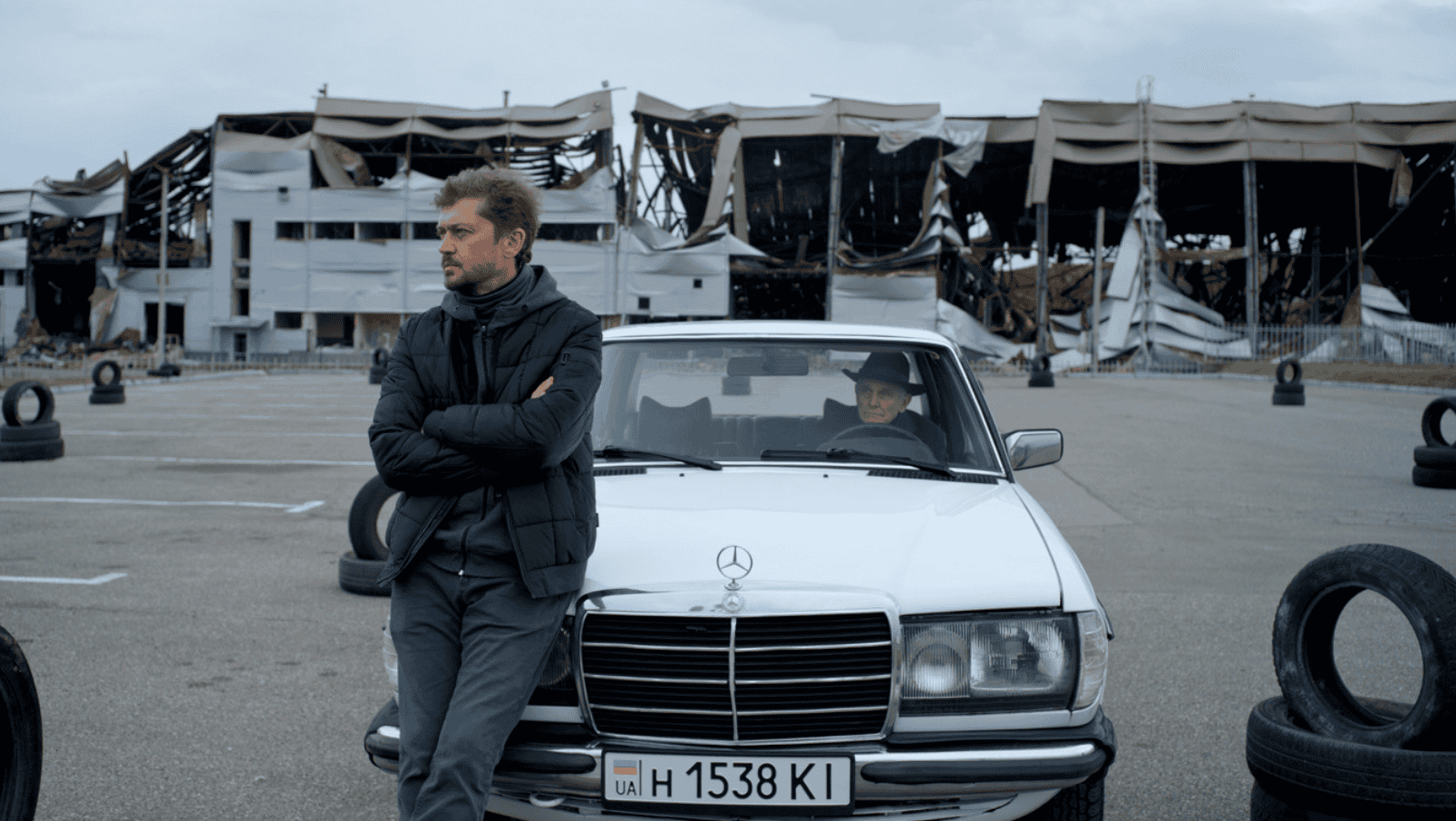
Valentyn Vasyanovych in To The Victory!
“We are already kind of more or less okay with the perspective that we might not wake up every morning,” Valentyn Vasyanovych, the director of To The Victory!, a meta-drama set in post-war Ukraine, tells INsauga.com.
Vasyanovych and the film’s producer, Volodymyr Yatsenko, recently sat down for a Zoom chat with INsauga.com to discuss not just the film (which recently premiered at TIFF) but also what it’s like to make a movie in a country that’s actively at war.
Vasyanovych, a Ukrainian filmmaker who is no stranger to the Toronto International Film Festival (his films Atlantis and Reflection both screened at previous festivals), called in from Kyiv (which was recently subjected to a barrage of attacks that left four people dead) to discuss his latest work.
With Yatsenko translating, Vasyanovych offered some insight on working on a project with a long timeline at a point when life can change (or end) in an instant.
“That’s part of the life now,” he says.
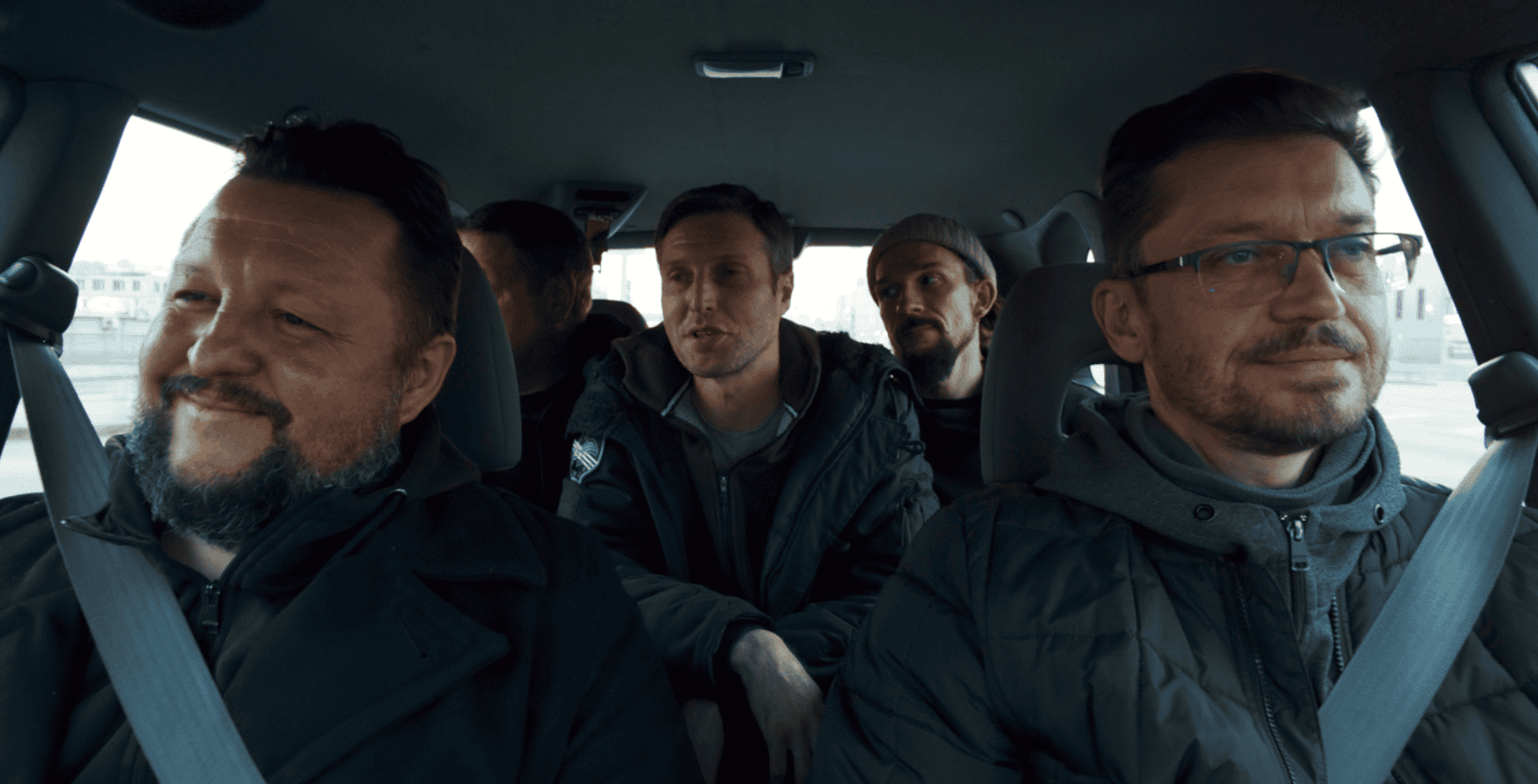
To The Victory! Often feels a bit messy and hard to follow–perhaps a reflection of life in uncertain times. Set in the near-future in which Ukraine has won the war with Russia, the film focuses on Kyiv filmmaker Roman (played by Vasyanovych), a man trying to make a movie (yes, this is a movie-within-a-movie project) in a country facing not just economic and political upheaval, but also a demographic crisis (the movie-within-the-movie is affected by and about this very crisis).
Roman, who casts his close friends and son in the project, watches his wife and daughter, who moved to Austria to escape the war, choose their new life over the family’s old one in Ukraine. Unsure if things will improve, Roman nonetheless decides he can’t leave the country he fought for.
While the film is fictional, it feels semi-autobiographical, with Vasyanovych’s real-life friends rounding out the small cast of people in the same boat as him. Set against crumbling buildings, the film, infused with a great deal of lightness, silliness and drinking, questions what the country will look like with so many people choosing never to return.
“Mathematically, it looks very bad,” Vasyanovych says.
“I mean, we had 52 million people in 1991. Now we have around 38 million. I think almost 10 million people now live in other countries, and we don’t know how many more people are going to be killed.”
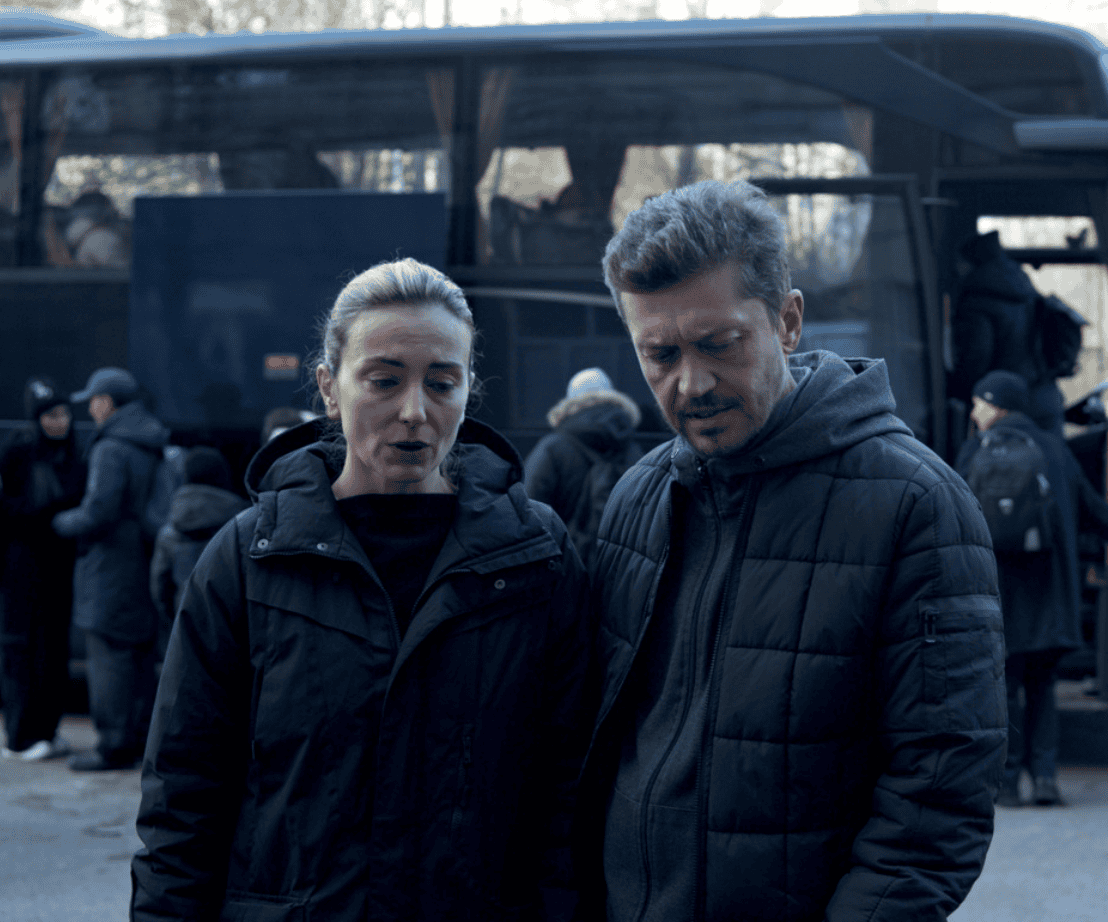
When asked if Roman’s experience mirrors his own, Vasyanovych says the movie is not perfectly autobiographical because it’s technically set in the future, but it still captures a collective truth about life in Ukraine.
“It’s some kind of collective biography, you know? So it’s everything which could happen in the future with everyone. More or less because we have all the same fate in a way. I mean, some families are still okay. But for some of our friends, their families were destroyed by the war,” he says, adding that years of separation inevitably cause people to grow apart.
“You became different people, you have different lives and it’s harder and harder to find anything in common.”
While war is a travesty (and in this case, there’s seemingly no end in sight), the film tackles the aftermath and the bleak realization that perhaps a bright future isn’t an inevitability–or at least an imminent one.
“This is the biggest challenge for Ukraine now, how to cure the society which is broken and divided. Most of our kids are out of Ukraine and they’re being raised in different countries.”
Lengthy scenes of monotonous daily life (getting gas, caring for an elderly parent, arguing with a teenage child) are interspersed with unexpectedly silly interludes (including a discussion, not serious, about whether or not to include a gay sex scene to highlight the dearth of women in Ukraine, be “trendy” and joke about intimacy coordinators). While the film defies expectations, the fact that it was created at all seems awe-inspiring.
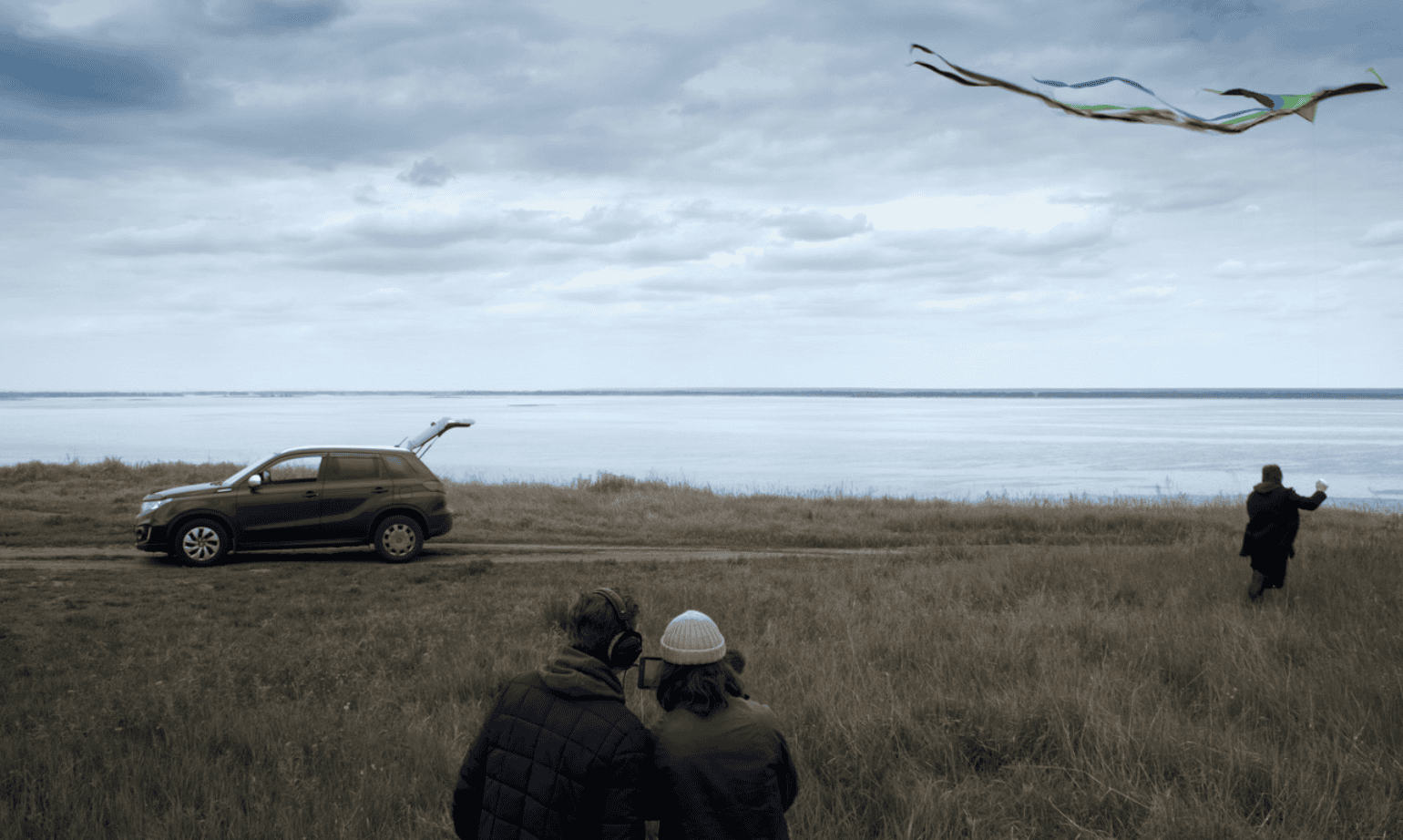
“To be honest, where you are, what’s happening next, you can’t build any plans in completely unknown waters, if you know what I mean,” Vasyanovych says.
“So this uncertainty, we tried to reflect it in the film when the viewers don’t know what the level of reality is. We also feel very strange now in Ukraine. I mean, people trying to survive during the night and the next morning, everybody pretends that they live a normal life. They go to work, and they take their children to kindergarten. It’s absolutely different levels of reality.”
Vasyanovych says some days, life looks the same as it did before the war, even though everything has changed. Knowing the next day, let alone the next year, is not guaranteed, makes seeing a film through from casting to the premiere an anchoring experience.
“Valentyn is really afraid, like all of us,” Yatsenko says.
“I mean, it’s a very uncertain situation every day. But filming the movie, shooting the movie, finishing the movie. So for him, it became the very important lighthouse in this darkness.”
Vasyanovych also says the project provided a distraction from thoughts about death and his constant concern for his relatives and friends.
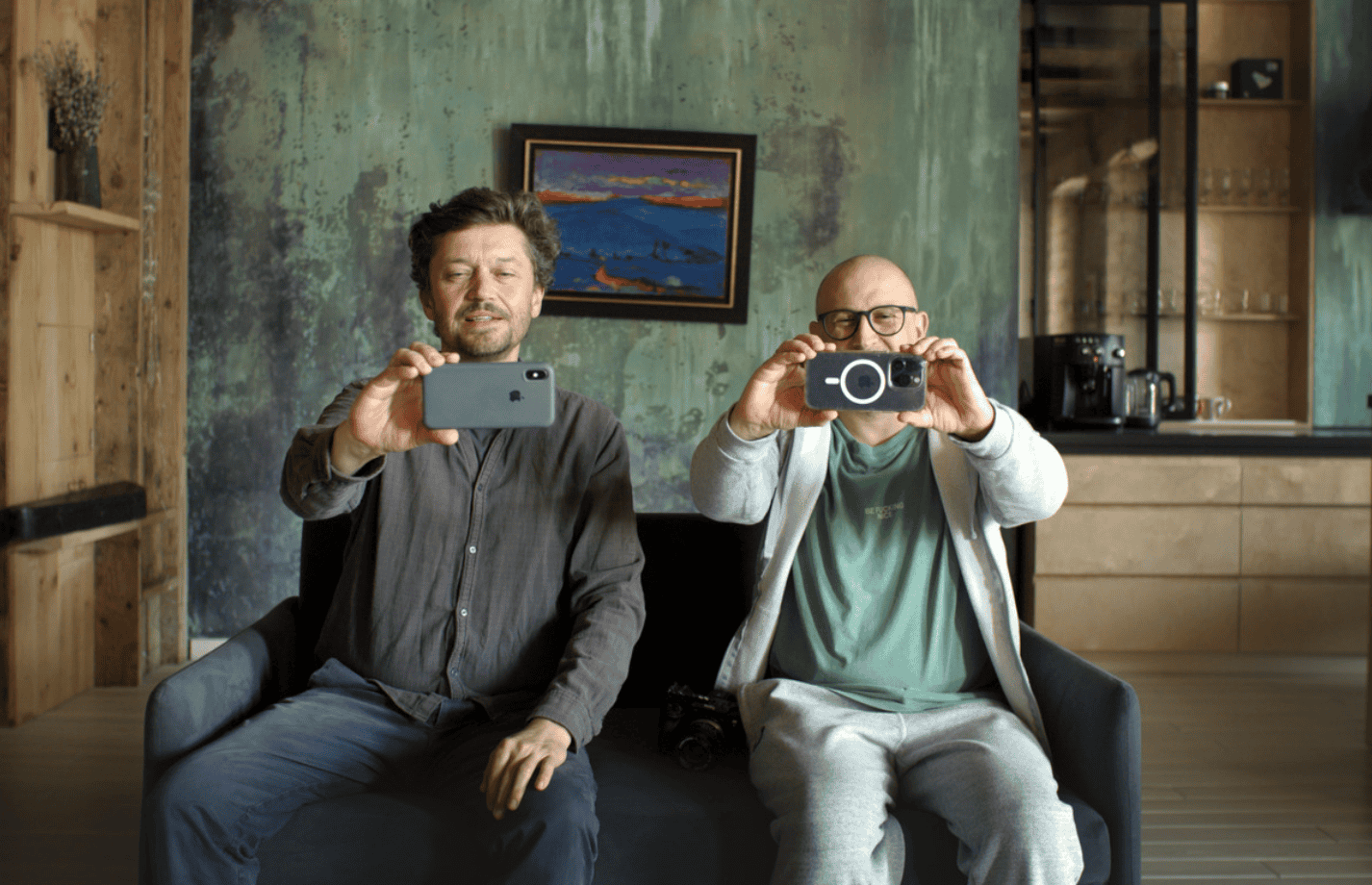
Making the movie with real-life friends also made the experience all the more resonant.
“When you shoot [a film] with really close friends, it helps you a lot. You can discuss important stuff and during the shoot you can express your feelings to each other because you don’t know what it’s going to be tomorrow. So this kind of openness, it’s not very typical for or in contemporary society in Ukraine,” he says.
Making a film during a war, with a limited budget, a limited cast and crew and the threat of death, is, both men say, an act of pure hope.
“When you dare to dream, when you dare to work, when you dare to plan something, even unplannable, it just means you are human. It’s better to create something than not create anything.”
INsauga's Editorial Standards and PoliciesPollView All
WIN A $100 GIFT CARD
Subscribe to INsauga’s daily email newsletter for a chance to win a $100 Amazon gift card.