
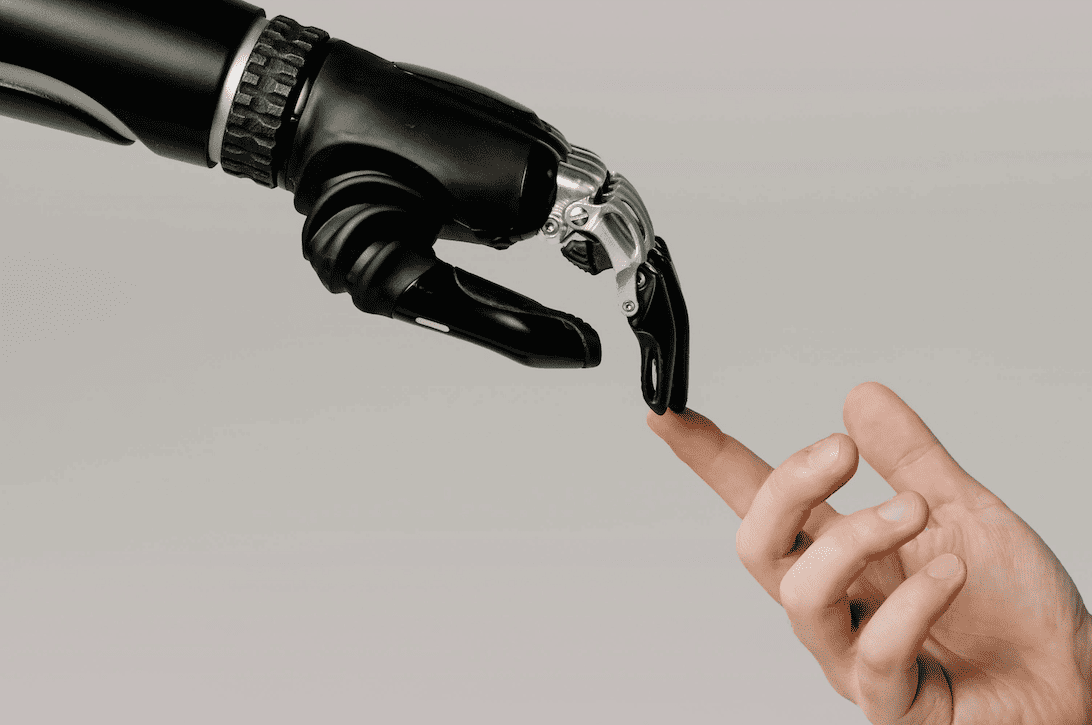
With the technology moving at unprecedented speeds, most Ontario residents want to integrate AI (artificial intelligence) into school systems.
A recent survey conducted by the legal tech platform Alexi found that between Canada and the U.S., attitudes toward AI integration in day-to-day life are increasing exponentially, with Canada taking the lead.
Frequently used AI applications include ChatGPT, a chatbot that gathers online data to answer questions and generate written content, Grammarly, an online tool that corrects grammatical errors via AI, and Google Gemini, a text-to-image platform for visual content online.
Specifics from Alexi’s data noted that 60 per cent of Canadian respondents are in favour of teaching AI literacy in school systems by as early as 2026, with less than half of U.S. residents surveyed feeling the same way.
Ontario is spearheading this sentiment, as 58 per cent of provincial respondents feel that AI literacy is paramount to the future of early education.
“I think it is abundantly clear now that AI is going to be a significant presence in the future of both professional and non-professional environments. For that reason alone, we must start educating future generations to work with this kind of technology,” CEO of Alexi, Mark Doble, told INsauga.com.
Doble has followed the trajectory of AI since his early days in law school, which, upon graduating, inspired him to create Alexi to consolidate AI technologies to help those who work within the North American legal system.
As a result, Doble helped Alexi launch its recent survey to tap into how AI as a tool is perceived outside of the judicial process, with a focus on education, application, and prospects into the future.
Doble believes that the desire to teach AI literacy to younger generations is reminiscent of an attitude that has been in lockstep with tech progress for decades, as when any new applications emerge, they almost always find a way into the classroom.
“We learn how to apply calculations on a computer at a young age while also learning to write them on paper,” says Doble. “There are good pedagogical reasons for that, and AI is in a very similar field.”
However, leaders within educational systems are rallying around a cautious approach to AI integration, as a 2024 report from University Canada West (UCW) cited that in all levels of education, AI use can present significant disadvantages, such as a dependence on technology, increased risks around cheating, and data breaches concerning students and teachers.
Running parallel to the pro-AI literacy movement in Ontario, Alexi’s survey found that half of provincial residents anticipate AI will be less biased than humans in decision-making. As for why Ontario continues to champion AI interest in Canada, Doble believes that Ontario reflects national numbers in a more condensed manner.
“I don’t know why there would be any differences between Ontario and other provinces, but I know it is not just because Toronto is a tech hub, I think these are just more emergent trends in the general population here,” he says.
According to Alexi’s data, roughly the same number of Ontarians also believe that AI will replace ‘mundane tasks’ of daily life sooner than we think.
A prospect that Doble, despite his pro-AI mindset, still believes needs to be approached with caution.
“It is efficient enough to do mundane tasks even by today’s standards, however, we shouldn’t let it from a moral, ethical, and policy perspective. It is for the same reasons we would let aliens be lawyers if they landed on the planet next week — we can’t be confident that interests align, as with any task that is a fundamentally human endeavor,” says Doble.
As a result, Doble believes that teaching how to use AI as a tool will lay significant groundwork for decades, as he believes it is only a matter of time until the line between what people and machines can do will blur.
“I would argue that there is something fundamentally unique about being human, I don’t think it’s intelligence. Everything that goes into the components of being a human — what is considered ‘intelligence’ — I think we’ll see it in machines. Certainly in my lifetime and certainly within the next decade or two.”
Alexi’s survey took place from Feb. 20 to Feb. 26, 2025, and featured 2,000 respondents from the U.S. and Canada. For more information, visit their official website.
INsauga's Editorial Standards and PoliciesPollView All
WIN A $100 GIFT CARD
Subscribe to INsauga’s daily email newsletter for a chance to win a $100 Amazon gift card.