
A new report reveals the most affordable cities in Canada.
The list from the real estate company Royal LePage is based on how much of a household’s monthly income would be required to cover a mortgage payment.
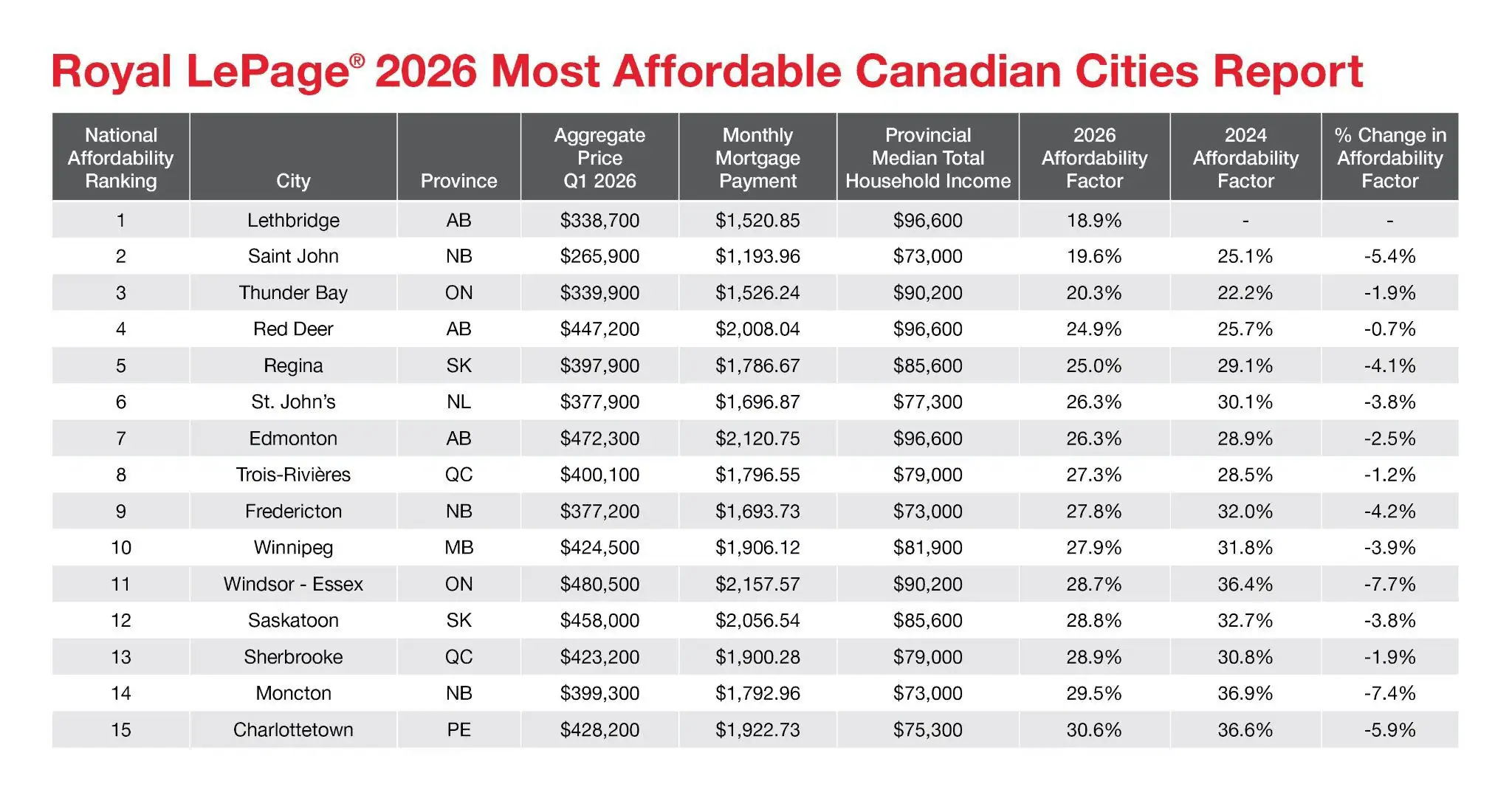
Lethbridge tops the list of most affordable cities in Canada, followed by Saint John; Thunder Bay slips from first to third spot, Royal LePage said in its 2026 Most Affordable Canadian Cities report.
The report looks at the cost of homes, mortgage payments and median incomes to rate cities for affordability.
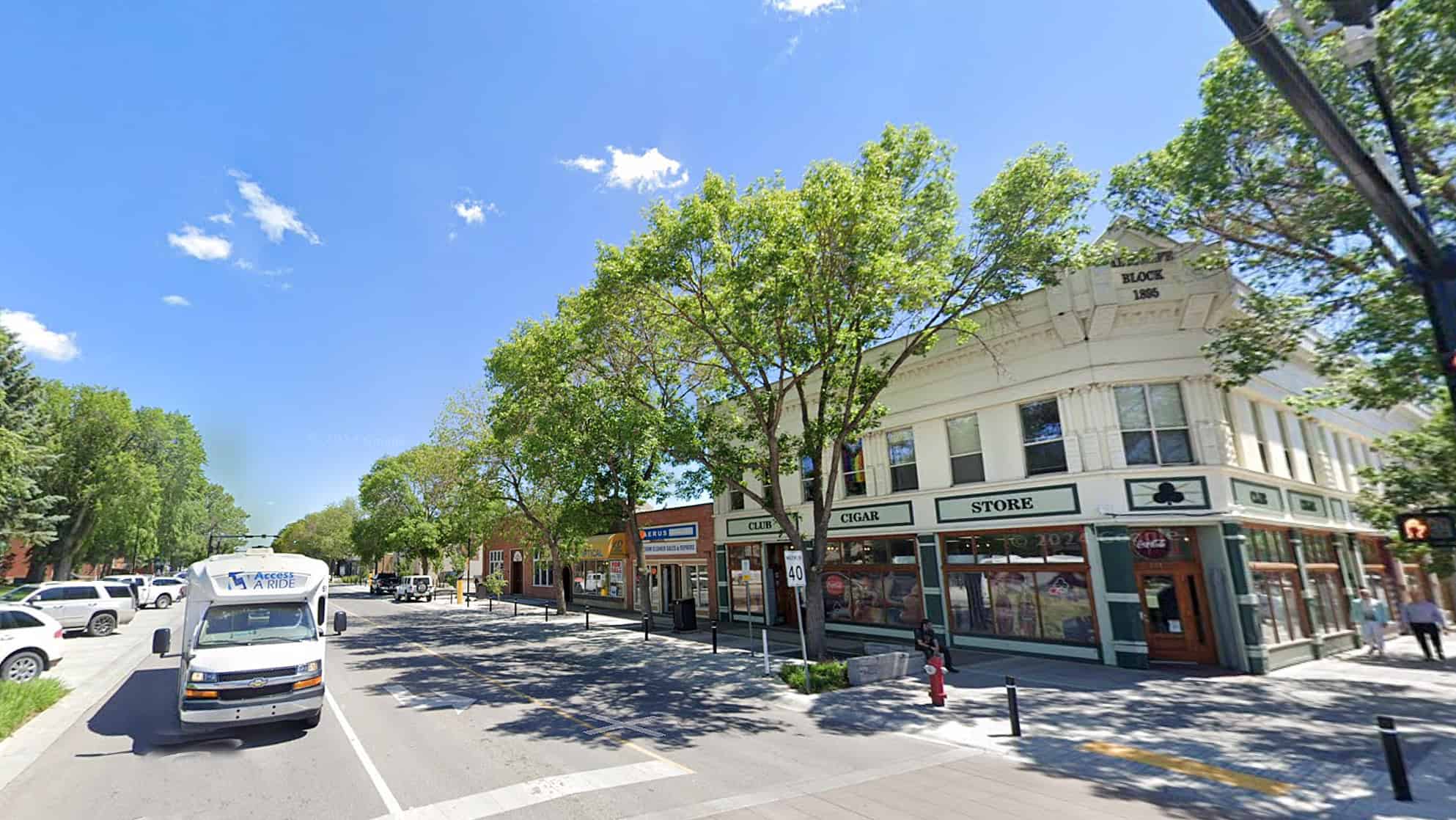
Known as a commercial and cultural hub of southern Alberta, Lethbridge residents pay about 18.9 per cent of their household’s monthly income on mortgage payments. The aggregate price (average or median price of all housing types combined in a specific area) of a home is $388,700 in Lethbridge, and the median total household income is $96,600, the report finds.
Lethbridge is followed by Saint John, taking over the top spot from Thunder Bay (currently ranked third), which was ranked as the country’s most affordable market in 2024. Red Deer and Regina round out the top five, where no more than 25 per cent of a household’s monthly income is needed to service a mortgage payment, the report states.
In Thunder Bay, 20.3 per cent of a household’s monthly income would be required, an improvement from 2024, when 22.2 per cent was needed, the report stated.
“Thunder Bay continues to be a highly attractive and relatively affordable market, even as home prices have steadily increased in recent years,” said Nathan Lawrence, sales representative and partner, Royal LePage Lannon Realty.
Lawrence noted that Thunder Bay attracts a diverse mix of buyers, including young families, retirees, former residents returning to the region, and investors seeking stable recreational or rental properties. He added that the city’s access to outdoor recreation, strong infrastructure and convenient transportation continue to attract people from across Canada.
“Looking ahead, I expect Thunder Bay to remain one of Canada’s more affordable housing markets,” added Lawrence. “While demand is expected to continue outpacing supply, investments in new rental housing and efforts to expand inventory should help create more housing options for residents. Overall, Thunder Bay continues to offer exceptional value and long-term stability for homebuyers.”
Out of the 15 most affordable cities in Canada, only two are in Ontario. Windsor-Essex ranks eleventh, where 28.7 per cent of a household’s monthly income would be required to service a mortgage payment, down significantly from 36.4 per cent two years ago.
 The report also includes a survey of Canadians living in the greater regions of Toronto, Montreal and Vancouver, conducted by Burson.
Among respondents in the Greater Toronto Area, 55 per cent say they would consider purchasing a home in a more affordable city.
Their top choice is Edmonton (16 per cent), followed by Thunder Bay (15 per cent), Charlottetown (14 per cent) and Windsor-Essex (14 per cent). Respondents could select more than one answer.
“Home prices in Canada’s largest cities have moderated over the past couple of years, but for many buyers, the math still doesn’t work,” said Phil Soper, president and CEO, Royal LePage. “As barriers to entry remain high in the country’s most expensive urban centres, relocating to a more affordable city is becoming less of a last resort and more of a deliberate strategy. Aspiring homeowners who cannot secure a foothold in these markets are seriously weighing their options, and renters – unburdened by existing roots – are more likely to make that move than established homeowners.”
Younger Canadians – often less anchored to one community in particular – are well-positioned to make the move to another city or province, with the flexibility to put down roots where housing is more attainable, Soper added.
The remote work era gave buyers the freedom to live anywhere while earning a competitive wage, but as more workers return to the office, that freedom is becoming harder to come by, he noted.
“Canadians are remarkably mobile in theory, but less so in practice,” noted Soper. “Many people dream about relocating to a more affordable city or province, yet the number that actually relocate is smaller. Career opportunities, family obligations and established social networks are powerful forces. Still, as housing affordability challenges persist in the country’s largest urban centres, more buyers are widening their search and seriously evaluating markets they may never have considered just a few years ago.”
See the full report here.
Lead photo of Lethbridge: Google Maps
INsauga's Editorial Standards and PoliciesPollView All
WIN A $100 GIFT CARD
Subscribe to INsauga’s daily email newsletter for a chance to win a $100 Amazon gift card.