

Five months after the future of transit on Oshawa’s busiest street was revealed to be aerial cable cars, the idea of passengers being ferried up and down Simcoe Street in gondolas in the sky has not gone away, despite widespread ridicule from the public and near universal rejection of the concept from city councillors.
As a Region of Durham project, the City of Oshawa has just six of the 29 votes that will ultimately decide the fate of the project, however.
Councillors in Oshawa and the rest of Durham got an update on the Simcoe Street Transit Study on Jan. 15 at a Committee of the Whole meeting and not much changed, either in concept or acceptance of the concept, despite the proposal being considered the best option for the future by staff at the region.
The aerial cable system, a Bus Rapid Transit line (which is being implemented on Kingston Road from the Scarborough Town Centre to the new Oshawa central GO station), an LRT line and monorails were all in the mix during the initial phase of studies and public consultation last fall. The latter two options – goodbye monorail – were tossed out by the project team, leaving the cable cars and the BRT as the final two being considered.
The cable car system moves more passengers – 9.7 million per year vs 8.9 million for the BRT – and is less intrusive to the environment as it doesn’t need any traffic lanes to be ripped out.
Simcoe Street currently handles 13,000 vehicles a day, with traffic expected to nearly double by 2051.
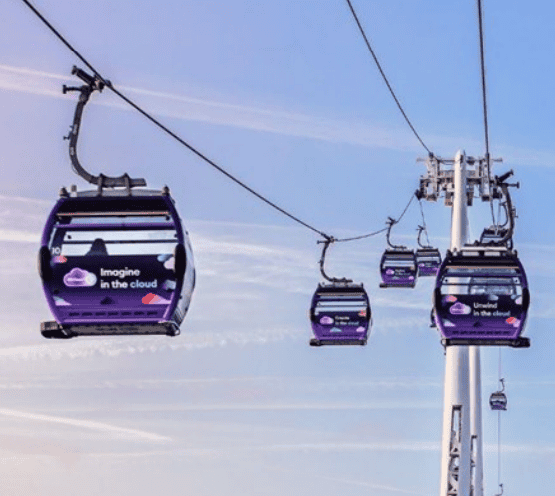
The initial capital costs for the aerial car system are bit higher at $770 million vs $550 million and the total cost to implement cable will run close to $1.1 billion in today’s dollars, with the BRT coming in at about $700 or so million.
Revenue from the aerial car concept will be significantly higher, however, with annual revenue estimated at $18.9 million and the added bonus of decreased traffic on the roads. The BRT system would bring in about $14.2 million a year.
The cost to build an LRT on the route is estimated to be about $5 billion. A subway serving Simcoe Street – which wasn’t one of the options – would cost at least $20 billion.
Initial reaction from the public on social media forums like Reddit have also been critical of the plan (along with several references to the Simpsons’ famous Monorail episode):
- “Cable cars… Unbelievable! Why not build a lazy river down Simcoe Street while we are at it?”
- “I’m thinking this is about as likely to be built as Doug Ford’s 401 tunnel.”
- “Is this a joke?”
- “Maybe a Ferris wheel could be installed to go with the overhead gondola cable cars they want to install going down Simcoe Street?”
- “So the city can’t do anything else with $1.1 billion? Really? We need this? Good lord wtf is going on?”
“We understand the public is going to be skeptical and council is going to be skeptical. It’s a new technology,” David Dunn, the region’s Director of Transportation and Field Services said in December. “A large part of our plan moving forward will be in educating people so they can make informed decisions and they don’t just see this as a novel approach.”
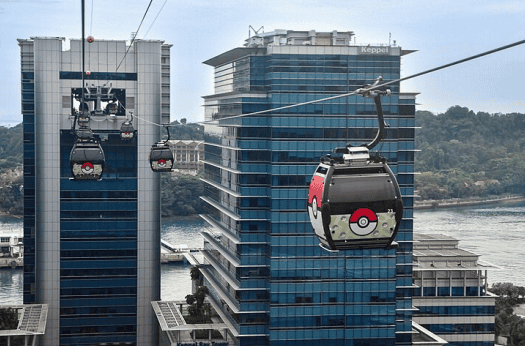
Singapore
Oshawa Regional Councillor Tito-Dante Marimpietri is doubtful the cable car plan will ever get off the ground and would prefer the region improve the current system by adding buses in high density areas “at a fraction of the cost,” instead of “waiting years” for this project to be built.
“We will have flying cars before we ever see a transit system of this nature developed, considering the pace the Metrolinx GO extension has been at.”
Steven Dale, a planner with SJC Alliance – one of the only firms in the world with a division dedicated to Cable Propelled Transit systems and a company that had a hand in completed and in-the-works projects in Grand Rapids, Michigan; Los Angeles (a downtown LA to Dodgers Stadium gondola), two cable car systems in France and the Burnaby Mountain Gondola in greater Vancouver – was prepared for the doubters when he addressed councillors in December and in January.
“There is healthy skepticism for this, which is normal. But once people see the technology, once they use it and get used to the short, reliable wait times, they become converts very quickly.”
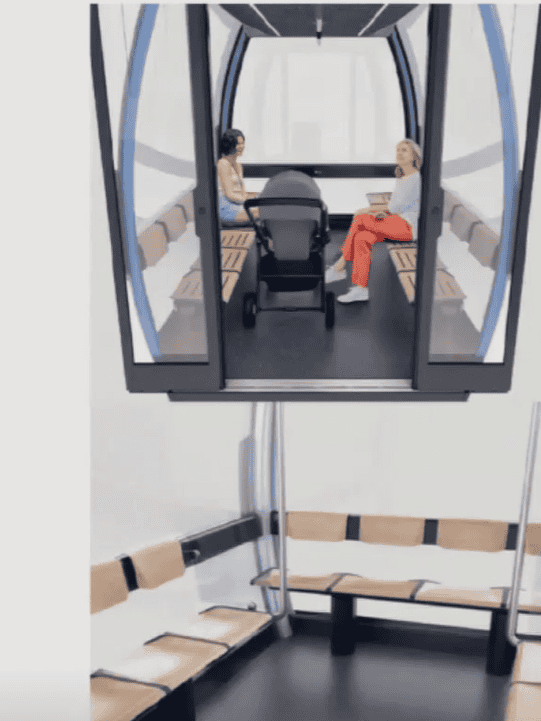
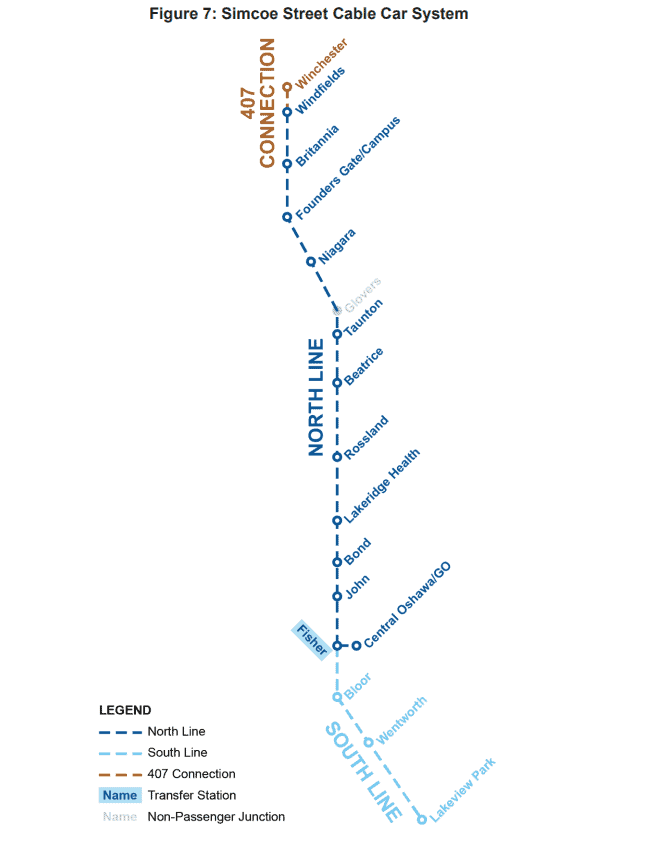
The system would be all elevated, from Lakeview Park to Highway 407, and would have stations along the route. People would access the cable cars – each holding 25 passengers – via stairs or elevators and there would be a new car every 26 seconds during peak times.
The concept, which is popular in Europe and, surprisingly, in Medellin, Colombia and La Paz in Bolivia in South America – where they move half a million passengers a day – is now catching on over here.
“Ten years ago I had no business in North America. Now North America, and Canada in particular, is our busiest territory,” Dale said. “People in Canada are paying attention.”
Dunn agreed, noting that while the technology may be new in Ontario, “it’s not new to the world.”
While not exactly on board with the idea yet, some Oshawa residents were at least opening their minds to the possibility of flying cars on Simcoe Street in the months since the Jan. 15 meeting:
- “It’s not as crazy when you consider the bus rapid transit would cost $700 million. Plus this allegedly transports one million more people per year and would net higher profits. It sounds a bit ridiculous but might actually be a good transit option.”
- “I mean, a gondola doesn’t get stuck in traffic.”
The funding for the project – whichever option is ultimately chosen – will come primarily from the federal and provincial governments, as the cost is far beyond what local taxpayers can bear.
It’s all pie-in-the-sky fantasy, as far as Brian Nicholson is concerned, with the Oshawa councillor asking if the city decided it didn’t want to be a “willing host,” would the region scrap the idea?
Dunn’s answer that they would take that decision “under advisement” was not what Nicholson wanted to hear.
“The overall reaction is laughter on having gondolas running up Simcoe Street,” the councillor said.
The Simcoe Street corridor, stretching from Lakeview Park in the south to Highway 407 in the north, is one of the region’s busiest, carrying more than 20 per cent of Durham’s total ridership, with that number expected to grow in the coming years.
Something has to be done to meet that demand, Marimpietri said, but he doesn’t believe cable cars is the answer.
“Let’s be real – a gondola may be a novel idea for some, with a population of millions like New York or Medellin, Colombia, which has typographical challenges, not Oshawa with a nearly level road network and a population of less than 200,000,” he said. “Public transportation excites me, and I’m committed to activating the most timely and intelligent services we can offer, but at this point, I just don’t think a gondola is a wise use of $1billion.”
“It’s no secret that I’ve been skeptical and even critical about the prospects of spending $1 billion on gondolas for a single north-south line with the city,” he added, citing the timing and impact to heritage properties along the route, as well as the cost. “But having met with students, function is also a real concern in our community. We are actually in desperate need of timely service improvements today, not decades from now when these gondola studies may be completed.”
“We must invest in a more efficient and effective public transportation for the needs of students and our community today.”
The presentation in January included concept drawings of some of the proposed stations, including Lakeridge Health Station and Bond Station, as well as details on other possible stops at Ontario Tech/Durham College, downtown, the Windfields growth area in the north end and Lakeview Park.
(It’s worth noting that a real estate developer – 6ixDev Inc. – is already marketing a 10-storey, 400-unit building near the university as the future home of Niagara Station, “part of the proposed Simcoe Aerial LRT line.”)
Councillor Jim Lee, who attended one of the public information sessions, said residents at the meeting came away “shaking their heads and saying, ‘this is never going to happen.’”
Lee, did, however, voted in favour of regional staff bringing a report to Oshawa Council in the fall.
Marimpietri, Rick Kerr and Oshawa Mayor Dan Carter voted against moving the study forward, though Carter was one of the few voices not willing to immediately dismiss the idea when it came before the Oshawa committee in December.
“This technology doesn’t scare me,” he said.
Councillors Bob Chapman and John Neale were absent.
Regional Council, by a 13-9 vote, agreed to examine the Aerial Cable Car Transit plan further and to prepare a communication plan, scope of work and consultation with Oshawa Council by the third quarter of 2025 or earlier.
If approved, construction would being as early as 2031.
PollView All
WIN A $100 GIFT CARD
Subscribe to INsauga’s daily email newsletter for a chance to win a $100 Amazon gift card.